
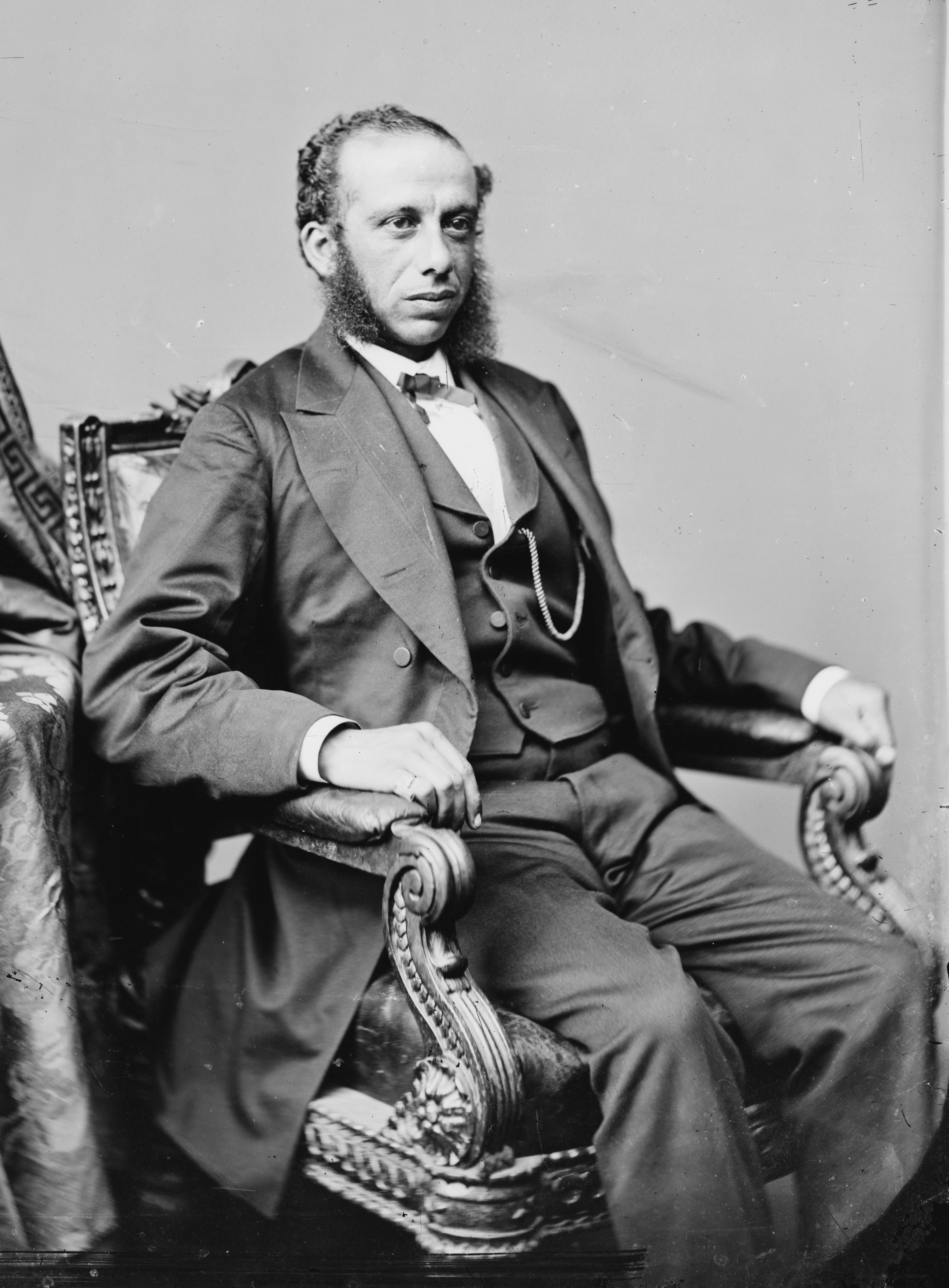
Historical · U.S. House · South Carolina · District 2
Robert De Large
Former U.S. Representative · South Carolina District 2 · 1871–1873 · Republican
Robert De Large represented South Carolina's District 2 in the United States House of Representatives (1871–1873) for the Republican party. The page below collects sourced biographical facts, term history, committee roles, and provenance for Large.
Bioguide ID: D000208
Key facts
- Full name
- Robert De Large
- State
- South Carolina
- District
- District 2
- Party
- Republican
- House service
- 1871–1873
- First House term
- 1871
- Status
- Left office
- Current term ends
- —
- Born
- 1842
- Bioguide ID
- D000208
- Committee assignments
- —
- Dataset version
- 1.20260606
Biographical narrative
1,009 words · sourced from the Wikipedia REST extract
Robert De Large was a Republican politician who served as a U.S. Representative for South Carolina's 2nd congressional district from 1871 until 1873. His political career was notable for its brief duration but significant context, occurring during the Reconstruction era following the American Civil War. Born in Aiken, South Carolina, in 1842, De Large's life and career were shaped by his mixed-race heritage and the socio-political dynamics of his time. He was a prominent figure in the African American community and engaged in various political roles before and during his tenure in Congress. His life came to an early end in 1874 due to tuberculosis, but his contributions to the political landscape of South Carolina during a transformative period remain of historical interest.
Early life and career
Robert De Large was born on March 15, 1842, in Aiken, South Carolina. He was the son of an African American mother and a mixed-race father, both of whom were part of the mulatto elite in Charleston. This background positioned De Large within a unique social class that had access to certain privileges, including education, which was not widely available to all African Americans at the time. His parents, whose names are not recorded, were slaveholders and contributed to the local economy through their professions; his father worked as a tailor, while his mother was a seamstress.
Encouraged by his parents to pursue education, De Large attended primary school in North Carolina before returning to Charleston, where he graduated from Wood High School. Following his education, he took on the trades of tailoring and farming, which were common occupations among African Americans in his community. De Large's involvement in the Brown Fellowship Society, an organization composed of free people of color in Charleston, further solidified his status among the elite African American artisans of the city. This society played a significant role in the social and political life of its members, fostering a sense of community and mutual support.
During the Civil War, De Large was employed by the Confederate Navy, which provided him with financial resources that he would later use to establish a foothold in the post-war economy. His experiences during the war likely influenced his political views and aspirations. Following the conflict, he became increasingly involved in politics, reflecting the broader trend of African Americans seeking representation and rights during the Reconstruction era. In 1868, he was elected as a delegate to the South Carolina constitutional convention, a pivotal moment in the state's efforts to redefine its governance and societal structure after the war. That same year, he was elected to the South Carolina House of Representatives, where he served a single term until 1870. His political career continued to evolve as he was elected State Land Commissioner and served as one of the commissioners of the State's sinking fund.
House tenure
Robert De Large's tenure in the U.S. House of Representatives began on March 4, 1871. He represented South Carolina's 2nd congressional district during a time of significant political upheaval and change. His election to Congress was part of a broader movement in which African Americans began to gain political power in the South, particularly in the wake of the Civil War and the passage of the Reconstruction Amendments. De Large's role as a congressman was emblematic of this shift, as he was one of the few African Americans to serve in Congress during this period.
However, his time in office was marked by challenges. In January 1873, his congressional seat was declared vacant following an election challenge from his Democratic opponent, Christopher C. Bowen. The House's Election Committee found numerous abuses and irregularities in the election process on both sides, making it impossible to determine a clear victor. Additionally, the committee identified that De Large held two positions in the South Carolina government that were deemed incompatible with his role as a congressman. Consequently, on January 18, 1873, the committee recommended that the seat be declared vacant for the remainder of the 42nd Congress, which was set to adjourn in March. This decision was subsequently agreed upon by the full House.
Despite the brevity of his congressional career, De Large's election to the House was significant in the context of African American political representation during Reconstruction. His presence in Congress was part of a larger narrative of African Americans striving for equality and representation in a society that had long marginalized them.
Legislative focus and committees
During his time in the House of Representatives, Robert De Large's legislative focus and committee assignments are not extensively documented. However, it can be inferred that as a member of the Republican Party during the Reconstruction era, his priorities likely aligned with the broader goals of the party, which included civil rights for freedmen, economic development in the South, and the establishment of equitable policies that would benefit African Americans and other marginalized groups.
The political landscape of the time was fraught with tension, as many Southern Democrats opposed the Reconstruction efforts and sought to undermine the progress made by African Americans. De Large's role as a congressman would have involved navigating these challenges while advocating for the rights and interests of his constituents. His background as a delegate to the state constitutional convention and his previous experience in the South Carolina House of Representatives would have equipped him with the knowledge and skills necessary to address the pressing issues of the day.
After leaving Congress, De Large continued to serve his community as a local magistrate, a role that allowed him to remain engaged in public service and local governance. His life was cut short when he died from tuberculosis on February 14, 1874, at the age of 31. He was buried in the Brown Fellowship Graveyard, a testament to his roots in the African American community of Charleston.
Robert De Large's life and career illustrate the complexities of African American political engagement during the Reconstruction era. His contributions, though brief, reflect the struggles and aspirations of a generation seeking to redefine their place in American society.
Notable legislation
Sponsored and co-sponsored legislation for Robert De Large is pending operator curation. The biographical narrative above carries the same provenance trail until per-bill rows are written.
Sources
- [1]https://en.wikipedia.org/wiki/Robert_C._De_LargeWikipedia · retrieved 2026-06-06
Notable quotes
Sourced quotes for Robert De Large are pending operator curation. Narrative-scope provenance remains attached below.
Sources
- [1]https://en.wikipedia.org/wiki/Robert_C._De_LargeWikipedia · retrieved 2026-06-06
Key positions
Curated policy positions for Robert De Large are pending operator review. The biographical narrative above carries the same provenance trail until per-topic positions are written.
Sources
- [1]https://en.wikipedia.org/wiki/Robert_C._De_LargeWikipedia · retrieved 2026-06-06
Terms served
- 1871–1873U.S. House · Term 1 · Republican
Sources & provenance
Every attributable claim above carries a per-section [N] marker that resolves to the corresponding URL below. Each entry records the upstream provider, the canonical URL, and the timestamp at which the source was retrieved by the ingest pipeline.
Key facts
- https://bioguide.congress.gov/search/bio/D000208bioguide · retrieved 2026-06-06
- https://www.govtrack.us/congress/members/403313govtrack · retrieved 2026-06-06
Biographical narrative
- https://en.wikipedia.org/wiki/Robert_C._De_Largewikipedia · retrieved 2026-06-06
Find your representative
Every U.S. state elects representatives by district. Browse South Carolina’s delegation, the full former-representative roster, or explore the role and term length.
Related on The Candidate
- Preceded by Christopher BowenEarlier holder of the South Carolina District 2 House seat · Republican.Open
- Succeeded by Alonzo RansierLater holder of the South Carolina District 2 House seat · Republican.Open
- Arthur Ravenel Jr.Former U.S. Representative · South Carolina District 1 · RepublicanOpen
- Benjamin WhittemoreFormer U.S. Representative · South Carolina District 1 · RepublicanOpen
- Clara McMillanFormer U.S. Representative · South Carolina District 1 · DemocraticOpen
- Daniel WallaceFormer U.S. Representative · South Carolina District 1 · DemocraticOpen