
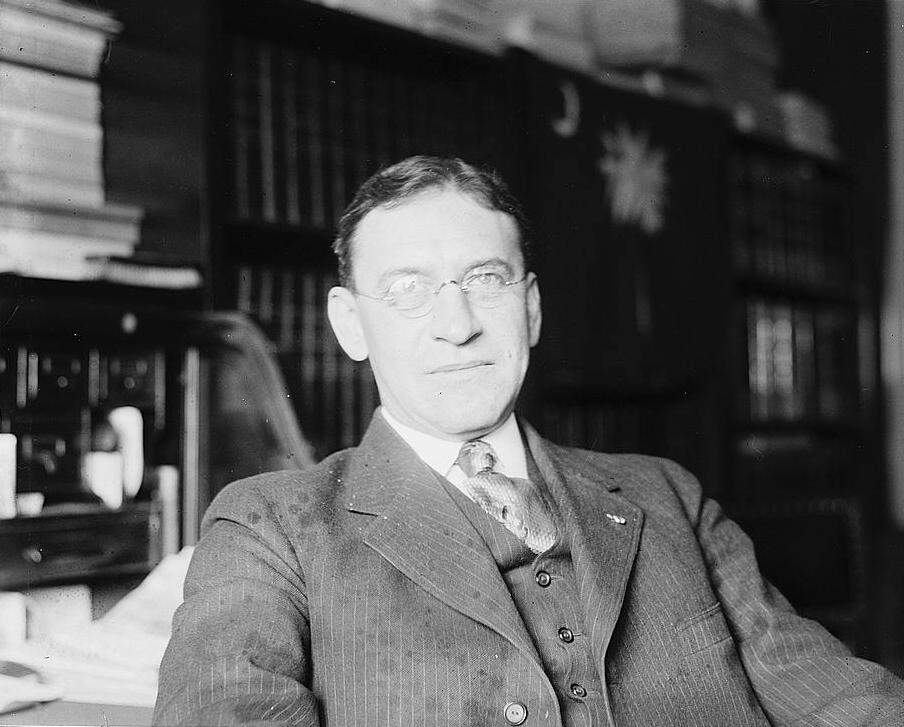
Historical · U.S. House · South Carolina · District 3
Frederick Dominick
Former U.S. Representative · South Carolina District 3 · 1917–1933 · Democratic
Frederick Dominick represented South Carolina's District 3 in the United States House of Representatives (1917–1933) for the Democratic party. The page below collects sourced biographical facts, term history, committee roles, and provenance for Dominick.
Bioguide ID: D000408
Key facts
- Full name
- Frederick Dominick
- State
- South Carolina
- District
- District 3
- Party
- Democratic
- House service
- 1917–1933
- First House term
- 1917
- Status
- Left office
- Current term ends
- —
- Born
- 1877
- Bioguide ID
- D000408
- Committee assignments
- —
- Dataset version
- 1.20260606
Biographical narrative
1,007 words · sourced from the Wikipedia REST extract
Frederick Dominick was a notable figure in American politics, serving as a U.S. Representative for South Carolina's 3rd congressional district. A member of the Democratic Party, Dominick's congressional career spanned eight terms from 1917 until 1933. His tenure was marked by significant events in American history, including World War I and the early years of the Great Depression. After his time in Congress, he continued to contribute to public service and the legal profession until his passing in 1960.
Early life and career
Frederick Haskell Dominick was born on February 20, 1877, in Peak, a small community located in Newberry County, South Carolina. His early education took place in the public schools of Columbia, South Carolina, where he developed a foundation for his future academic pursuits. Dominick furthered his education at Newberry College and South Carolina College in Columbia, institutions that would have shaped his understanding of both the law and public service. He later attended the law school at the University of Virginia in Charlottesville, a prestigious institution that provided him with a comprehensive legal education.
After completing his studies, Dominick was admitted to the South Carolina bar in 1898, which allowed him to begin his legal practice in Newberry, South Carolina. His early career in law laid the groundwork for his future political endeavors. In addition to his legal work, he became involved in local politics, serving as a member of the South Carolina House of Representatives from 1901 to 1902. This experience in state government provided him with insights into legislative processes and the needs of his constituents.
Dominick's political involvement deepened when he became the chairman of the Democratic Party county committee, a position he held from 1906 to 1914. This role not only solidified his standing within the party but also allowed him to influence local political dynamics. His commitment to public service continued as he served as an assistant attorney general of South Carolina from 1913 to 1916. This position further enhanced his legal expertise and provided him with a broader understanding of state governance.
In addition to his legal and political roles, Dominick was active in national politics as well. He was a delegate to the Democratic National Conventions in 1920 and 1924, where he participated in shaping the party's platform and selecting its candidates. His involvement at the national level indicated his growing prominence within the Democratic Party and his commitment to its ideals.
House tenure
Frederick Dominick's congressional career began when he was elected to the U.S. House of Representatives for South Carolina's 3rd congressional district. His first term commenced on March 4, 1917, and he was subsequently re-elected for seven additional terms, concluding his service on March 3, 1933. During his time in Congress, he was part of a significant period in American history, which included the United States' entry into World War I and the onset of the Great Depression.
One notable aspect of Dominick's congressional tenure was his stance on key issues of the time. On April 5, 1917, he was one of only 50 representatives who voted against declaring war on Germany, making him the sole representative from South Carolina to take this position. This vote reflected his personal beliefs and the complexities of the political landscape during World War I. His decision to oppose the war declaration was significant, as it demonstrated a willingness to stand apart from the prevailing sentiment in Congress.
In addition to his voting record, Dominick was involved in important legislative actions during his time in office. He was appointed as one of the managers by the United States House of Representatives to conduct the impeachment proceedings against George W. English, a judge of the United States District Court for the Eastern District of Illinois, in 1926. This role underscored his legal expertise and his commitment to upholding the integrity of the judicial system.
Throughout his eight terms in Congress, Dominick engaged with various issues that affected his constituents and the nation. His legislative focus included matters related to economic recovery, infrastructure development, and social welfare, reflecting the challenges faced by the country during the 1920s and early 1930s.
Despite his lengthy tenure, Dominick's political career faced challenges. He was an unsuccessful candidate for renomination in 1932, which marked the end of his time in Congress. The political landscape was shifting during this period, and his defeat reflected the changing dynamics within the Democratic Party and the electorate's response to the economic crisis.
Legislative focus and committees
During his time in the U.S. House of Representatives, Frederick Dominick was involved in a range of legislative issues that were pertinent to his constituents and the nation as a whole. His focus on economic recovery was particularly relevant during the Great Depression, a time when many Americans faced significant hardships. While specific details about the bills he sponsored or supported are not provided, it can be inferred that his legal background and experience in state government informed his approach to legislative matters.
Dominick's involvement in the impeachment proceedings against Judge George W. English highlighted his commitment to judicial integrity and accountability. This role required a thorough understanding of legal principles and the ability to navigate complex political situations, skills that Dominick had honed throughout his career.
In Congress, he likely served on various committees that addressed issues ranging from economic policy to social welfare. His participation in these committees would have allowed him to advocate for the interests of his constituents and contribute to the legislative process. The committees he served on would have provided him with platforms to influence policy and engage with other lawmakers on critical issues facing the nation.
After leaving Congress, Dominick continued to practice law in Newberry, South Carolina, where he remained active in the legal community until his death on March 11, 1960. His long career in public service and law reflects a dedication to his community and the principles of democracy. He was interred in Rosemont Cemetery, leaving behind a legacy of commitment to public service and the rule of law.
Notable legislation
Sponsored and co-sponsored legislation for Frederick Dominick is pending operator curation. The biographical narrative above carries the same provenance trail until per-bill rows are written.
Sources
- [1]https://en.wikipedia.org/wiki/Frederick_H._DominickWikipedia · retrieved 2026-06-06
Notable quotes
Sourced quotes for Frederick Dominick are pending operator curation. Narrative-scope provenance remains attached below.
Sources
- [1]https://en.wikipedia.org/wiki/Frederick_H._DominickWikipedia · retrieved 2026-06-06
Key positions
Curated policy positions for Frederick Dominick are pending operator review. The biographical narrative above carries the same provenance trail until per-topic positions are written.
Sources
- [1]https://en.wikipedia.org/wiki/Frederick_H._DominickWikipedia · retrieved 2026-06-06
Terms served
- 1917–1919U.S. House · Term 1 · Democratic
- 1919–1921U.S. House · Term 2 · Democratic
- 1921–1923U.S. House · Term 3 · Democratic
- 1923–1925U.S. House · Term 4 · Democratic
- 1925–1927U.S. House · Term 5 · Democratic
- 1927–1929U.S. House · Term 6 · Democratic
- 1929–1931U.S. House · Term 7 · Democratic
- 1931–1933U.S. House · Term 8 · Democratic
Sources & provenance
Every attributable claim above carries a per-section [N] marker that resolves to the corresponding URL below. Each entry records the upstream provider, the canonical URL, and the timestamp at which the source was retrieved by the ingest pipeline.
Key facts
- https://bioguide.congress.gov/search/bio/D000408bioguide · retrieved 2026-06-06
- https://www.govtrack.us/congress/members/403521govtrack · retrieved 2026-06-06
Biographical narrative
- https://en.wikipedia.org/wiki/Frederick_H._Dominickwikipedia · retrieved 2026-06-06
Find your representative
Every U.S. state elects representatives by district. Browse South Carolina’s delegation, the full former-representative roster, or explore the role and term length.
Related on The Candidate
- Preceded by Wyatt AikenEarlier holder of the South Carolina District 3 House seat · Democratic.Open
- Succeeded by John TaylorLater holder of the South Carolina District 3 House seat · Democratic.Open
- Arthur Ravenel Jr.Former U.S. Representative · South Carolina District 1 · RepublicanOpen
- Benjamin WhittemoreFormer U.S. Representative · South Carolina District 1 · RepublicanOpen
- Clara McMillanFormer U.S. Representative · South Carolina District 1 · DemocraticOpen
- Daniel WallaceFormer U.S. Representative · South Carolina District 1 · DemocraticOpen