
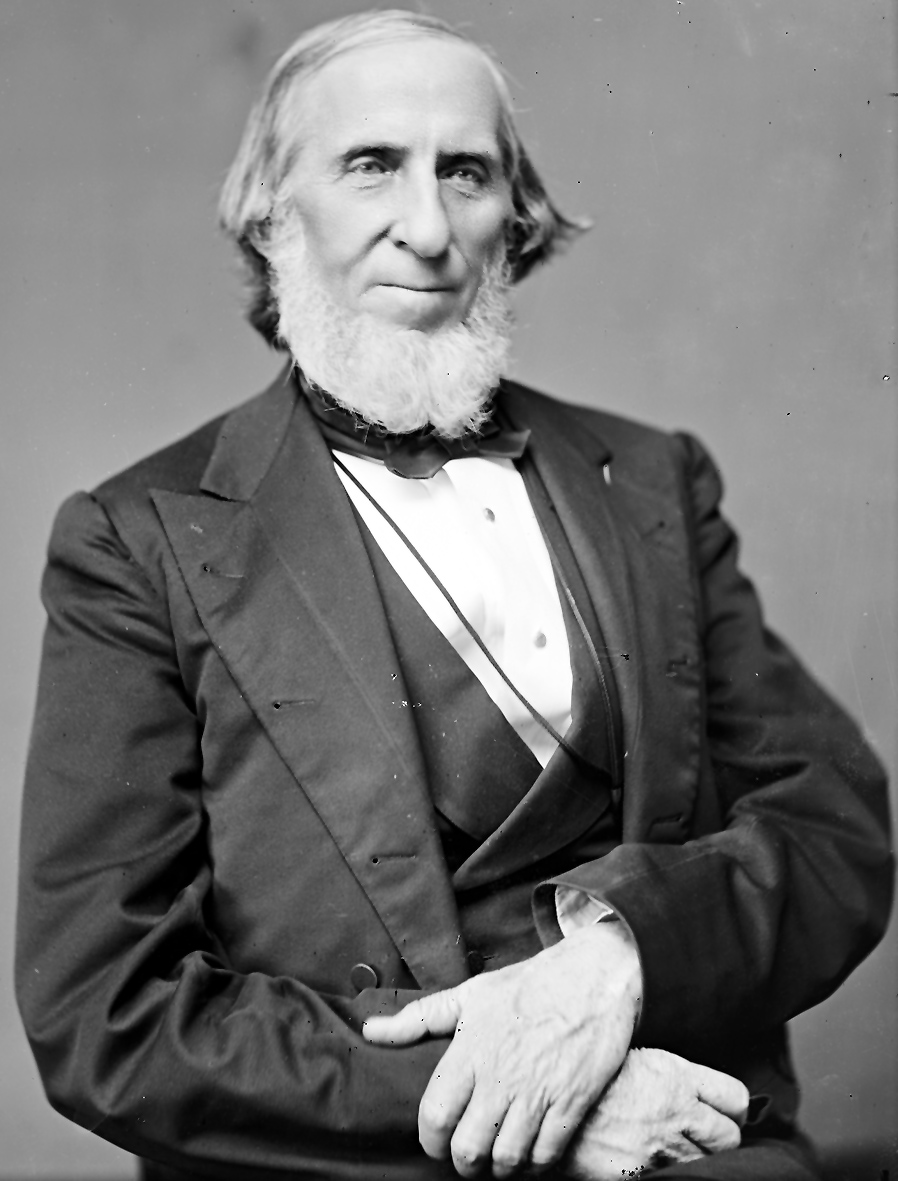
Historical · U.S. House · South Carolina · District 4
Alexander Wallace
Former U.S. Representative · South Carolina District 4 · 1869–1877 · Republican
Alexander Wallace represented South Carolina's District 4 in the United States House of Representatives (1869–1877) for the Republican party. The page below collects sourced biographical facts, term history, committee roles, and provenance for Wallace.
Bioguide ID: W000074
Key facts
- Full name
- Alexander Wallace
- State
- South Carolina
- District
- District 4
- Party
- Republican
- House service
- 1869–1877
- First House term
- 1869
- Status
- Left office
- Current term ends
- —
- Born
- 1810
- Bioguide ID
- W000074
- Committee assignments
- —
- Dataset version
- 1.20260606
Biographical narrative
988 words · sourced from the Wikipedia REST extract
Alexander Wallace was a prominent political figure in South Carolina during the Reconstruction era, serving as a United States Representative for the state’s fourth congressional district. A member of the Republican Party, Wallace's political career spanned four terms in the U.S. House of Representatives from 1869 until 1877. His tenure was marked by significant historical events, including the aftermath of the Civil War and the challenges of Reconstruction, during which he navigated complex political landscapes shaped by issues of race, civil rights, and the reintegration of Southern states into the Union.
Early life and career
Born on December 30, 1810, near York, South Carolina, Alexander Wallace was the son of McCasland Wallace, an immigrant who arrived in America as a child. McCasland was born at sea to a Scots-Irish family en route to Charleston, South Carolina. Growing up in a region with deep agricultural roots, Alexander Wallace received limited formal education, which was common for many individuals of his time, particularly in rural areas. Despite this, he became involved in the agricultural sector, where he engaged in planting and was known to be a slaveholder, reflecting the socio-economic realities of the antebellum South.
Wallace's political career began in the South Carolina House of Representatives, where he served two non-consecutive terms from 1852 to 1855 and again from 1858 to 1859. During this time, he aligned himself with the Unionist faction, which was significant given the growing tensions leading up to the Civil War. When South Carolina seceded from the Union in 1860, Wallace withdrew from political life, a decision that reflected the complicated loyalties of many Southern politicians during this tumultuous period. Throughout the Civil War, he maintained a low profile and refrained from overt support of the Confederacy, navigating a precarious situation due to his prior Unionist sympathies.
Following the conclusion of the Civil War and the abolition of slavery, Wallace re-entered politics, aligning himself with the Republican Party, which was emerging as a key political force in the South, particularly among newly freed African Americans. The political landscape in South Carolina had shifted dramatically, as the 1868 state constitution enfranchised African Americans while disenfranchising many former Confederates. This change created an environment in which Wallace could successfully contest the election for the 41st Congress, marking the beginning of his congressional career.
House tenure
Wallace's first term in the U.S. House of Representatives began in 1869, during a period characterized by significant political and social upheaval. He was elected to represent South Carolina's fourth congressional district, a position he held for four consecutive terms until March 3, 1877. His election came at a time when the Republican Party was gaining strength in the South, largely due to the support of African American voters, northern military officers, and individuals associated with the Freedmen's Bureau.
During his time in Congress, Wallace was involved in various legislative activities and served as chairman of the Committee on Revolutionary Claims during the 42nd Congress. His role in this committee involved overseeing claims related to Revolutionary War veterans and their descendants, reflecting the ongoing efforts to address historical grievances and provide support to those who had served the nation. Wallace's legislative focus aligned with the broader goals of the Republican Party during Reconstruction, which sought to secure civil rights for African Americans and promote their integration into American society.
Wallace's congressional career was marked by his support for significant legislation aimed at advancing civil rights. He voted in favor of the Ku Klux Klan Act, which aimed to combat the violent activities of white supremacist groups that emerged during Reconstruction. Additionally, he supported the Civil Rights Act of 1875, which sought to guarantee equal treatment in public accommodations and protect the rights of African Americans. These votes underscored his commitment to the principles of equality and justice during a time when such ideals were under intense scrutiny and opposition.
Despite his efforts and contributions, Wallace faced challenges in maintaining his political position. He was ultimately unsuccessful in his bid for reelection in 1876 to the 45th Congress, marking the end of his formal political career. The shifting political dynamics in the South, coupled with the waning influence of the Republican Party in the region, contributed to the difficulties he encountered in securing a continued role in Congress.
Legislative focus and committees
Throughout his tenure in the House of Representatives, Wallace's legislative focus was closely aligned with the priorities of the Republican Party during the Reconstruction era. His involvement in key committees, particularly as chairman of the Committee on Revolutionary Claims, provided him with a platform to advocate for issues related to veterans and their families. This role was significant in the context of post-war America, as the nation grappled with the consequences of the Civil War and the need to address the needs of those who had served in the military.
Wallace's support for civil rights legislation, including the Ku Klux Klan Act and the Civil Rights Act of 1875, highlighted his commitment to advancing the rights of African Americans in a challenging political environment. These legislative efforts were part of a broader Republican agenda aimed at ensuring that the principles of freedom and equality were upheld in the aftermath of the Civil War. Wallace's votes on these critical pieces of legislation reflected the party's dedication to protecting the rights of newly freed individuals and combating the resurgence of racial violence and discrimination.
After concluding his congressional service in 1877, Wallace returned to his agricultural pursuits in South Carolina. He continued to engage with the community and remained involved in local affairs until his death on June 27, 1893. His legacy is preserved in the historical context of Reconstruction and the ongoing struggle for civil rights in the United States. Wallace was interred at Rose Hill Cemetery in York, South Carolina, marking the final resting place of a figure who navigated the complexities of a transformative period in American history.
Notable legislation
Sponsored and co-sponsored legislation for Alexander Wallace is pending operator curation. The biographical narrative above carries the same provenance trail until per-bill rows are written.
Sources
- [1]https://en.wikipedia.org/wiki/Alexander_S._WallaceWikipedia · retrieved 2026-06-06
Notable quotes
Sourced quotes for Alexander Wallace are pending operator curation. Narrative-scope provenance remains attached below.
Sources
- [1]https://en.wikipedia.org/wiki/Alexander_S._WallaceWikipedia · retrieved 2026-06-06
Key positions
Curated policy positions for Alexander Wallace are pending operator review. The biographical narrative above carries the same provenance trail until per-topic positions are written.
Sources
- [1]https://en.wikipedia.org/wiki/Alexander_S._WallaceWikipedia · retrieved 2026-06-06
Terms served
- 1869–1871U.S. House · Term 1 · Republican
- 1871–1873U.S. House · Term 2 · Republican
- 1873–1875U.S. House · Term 3 · Republican
- 1875–1877U.S. House · Term 4 · Republican
Sources & provenance
Every attributable claim above carries a per-section [N] marker that resolves to the corresponding URL below. Each entry records the upstream provider, the canonical URL, and the timestamp at which the source was retrieved by the ingest pipeline.
Key facts
- https://bioguide.congress.gov/search/bio/W000074bioguide · retrieved 2026-06-06
- https://www.govtrack.us/congress/members/411253govtrack · retrieved 2026-06-06
Biographical narrative
- https://en.wikipedia.org/wiki/Alexander_S._Wallacewikipedia · retrieved 2026-06-06
Find your representative
Every U.S. state elects representatives by district. Browse South Carolina’s delegation, the full former-representative roster, or explore the role and term length.
Related on The Candidate
- Preceded by James GossEarlier holder of the South Carolina District 4 House seat · Republican.Open
- Succeeded by John EvinsLater holder of the South Carolina District 4 House seat · Democratic.Open
- Arthur Ravenel Jr.Former U.S. Representative · South Carolina District 1 · RepublicanOpen
- Benjamin WhittemoreFormer U.S. Representative · South Carolina District 1 · RepublicanOpen
- Clara McMillanFormer U.S. Representative · South Carolina District 1 · DemocraticOpen
- Daniel WallaceFormer U.S. Representative · South Carolina District 1 · DemocraticOpen