
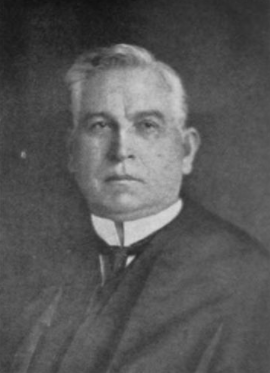
Historical · U.S. House · South Carolina · District 4
Joseph Johnson
Former U.S. Representative · South Carolina District 4 · 1901–1917 · Democratic
Joseph Johnson represented South Carolina's District 4 in the United States House of Representatives (1901–1917) for the Democratic party. The page below collects sourced biographical facts, term history, committee roles, and provenance for Johnson.
Bioguide ID: J000156
Key facts
- Full name
- Joseph Johnson
- State
- South Carolina
- District
- District 4
- Party
- Democratic
- House service
- 1901–1917
- First House term
- 1901
- Status
- Left office
- Current term ends
- —
- Born
- 1858
- Bioguide ID
- J000156
- Committee assignments
- —
- Dataset version
- 1.20260606
Biographical narrative
919 words · sourced from the Wikipedia REST extract
Joseph Johnson was a prominent political figure in the early 20th century, serving as a United States Representative from South Carolina's 4th congressional district. A member of the Democratic Party, Johnson's congressional career spanned over a decade, during which he was elected to eight consecutive terms in the House of Representatives. His tenure in Congress began in 1901 and concluded in 1915 when he resigned to accept a federal judgeship. Following his time in the House, he served as a district judge for the United States District Court for the Western District of South Carolina until his death in 1919.
Early life and career
Joseph Travis Johnson was born on February 28, 1858, in Brewerton, an unincorporated community located in Laurens County, South Carolina. His early education took place in local common schools, which laid the foundation for his academic pursuits. Johnson demonstrated a commitment to education and personal development, ultimately earning an Artium Baccalaureus degree from Erskine College in 1879. This achievement marked the beginning of his higher education journey, which continued with his enrollment at Vanderbilt University Law School, where he obtained a Bachelor of Laws degree in 1883.
Before embarking on his legal career, Johnson contributed to his community by teaching school for several years. This experience in education likely influenced his later approach to public service and community engagement. After being admitted to the bar in 1883, he began his legal practice in Laurens, South Carolina, where he worked until 1895. During this period, he developed a reputation as a skilled attorney, which facilitated his transition to a more prominent legal practice in Spartanburg, South Carolina. Johnson continued his private practice in Spartanburg from 1895 until 1915, gaining valuable experience and establishing a network that would later support his political ambitions.
House tenure
Johnson's political career began in earnest when he was elected as a Democrat to the United States House of Representatives. He took office on March 4, 1901, as a member of the 57th Congress. His election marked the beginning of a significant period in his life, as he would go on to serve in the House for eight consecutive terms. Throughout his tenure, Johnson was involved in various legislative activities and contributed to the development of policies that affected his constituents and the nation as a whole.
During his time in Congress, Johnson was part of a legislative body that was navigating the complexities of a rapidly changing America. The early 20th century was marked by significant social, economic, and political transformations, including the Progressive Era, which sought to address issues such as corruption, inequality, and labor rights. Johnson's role as a representative allowed him to engage with these pressing issues, although specific details regarding his legislative initiatives and contributions during this period are not extensively documented.
Johnson's congressional service continued until April 19, 1915, when he resigned to accept a federal judgeship. His resignation marked the end of a notable chapter in his political career, but it also signified a new opportunity for him to serve the public in a different capacity. His election to the House and subsequent resignation reflect the trust and support he garnered from his constituents in South Carolina's 4th congressional district.
Legislative focus and committees
While specific details regarding Johnson's legislative focus and committee assignments during his time in the House are not provided, it can be inferred that, as a member of the Democratic Party during a transformative period in American history, he likely engaged with a range of issues pertinent to his constituents and the broader national landscape. The Democratic Party at the time was involved in various progressive reforms, which included efforts to improve labor conditions, expand civil rights, and enhance social welfare programs.
Johnson's long tenure in Congress, spanning over a decade, suggests that he was able to build relationships with colleagues and gain influence within the legislative process. This experience would have positioned him to advocate for the interests of his district effectively. The skills he developed as a practicing attorney likely contributed to his ability to navigate the complexities of legislative procedures and engage in meaningful discussions on policy matters.
In 1915, Johnson transitioned from his role as a U.S. Representative to that of a federal judge. He received a recess appointment from President Woodrow Wilson on March 9, 1915, to the United States District Court for the Western District of South Carolina. This appointment was made to a new seat authorized by legislation, reflecting the growing need for judicial oversight in the region. Johnson's nomination was formalized by President Wilson on January 4, 1916, and he was confirmed by the United States Senate shortly thereafter.
His judicial service lasted until his death on May 8, 1919, in Spartanburg, South Carolina. Johnson's contributions to the judiciary were significant, as he played a role in interpreting and applying federal law in a period marked by social change and legal challenges. His burial took place at Oakwood Cemetery in Spartanburg, where he was laid to rest, leaving behind a legacy of public service that spanned both legislative and judicial roles.
In summary, Joseph Johnson's life was characterized by a commitment to education, law, and public service. His journey from a local educator to a U.S. Representative and later a federal judge illustrates a dedication to the principles of democracy and justice. His work in Congress and the judiciary reflects the evolving landscape of American governance during the early 20th century, a time of significant transformation in the United States.
Notable legislation
Sponsored and co-sponsored legislation for Joseph Johnson is pending operator curation. The biographical narrative above carries the same provenance trail until per-bill rows are written.
Sources
- [1]https://en.wikipedia.org/wiki/Joseph_T._JohnsonWikipedia · retrieved 2026-06-06
Notable quotes
Sourced quotes for Joseph Johnson are pending operator curation. Narrative-scope provenance remains attached below.
Sources
- [1]https://en.wikipedia.org/wiki/Joseph_T._JohnsonWikipedia · retrieved 2026-06-06
Key positions
Curated policy positions for Joseph Johnson are pending operator review. The biographical narrative above carries the same provenance trail until per-topic positions are written.
Sources
- [1]https://en.wikipedia.org/wiki/Joseph_T._JohnsonWikipedia · retrieved 2026-06-06
Terms served
- 1901–1903U.S. House · Term 1 · Democratic
- 1903–1905U.S. House · Term 2 · Democratic
- 1905–1907U.S. House · Term 3 · Democratic
- 1907–1909U.S. House · Term 4 · Democratic
- 1909–1911U.S. House · Term 5 · Democratic
- 1911–1913U.S. House · Term 6 · Democratic
- 1913–1915U.S. House · Term 7 · Democratic
- 1915–1917U.S. House · Term 8 · Democratic
Sources & provenance
Every attributable claim above carries a per-section [N] marker that resolves to the corresponding URL below. Each entry records the upstream provider, the canonical URL, and the timestamp at which the source was retrieved by the ingest pipeline.
Key facts
- https://bioguide.congress.gov/search/bio/J000156bioguide · retrieved 2026-06-06
- https://www.govtrack.us/congress/members/406054govtrack · retrieved 2026-06-06
Biographical narrative
- https://en.wikipedia.org/wiki/Joseph_T._Johnsonwikipedia · retrieved 2026-06-06
Find your representative
Every U.S. state elects representatives by district. Browse South Carolina’s delegation, the full former-representative roster, or explore the role and term length.
Related on The Candidate
- Preceded by Stanyarne WilsonEarlier holder of the South Carolina District 4 House seat · Democratic.Open
- Succeeded by John McSwainLater holder of the South Carolina District 4 House seat · Democratic.Open
- Arthur Ravenel Jr.Former U.S. Representative · South Carolina District 1 · RepublicanOpen
- Benjamin WhittemoreFormer U.S. Representative · South Carolina District 1 · RepublicanOpen
- Clara McMillanFormer U.S. Representative · South Carolina District 1 · DemocraticOpen
- Daniel WallaceFormer U.S. Representative · South Carolina District 1 · DemocraticOpen