
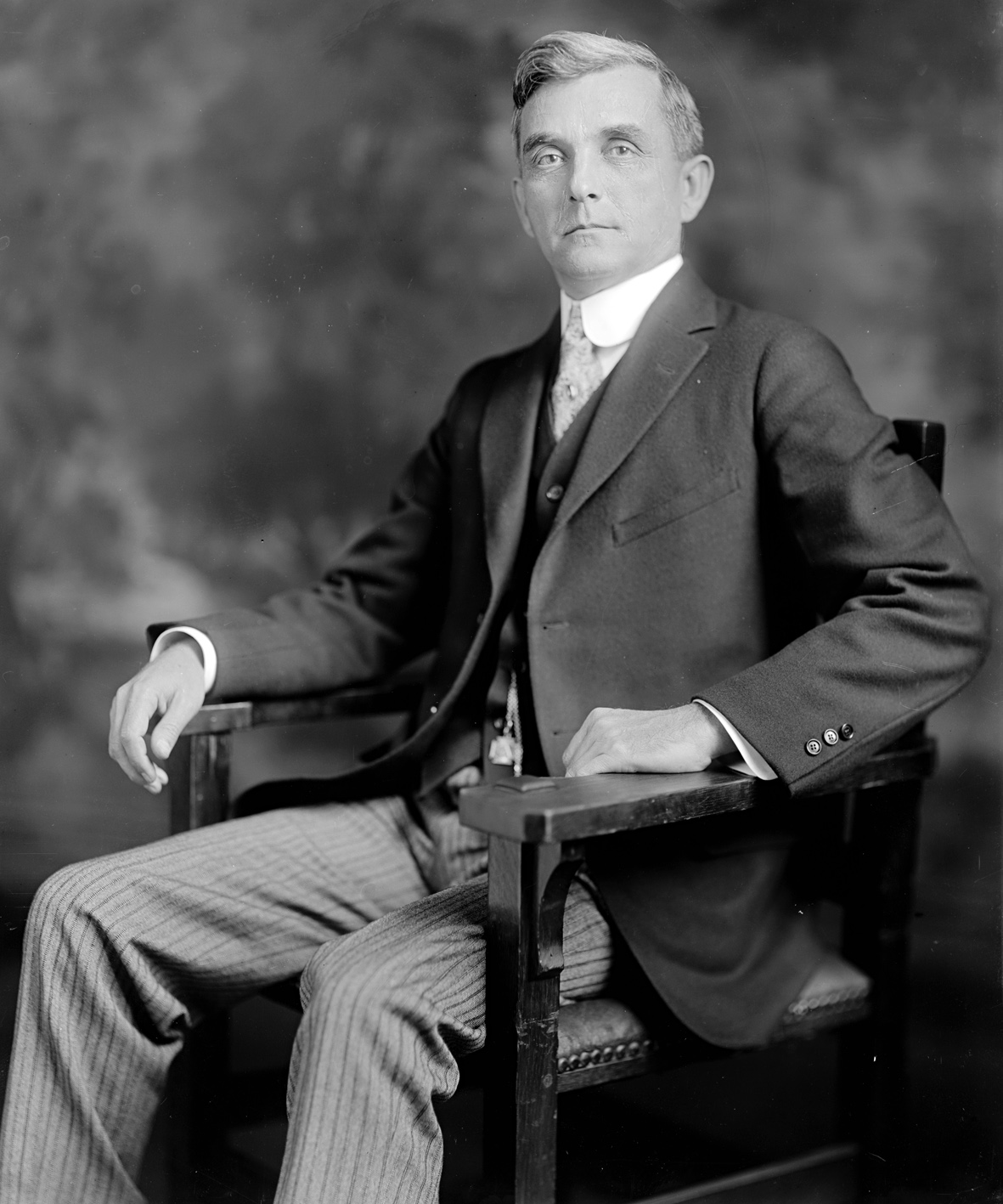
Historical · U.S. House · South Carolina · District 6
Philip Stoll
Former U.S. Representative · South Carolina District 6 · 1919–1923 · Democratic
Philip Stoll represented South Carolina's District 6 in the United States House of Representatives (1919–1923) for the Democratic party. The page below collects sourced biographical facts, term history, committee roles, and provenance for Stoll.
Bioguide ID: S000951
Key facts
- Full name
- Philip Stoll
- State
- South Carolina
- District
- District 6
- Party
- Democratic
- House service
- 1919–1923
- First House term
- 1919
- Status
- Left office
- Current term ends
- —
- Born
- 1874
- Bioguide ID
- S000951
- Committee assignments
- —
- Dataset version
- 1.20260606
Biographical narrative
820 words · sourced from the Wikipedia REST extract
Philip Stoll was a U.S. Representative from South Carolina, serving in the House of Representatives as a member of the Democratic Party. His congressional career spanned from 1919 to 1923, during which he represented South Carolina's 6th congressional district. Stoll's legal career and later judicial service were marked by notable events, including his role in a controversial case involving the death penalty of a minor. After his time in Congress, he continued to engage in public service through various legal and judicial roles until his retirement.
Early life and career
Philip Henry Stoll was born on November 5, 1874, in Little Rock, which is located in Marion County, South Carolina, now known as Dillon County. He received his early education in public schools, which laid the foundation for his future academic pursuits. Stoll graduated from Wofford College in Spartanburg, South Carolina, in 1897, where he likely developed his interests in law and public service.
Following his graduation, Stoll began his professional career as a teacher, working in public schools from 1897 to 1901. This experience in education may have influenced his understanding of the importance of civic engagement and the role of government in society. After his teaching career, he studied law and was admitted to the bar in 1901, which allowed him to practice law in Kingstree, South Carolina.
Stoll's political career began in earnest when he was elected to the South Carolina House of Representatives, where he served from 1905 to 1906. His involvement in state politics continued as he took on the role of solicitor for the third judicial circuit from 1908 to 1917. During this time, he also held positions as chairman of the Democratic county committee and as a member of the Democratic State committee from 1908 to 1918. His legal and political experiences during these years likely contributed to his understanding of the legislative process and the needs of his constituents.
With the onset of World War I, Stoll was commissioned as a major in the Judge Advocate General's Department of the United States Army in 1917. His military service was marked by a promotion to lieutenant colonel in 1918, and he served throughout the war, which further solidified his commitment to public service and leadership.
House tenure
Stoll's congressional career began when he was elected as a Democrat to the Sixty-sixth Congress to fill a vacancy created by the death of J. Willard Ragsdale. He took office on October 7, 1919, and was subsequently reelected to the Sixty-seventh Congress, serving until March 3, 1923. During his time in the House of Representatives, Stoll participated in various legislative activities and contributed to discussions on issues pertinent to his district and the nation.
Despite his initial success in securing a seat in Congress, Stoll faced challenges when he sought renomination in 1922. He was ultimately unsuccessful in his bid to continue serving in the House, which marked the end of his congressional tenure. After leaving Congress, he returned to his legal practice, continuing to engage with the community and the legal system.
Stoll's political career did not end with his departure from Congress. He was re-elected to the South Carolina House of Representatives from 1929 to 1931, demonstrating his ongoing commitment to public service at the state level. His experience in both the legislative and judicial branches of government provided him with a comprehensive understanding of the law and governance.
Legislative focus and committees
During his time in the House of Representatives, Stoll's legislative focus reflected the interests and concerns of his constituents in South Carolina's 6th congressional district. While specific details regarding the bills he sponsored or the committees he served on are not documented, it can be inferred that his background in law and experience as a solicitor likely influenced his approach to legislative matters.
Stoll's career was further complicated by his later judicial role, particularly in relation to a high-profile case in 1944. As a judge, he sentenced 14-year-old George Stinney to death, a decision that would later be scrutinized and criticized due to the circumstances surrounding the trial and the subsequent conviction. This case has become a significant part of Stoll's legacy, particularly in discussions about the judicial system and the treatment of minors in legal proceedings.
After serving as a judge for the third judicial circuit of South Carolina from 1931 until his retirement in 1946, Stoll continued to be involved in legal matters and public service. His contributions to the legal field and his role in shaping judicial practices in South Carolina are noteworthy aspects of his career.
Philip Stoll passed away on October 29, 1958, in Columbia, South Carolina. He was interred in Williamsburg Presbyterian Cemetery in Kingstree, South Carolina. His life and career reflect a complex interplay of education, law, and public service, with a legacy that includes both his contributions to the legislative process and the controversies that arose during his judicial tenure.
Notable legislation
Sponsored and co-sponsored legislation for Philip Stoll is pending operator curation. The biographical narrative above carries the same provenance trail until per-bill rows are written.
Sources
- [1]https://en.wikipedia.org/wiki/Philip_H._StollWikipedia · retrieved 2026-06-06
Notable quotes
Sourced quotes for Philip Stoll are pending operator curation. Narrative-scope provenance remains attached below.
Sources
- [1]https://en.wikipedia.org/wiki/Philip_H._StollWikipedia · retrieved 2026-06-06
Key positions
Curated policy positions for Philip Stoll are pending operator review. The biographical narrative above carries the same provenance trail until per-topic positions are written.
Sources
- [1]https://en.wikipedia.org/wiki/Philip_H._StollWikipedia · retrieved 2026-06-06
Terms served
- 1919–1921U.S. House · Term 1 · Democratic
- 1921–1923U.S. House · Term 2 · Democratic
Sources & provenance
Every attributable claim above carries a per-section [N] marker that resolves to the corresponding URL below. Each entry records the upstream provider, the canonical URL, and the timestamp at which the source was retrieved by the ingest pipeline.
Key facts
- https://bioguide.congress.gov/search/bio/S000951bioguide · retrieved 2026-06-06
- https://www.govtrack.us/congress/members/410410govtrack · retrieved 2026-06-06
Biographical narrative
- https://en.wikipedia.org/wiki/Philip_H._Stollwikipedia · retrieved 2026-06-06
Find your representative
Every U.S. state elects representatives by district. Browse South Carolina’s delegation, the full former-representative roster, or explore the role and term length.
Related on The Candidate
- Preceded by James EllerbeEarlier holder of the South Carolina District 6 House seat · Democratic.Open
- Succeeded by Allard GasqueLater holder of the South Carolina District 6 House seat · Democratic.Open
- Arthur Ravenel Jr.Former U.S. Representative · South Carolina District 1 · RepublicanOpen
- Benjamin WhittemoreFormer U.S. Representative · South Carolina District 1 · RepublicanOpen
- Clara McMillanFormer U.S. Representative · South Carolina District 1 · DemocraticOpen
- Daniel WallaceFormer U.S. Representative · South Carolina District 1 · DemocraticOpen