
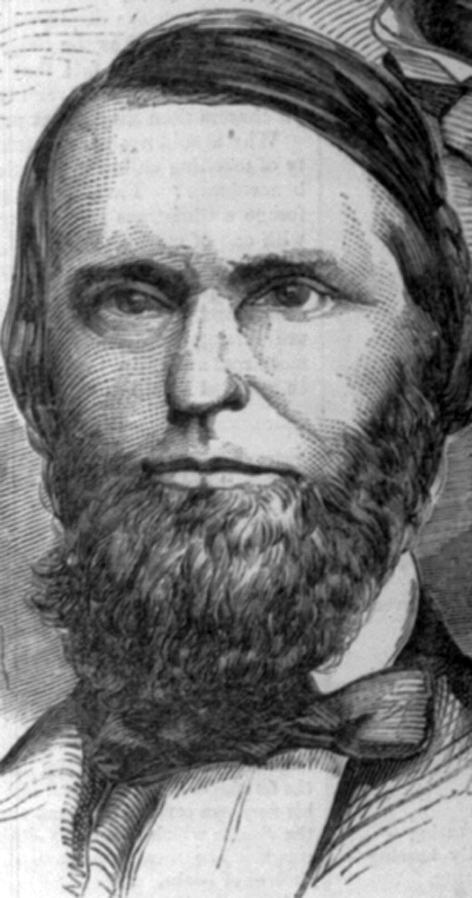
Historical · U.S. House · South Carolina · District 6
William Boyce
Former U.S. Representative · South Carolina District 6 · 1853–1861 · Democratic
William Boyce represented South Carolina's District 6 in the United States House of Representatives (1853–1861) for the Democratic party. The page below collects sourced biographical facts, term history, committee roles, and provenance for Boyce.
Bioguide ID: B000713
Key facts
- Full name
- William Boyce
- State
- South Carolina
- District
- District 6
- Party
- Democratic
- House service
- 1853–1861
- First House term
- 1853
- Status
- Left office
- Current term ends
- —
- Born
- 1818
- Bioguide ID
- B000713
- Committee assignments
- —
- Dataset version
- 1.20260606
Biographical narrative
880 words · sourced from the Wikipedia REST extract
William Boyce was an American politician and lawyer who served as a U.S. Representative for South Carolina's 6th congressional district. A member of the Democratic Party, Boyce's political career spanned several significant periods in American history, including the lead-up to the Civil War and the early years of the Confederacy. His tenure in the House of Representatives lasted from 1853 until 1860, after which he became involved in the Confederate government. Boyce's life and career reflect the complexities of American politics during a time of national division.
Early life and career
William Boyce was born on October 24, 1818, in Charleston, South Carolina, to Robert Boyce and Lydia (née Waters) Boyce. He was connected to notable figures in the region, being the nephew of industrialist Ker Boyce. His early education took place at the University of South Carolina and the University of Virginia, where he pursued studies that would prepare him for a career in law. After completing his education, Boyce read law and gained admission to the bar in 1839. He began his legal practice in Winnsboro, South Carolina, where he established himself as a prominent lawyer.
Throughout his life, Boyce was a slave owner, a fact that reflects the socio-economic context of the Southern states during his lifetime. His interactions with the enslaved individuals on his property were noted by contemporaries, including John D. Smart, an African American carpenter who remarked on Boyce's kindness towards his slaves. This aspect of his life illustrates the complexities of personal relationships within the institution of slavery, which was a significant part of Southern society at the time.
Before his tenure in the U.S. House of Representatives, Boyce was active in state politics. He served as a member of the North Carolina House of Representatives in 1846 and 1847, which provided him with early experience in governance and legislative processes. His political alignment with the Democratic Party positioned him within a dominant political faction in the South, which would later influence his actions during the Civil War.
House tenure
William Boyce's congressional career began when he was elected to the United States House of Representatives, representing South Carolina's 6th district. He took office on March 4, 1853, and served until December 21, 1860. During his time in the House, Boyce was involved in various legislative matters and held the position of chairman of the Committee on Elections during the 35th Congress. His leadership role in this committee underscored his influence within the legislative body and his engagement with electoral processes.
Boyce's political views were characterized as liberal for his time, and he navigated the complexities of a nation increasingly divided over issues such as slavery and states' rights. Initially, he opposed the idea of Southern secession, reflecting a more moderate stance in a period that was becoming increasingly polarized. However, as tensions escalated and the Civil War loomed, Boyce's position evolved, leading him to resign from Congress in December 1860, shortly before South Carolina's secession from the Union.
Following his resignation, Boyce volunteered for the Confederate States Army, although his political career continued within the Confederate government. He was elected as a delegate to the Provisional Congress of the Confederate States, serving from February 8, 1861, to February 17, 1862. Subsequently, he became a member of the Confederate States House of Representatives, where he served from February 17, 1862, until March 18, 1865. His involvement in the Confederate Congress placed him at the center of the political landscape during the Civil War, where he contributed to discussions and decisions regarding the Confederate war effort.
Legislative focus and committees
During his time in the Confederate Congress, Boyce was a member of the Committee on Naval Affairs, which was responsible for overseeing naval operations and policies during the war. This committee played a crucial role in shaping the Confederate Navy's strategies and responses to Union naval blockades and military actions. Boyce's participation in this committee indicates his engagement with critical wartime issues and his efforts to support the Confederate cause.
Despite his initial opposition to secession, Boyce's later actions demonstrated a commitment to the Confederate government. In late 1864, he, along with other Confederate leaders, authored a letter advocating for the surrender of Confederate forces. This letter was met with significant resistance and was largely viewed negatively, contributing to a decline in morale among Confederate supporters. Boyce's willingness to call for surrender highlights the internal conflicts and challenges faced by Confederate politicians as the war progressed and the South's situation became increasingly dire.
After the Civil War, Boyce returned to Washington, D.C., in 1866, where he resumed his legal practice. His post-war life included a marriage to Mary Elizabeth Pearson, with whom he had two daughters. Boyce's later years were spent away from the political spotlight, and he passed away on February 3, 1890, at the age of 71. He died at his residence in Fairfax County, Virginia, and was buried at St. John's Episcopal Cemetery in Winnsboro, South Carolina.
William Boyce's life and career reflect the tumultuous period of American history during the 19th century, marked by significant political and social upheaval. His experiences as a lawyer, politician, and member of the Confederate government provide insight into the complexities of governance and personal beliefs during a time of national crisis.
Notable legislation
Sponsored and co-sponsored legislation for William Boyce is pending operator curation. The biographical narrative above carries the same provenance trail until per-bill rows are written.
Sources
- [1]https://en.wikipedia.org/wiki/William_W._BoyceWikipedia · retrieved 2026-06-06
Notable quotes
Sourced quotes for William Boyce are pending operator curation. Narrative-scope provenance remains attached below.
Sources
- [1]https://en.wikipedia.org/wiki/William_W._BoyceWikipedia · retrieved 2026-06-06
Key positions
Curated policy positions for William Boyce are pending operator review. The biographical narrative above carries the same provenance trail until per-topic positions are written.
Sources
- [1]https://en.wikipedia.org/wiki/William_W._BoyceWikipedia · retrieved 2026-06-06
Terms served
- 1853–1855U.S. House · Term 1 · Democratic
- 1855–1857U.S. House · Term 2 · Democratic
- 1857–1859U.S. House · Term 3 · Democratic
- 1859–1861U.S. House · Term 4 · Democratic
Sources & provenance
Every attributable claim above carries a per-section [N] marker that resolves to the corresponding URL below. Each entry records the upstream provider, the canonical URL, and the timestamp at which the source was retrieved by the ingest pipeline.
Key facts
- https://bioguide.congress.gov/search/bio/B000713bioguide · retrieved 2026-06-06
- https://www.govtrack.us/congress/members/401674govtrack · retrieved 2026-06-06
Biographical narrative
- https://en.wikipedia.org/wiki/William_W._Boycewikipedia · retrieved 2026-06-06
Find your representative
Every U.S. state elects representatives by district. Browse South Carolina’s delegation, the full former-representative roster, or explore the role and term length.
Related on The Candidate
- Preceded by Isaac HolmesEarlier holder of the South Carolina District 6 House seat · Democratic.Open
- Succeeded by George DarganLater holder of the South Carolina District 6 House seat · Democratic.Open
- Arthur Ravenel Jr.Former U.S. Representative · South Carolina District 1 · RepublicanOpen
- Benjamin WhittemoreFormer U.S. Representative · South Carolina District 1 · RepublicanOpen
- Clara McMillanFormer U.S. Representative · South Carolina District 1 · DemocraticOpen
- Daniel WallaceFormer U.S. Representative · South Carolina District 1 · DemocraticOpen