
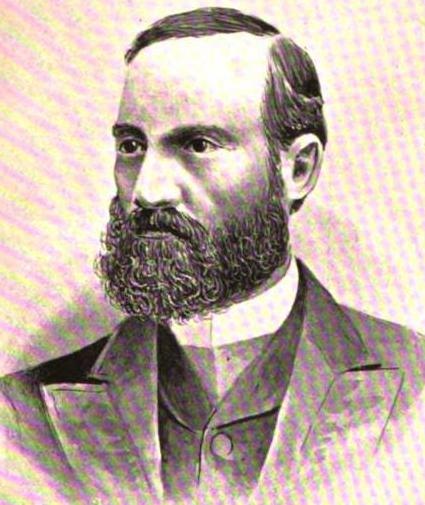
Historical · U.S. House · South Carolina · District 7
James Stokes
Former U.S. Representative · South Carolina District 7 · 1895–1903 · Democratic
James Stokes represented South Carolina's District 7 in the United States House of Representatives (1895–1903) for the Democratic party. The page below collects sourced biographical facts, term history, committee roles, and provenance for Stokes.
Bioguide ID: S000947
Key facts
- Full name
- James Stokes
- State
- South Carolina
- District
- District 7
- Party
- Democratic
- House service
- 1895–1903
- First House term
- 1895
- Status
- Left office
- Current term ends
- —
- Born
- 1853
- Bioguide ID
- S000947
- Committee assignments
- —
- Dataset version
- 1.20260606
Biographical narrative
1,076 words · sourced from the Wikipedia REST extract
James Stokes was a U.S. Representative from South Carolina, serving in the House of Representatives from 1895 until his death in 1901. A member of the Democratic Party, Stokes played a significant role in the political landscape of South Carolina during a time marked by significant social and political changes. His tenure in Congress coincided with a period when the state was undergoing transformations that would shape its political dynamics for decades.
Early life and career
James Stokes was born on December 12, 1853, near Orangeburg, South Carolina. His early education took place in local common schools, which provided him with a foundational understanding of various subjects. Stokes pursued higher education at Washington and Lee University in Lexington, Virginia, where he graduated in 1876. Following his graduation, he entered the field of education, teaching for twelve years. This experience in education likely provided him with insights into the needs and challenges of his community, which would later inform his political career.
In 1889, Stokes shifted his focus to agriculture, engaging in farming activities. His involvement in agriculture was complemented by his leadership role as president of the State Farmers' Alliance, an organization that aimed to advocate for the interests of farmers and address the economic challenges they faced. This position allowed him to connect with the agricultural community and understand the pressing issues affecting rural South Carolina.
Stokes also pursued a medical degree, graduating from Vanderbilt University in Nashville, Tennessee. His medical training would have equipped him with knowledge and skills that were valuable not only in his personal life but also in his public service, as health and welfare issues were significant concerns during his time. His diverse background in education, agriculture, and medicine provided him with a multifaceted perspective that he would carry into his political career.
In 1890, Stokes entered the political arena by serving as a member of the South Carolina Senate. This experience marked his first foray into formal politics, allowing him to gain insights into legislative processes and governance. His political involvement continued as he became a delegate to the Democratic National Convention in 1892, further solidifying his connections within the party and enhancing his political profile.
Despite his efforts, Stokes faced electoral challenges early in his political career. In 1892, he ran for a seat in the Fifty-third Congress but was defeated by George W. Murray, an African American candidate. This loss did not deter him; instead, it set the stage for his eventual success in the following election cycle.
House tenure
Stokes's political fortunes changed in 1894 when he successfully won election to the Fifty-fourth Congress. He officially began his first term on March 4, 1895. His initial term was marked by a significant event when the seat he occupied was declared vacant on June 1, 1896. This vacancy resulted from a series of political maneuvers and changes within the state, reflecting the complexities of the political landscape in South Carolina at the time.
Following the declaration of the vacancy, Stokes was elected in a special election to fill the position, reaffirming his status as a Democratic representative. His election came during a period when South Carolina had ratified a new constitution in 1895, which effectively disfranchised many African American voters. This constitutional change contributed to the establishment of a one-party Democratic state, where political contests were primarily settled in the party primaries. This political environment would persist until the civil rights movements of the 1960s, which sought to address issues of voter suppression and civil rights.
Stokes's tenure in the House of Representatives continued as he was re-elected to the Fifty-fifth, Fifty-sixth, and Fifty-seventh Congresses. His service spanned from November 3, 1896, until his death on July 6, 1901. Throughout his time in office, Stokes was involved in various legislative activities and discussions, contributing to the broader political discourse of his era. His role as a representative allowed him to advocate for the interests of his constituents and engage with national issues that affected South Carolina and the nation as a whole.
Stokes's life came to an end in Orangeburg, South Carolina, where he was interred in Sunnyside Cemetery. His passing marked the conclusion of a political career that had significant implications for his community and the state. His legacy is intertwined with the historical context of South Carolina during a transformative period in American history.
Legislative focus and committees
During his time in Congress, James Stokes focused on issues pertinent to his constituents and the broader Southern community. While specific details regarding the bills he sponsored or the committees on which he served are not extensively documented, it is understood that his legislative priorities were influenced by the socio-economic conditions of South Carolina at the time.
As a representative from a predominantly agricultural state, it is likely that Stokes was involved in discussions and legislation related to agricultural policies, rural development, and economic issues affecting farmers. His background as president of the State Farmers' Alliance would have informed his understanding of the challenges faced by the agricultural sector, including issues related to crop prices, land use, and access to resources.
Additionally, Stokes's medical training may have influenced his perspective on public health and welfare issues. During the late 19th century, health care and public health were becoming increasingly important topics in American politics, particularly as urbanization and industrialization brought new health challenges. While specific health-related initiatives or policies associated with Stokes are not detailed, it is reasonable to infer that his medical background would have contributed to his awareness of health issues affecting his constituents.
Stokes's tenure occurred during a time of significant political and social change in the United States, particularly in the South. The post-Reconstruction era was characterized by the establishment of Jim Crow laws and the disenfranchisement of African American voters, which fundamentally altered the political landscape. Stokes's role in this context was shaped by the prevailing political dynamics, which favored the Democratic Party and limited the participation of African Americans in the electoral process.
In summary, James Stokes's career as a U.S. Representative was marked by his commitment to representing the interests of his constituents in South Carolina. His background in education, agriculture, and medicine provided him with a unique perspective on the challenges facing his community. Although specific details about his legislative achievements are limited, his involvement in Congress during a transformative period in American history reflects the complexities of governance and representation in the late 19th century.
Notable legislation
Sponsored and co-sponsored legislation for James Stokes is pending operator curation. The biographical narrative above carries the same provenance trail until per-bill rows are written.
Sources
- [1]https://en.wikipedia.org/wiki/J._William_StokesWikipedia · retrieved 2026-06-06
Notable quotes
Sourced quotes for James Stokes are pending operator curation. Narrative-scope provenance remains attached below.
Sources
- [1]https://en.wikipedia.org/wiki/J._William_StokesWikipedia · retrieved 2026-06-06
Key positions
Curated policy positions for James Stokes are pending operator review. The biographical narrative above carries the same provenance trail until per-topic positions are written.
Sources
- [1]https://en.wikipedia.org/wiki/J._William_StokesWikipedia · retrieved 2026-06-06
Terms served
- 1895–1897U.S. House · Term 1 · Democratic
- 1897–1899U.S. House · Term 2 · Democratic
- 1899–1901U.S. House · Term 3 · Democratic
- 1901–1903U.S. House · Term 4 · Democratic
Sources & provenance
Every attributable claim above carries a per-section [N] marker that resolves to the corresponding URL below. Each entry records the upstream provider, the canonical URL, and the timestamp at which the source was retrieved by the ingest pipeline.
Key facts
- https://bioguide.congress.gov/search/bio/S000947bioguide · retrieved 2026-06-06
- https://www.govtrack.us/congress/members/410406govtrack · retrieved 2026-06-06
Biographical narrative
- https://en.wikipedia.org/wiki/J._William_Stokeswikipedia · retrieved 2026-06-06
Find your representative
Every U.S. state elects representatives by district. Browse South Carolina’s delegation, the full former-representative roster, or explore the role and term length.
Related on The Candidate
- Preceded by Thomas MillerEarlier holder of the South Carolina District 7 House seat · Republican.Open
- Succeeded by Edward MannLater holder of the South Carolina District 7 House seat · Democratic.Open
- Arthur Ravenel Jr.Former U.S. Representative · South Carolina District 1 · RepublicanOpen
- Benjamin WhittemoreFormer U.S. Representative · South Carolina District 1 · RepublicanOpen
- Clara McMillanFormer U.S. Representative · South Carolina District 1 · DemocraticOpen
- Daniel WallaceFormer U.S. Representative · South Carolina District 1 · DemocraticOpen