
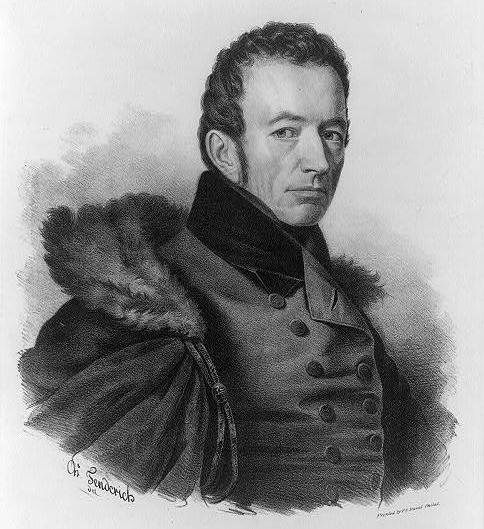
Historical · U.S. House · South Carolina · At-Large
Joel Poinsett
Former U.S. Representative · South Carolina At-Large · 1821–1827
Joel Poinsett represented South Carolina's At-Large in the United States House of Representatives (1821–1827). The page below collects sourced biographical facts, term history, committee roles, and provenance for Poinsett.
Bioguide ID: P000404
Key facts
- Full name
- Joel Poinsett
- State
- South Carolina
- District
- At-Large
- Party
- —
- House service
- 1821–1827
- First House term
- 1821
- Status
- Left office
- Current term ends
- —
- Born
- 1779
- Bioguide ID
- P000404
- Committee assignments
- —
- Dataset version
- 1.20260606
Biographical narrative
905 words · sourced from the Wikipedia REST extract
Joel Poinsett was an American medical doctor, botanist, politician, and diplomat who served as a U.S. Representative for South Carolina's at-large district from 1821 to 1825. He was a prominent figure in early 19th-century American politics and played significant roles in various capacities, including as the first U.S. Minister to Mexico and as a member of the South Carolina Legislature. His contributions to both science and politics were notable, and he is remembered for his involvement in the Nullification Crisis and his later appointment as Secretary of War.
Early life and career
Joel Roberts Poinsett was born on March 2, 1779, in Charleston, South Carolina, into a family of considerable means. His father, Elisha Poinsett, was a well-respected physician, and his mother, Katherine Ann Roberts, contributed to a nurturing environment that emphasized education and intellectual pursuits. Poinsett received a comprehensive education, initially in Connecticut and later at the University of Edinburgh, where he developed skills in languages, law, and military affairs.
After completing his education, Poinsett returned to Charleston in 1800 with aspirations of pursuing a military career. However, his father preferred that he follow a more conventional path, leading him to study law under prominent local attorney Henry William DeSaussure. Despite this, Poinsett's interests lay elsewhere, prompting him to persuade his parents to allow him to embark on an extensive tour of Europe in 1801. This journey would greatly influence his later pursuits and interests.
During his travels across Europe, Poinsett visited various countries, including France, Italy, and Switzerland. He engaged with notable figures of the time, such as Jacques Necker, the former French Finance Minister, and participated in cultural exchanges that enriched his understanding of European society. His travels were cut short in 1804 when he returned to Charleston upon learning of his father's death and his sister's illness. After a brief attempt to care for his sister, who ultimately passed away, Poinsett inherited a substantial estate, which provided him with financial stability and the means to pursue his interests further.
Poinsett's travels continued, taking him to Russia in 1806, where he interacted with the Russian court and provided insights on the cotton industry. His observations on serfdom and its implications for Russian industrialization reflected his analytical mindset and understanding of economic systems. This experience further solidified his reputation as a knowledgeable and capable individual, setting the stage for his future roles in public service.
House tenure
Joel Poinsett's political career began in earnest when he was elected to the U.S. House of Representatives, where he served from 1821 to 1825. During his tenure, he represented South Carolina's at-large district, a position that allowed him to engage with national issues and contribute to the legislative process. His time in Congress coincided with a period of significant political change in the United States, characterized by the rise of Jacksonian democracy, which emphasized the importance of the common man in governance.
Poinsett's alignment with Andrew Jackson and his administration was evident throughout his political career. He became a strong supporter of Jacksonian principles, advocating for policies that reflected the interests of the emerging democratic ethos. His involvement in the House of Representatives allowed him to address various issues pertinent to his constituents and the nation as a whole.
After serving two terms in the House, Poinsett was appointed by President John Quincy Adams as the first U.S. Minister to Mexico in 1825, a role that would further enhance his diplomatic credentials. His experiences in Congress and his understanding of international relations positioned him well for this significant appointment, where he represented U.S. interests during a transformative period in Mexican history.
Legislative focus and committees
During his time in the House of Representatives, Joel Poinsett's legislative focus encompassed a range of issues, reflecting the diverse interests of his constituents and the broader national landscape. While specific details regarding his committee assignments and individual votes are not documented, it is known that he was active in discussions surrounding economic policies, foreign relations, and domestic issues pertinent to South Carolina.
Poinsett's commitment to public service extended beyond his congressional duties. He played a crucial role in the Nullification Crisis of 1832-1833, a significant conflict in South Carolina where the state challenged federal tariffs. As a Unionist leader, Poinsett worked to maintain the integrity of the federal government during this tumultuous period, advocating for a resolution that would uphold national unity.
In addition to his political endeavors, Poinsett's contributions to science and culture were noteworthy. He co-founded the National Institute for the Promotion of Science and the Useful Arts in 1840, an organization that laid the groundwork for what would eventually become the Smithsonian Institution. His interests in botany and the natural sciences were reflected in his efforts to promote scientific inquiry and education.
Poinsett's legacy is marked by his multifaceted contributions to American society, encompassing his roles as a politician, diplomat, and advocate for science. His tenure in the House of Representatives, while relatively brief, was part of a broader career that significantly impacted both domestic and international affairs. After leaving Congress, he continued to serve in various capacities, including his appointment as the 15th U.S. Secretary of War under President Martin Van Buren, further solidifying his place in American history.
In summary, Joel Poinsett's life and career exemplify the complexities of early American politics and diplomacy. His experiences shaped his perspectives and actions, leaving a lasting imprint on the political landscape of his time.
Notable legislation
Sponsored and co-sponsored legislation for Joel Poinsett is pending operator curation. The biographical narrative above carries the same provenance trail until per-bill rows are written.
Sources
- [1]https://en.wikipedia.org/wiki/Joel_Roberts_PoinsettWikipedia · retrieved 2026-06-06
Notable quotes
Sourced quotes for Joel Poinsett are pending operator curation. Narrative-scope provenance remains attached below.
Sources
- [1]https://en.wikipedia.org/wiki/Joel_Roberts_PoinsettWikipedia · retrieved 2026-06-06
Key positions
Curated policy positions for Joel Poinsett are pending operator review. The biographical narrative above carries the same provenance trail until per-topic positions are written.
Sources
- [1]https://en.wikipedia.org/wiki/Joel_Roberts_PoinsettWikipedia · retrieved 2026-06-06
Terms served
- 1821–1823U.S. House · Term 1 · Republican
- 1823–1825U.S. House · Term 2
- 1825–1827U.S. House · Term 3
Sources & provenance
Every attributable claim above carries a per-section [N] marker that resolves to the corresponding URL below. Each entry records the upstream provider, the canonical URL, and the timestamp at which the source was retrieved by the ingest pipeline.
Key facts
- https://bioguide.congress.gov/search/bio/P000404bioguide · retrieved 2026-06-06
- https://www.govtrack.us/congress/members/408797govtrack · retrieved 2026-06-06
Biographical narrative
- https://en.wikipedia.org/wiki/Joel_Roberts_Poinsettwikipedia · retrieved 2026-06-06
Find your representative
Every U.S. state elects representatives by district. Browse South Carolina’s delegation, the full former-representative roster, or explore the role and term length.
Related on The Candidate
- Succeeded by Warren DavisLater holder of the South Carolina At-Large House seat · Nullifier.Open
- Arthur Ravenel Jr.Former U.S. Representative · South Carolina District 1 · RepublicanOpen
- Benjamin WhittemoreFormer U.S. Representative · South Carolina District 1 · RepublicanOpen
- Clara McMillanFormer U.S. Representative · South Carolina District 1 · DemocraticOpen
- Daniel WallaceFormer U.S. Representative · South Carolina District 1 · DemocraticOpen
- Representatives from South CarolinaEvery former U.S. Representative who has represented South Carolina.Open