
Historical · U.S. House · Tennessee · District 1
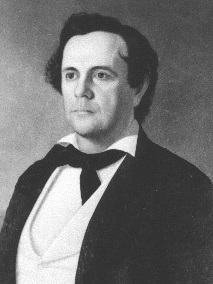
Nathaniel Taylor
Former U.S. Representative · Tennessee District 1 · 1853–1867 · Unionist
Nathaniel Taylor represented Tennessee's District 1 in the United States House of Representatives (1853–1867) for the Unionist party. The page below collects sourced biographical facts, term history, committee roles, and provenance for Taylor.
Bioguide ID: T000095
Key facts
- Full name
- Nathaniel Taylor
- State
- Tennessee
- District
- District 1
- Party
- Unionist
- House service
- 1853–1867
- First House term
- 1853
- Status
- Left office
- Current term ends
- —
- Born
- 1819
- Bioguide ID
- T000095
- Committee assignments
- —
- Dataset version
- 1.20260606
Biographical narrative
836 words · sourced from the Wikipedia REST extract
Nathaniel Taylor was an American lawyer, farmer, and politician who served as a U.S. Representative for Tennessee's 1st congressional district. A member of the Unionist Party, Taylor's congressional career spanned two non-consecutive terms during the mid-19th century, specifically from 1854 to 1855 and again from 1866 to 1867. In addition to his legislative service, he also held the position of Commissioner of Indian Affairs from 1867 to 1869. His life and career were marked by significant historical events, including the Civil War and the complexities of post-war politics in the United States.
Early life and career
Nathaniel Green Taylor was born on December 29, 1819, in Happy Valley, located in Carter County, Tennessee. He was the son of James Patton Taylor and Mary Carter, both of whom came from prominent families in the region. His paternal grandfather, General Nathaniel Taylor, was an early settler in Carter County and served as the county's first sheriff. His maternal grandfather, Landon Carter, was a veteran of the American Revolutionary War and is the namesake of Carter County.
Taylor received his early education through private instruction before attending Washington College near Jonesborough, Tennessee. He graduated from Princeton College in 1840, after which he pursued a legal career. He was admitted to the bar in 1841 and began practicing law in Elizabethton, Tennessee. Throughout his life, Taylor owned slaves, reflecting the socio-economic conditions of the time.
In 1849, Taylor made his first foray into politics by running for a seat in the U.S. House of Representatives, representing Tennessee's 1st congressional district. However, he lost the election to Democrat Andrew Johnson, who would later become the 16th Vice President and the 17th President of the United States.
Taylor's political ambitions continued, and in 1853, he was one of two Whig candidates for the same congressional seat. In a closely contested election, he lost to Democrat Brookins Campbell by a narrow margin. However, Campbell did not qualify to take his seat due to his death shortly after the election, leading to a special election in 1854 to fill the vacancy. Taylor won this special election and served in the Thirty-third Congress from March 30, 1854, to March 3, 1855.
House tenure
During his first term in Congress, Taylor focused on various issues pertinent to his constituents and the nation. However, he was not re-elected in 1855, losing to Albert Watkins, who had switched parties to run as a Democrat. Taylor attempted to regain his seat in 1857 as an "American" candidate, but this effort also resulted in a narrow defeat. He did not seek election again in 1859.
In 1860, Taylor participated in the presidential election as an elector for the Constitutional Union ticket, which sought to preserve the Union amid rising tensions leading to the Civil War. During the conflict, Taylor remained loyal to the Union, even as Tennessee seceded and joined the Confederacy. He became involved in efforts to support Southern Unionists in East Tennessee, advocating for their rights and interests.
Following the Civil War, Tennessee was readmitted to Congress in 1866. Taylor was elected again to represent the 1st district, this time as a Conservative candidate, reflecting a shift in political alliances in the post-war period. He served in the Thirty-ninth Congress from July 24, 1866, to March 3, 1867. After his term, he chose not to seek re-election.
Legislative focus and committees
During his time in Congress, Taylor's legislative focus aligned with the interests of his constituents and the broader political landscape of the era. His tenure coincided with significant national issues, including the aftermath of the Civil War and the challenges of Reconstruction. Taylor's alignment with the Unionist and later Conservative factions illustrated his adaptability to the changing political climate.
After leaving Congress, Taylor was appointed by President Andrew Johnson as Commissioner of Indian Affairs, a role he held from March 26, 1867, until his retirement in 1869. In this capacity, he was involved in negotiating treaties with Native American tribes, including the Medicine Lodge Treaty, which aimed to establish reservations for southern Plains Indians. This treaty was significant in the context of U.S. policies toward Native American tribes during a period of westward expansion and conflict.
Following his retirement from public office, Taylor returned to Tennessee, where he focused on farming and preaching in Carter County. He remained engaged in local affairs and was recognized for his contributions to the community. In 1886, when his sons Alfred and Robert Taylor were running for governor on opposing party tickets, the Prohibition Party approached Nathaniel Taylor to run as a candidate, but he declined the offer.
Nathaniel Taylor passed away on April 1, 1887, in Happy Valley, Tennessee. He was interred in the Old Taylor Cemetery, located on family land in Elizabethton. His legacy includes not only his political career but also the subsequent achievements of his children, who followed in his footsteps in public service. Taylor's life reflects the complexities of 19th-century American politics, particularly in the context of the Civil War and its aftermath.
Notable legislation
Sponsored and co-sponsored legislation for Nathaniel Taylor is pending operator curation. The biographical narrative above carries the same provenance trail until per-bill rows are written.
Sources
- [1]https://en.wikipedia.org/wiki/Nathaniel_Green_TaylorWikipedia · retrieved 2026-06-06
Notable quotes
Sourced quotes for Nathaniel Taylor are pending operator curation. Narrative-scope provenance remains attached below.
Sources
- [1]https://en.wikipedia.org/wiki/Nathaniel_Green_TaylorWikipedia · retrieved 2026-06-06
Key positions
Curated policy positions for Nathaniel Taylor are pending operator review. The biographical narrative above carries the same provenance trail until per-topic positions are written.
Sources
- [1]https://en.wikipedia.org/wiki/Nathaniel_Green_TaylorWikipedia · retrieved 2026-06-06
Terms served
- 1853–1855U.S. House · Term 1 · Whig
- 1865–1867U.S. House · Term 2 · Unionist
Sources & provenance
Every attributable claim above carries a per-section [N] marker that resolves to the corresponding URL below. Each entry records the upstream provider, the canonical URL, and the timestamp at which the source was retrieved by the ingest pipeline.
Key facts
- https://bioguide.congress.gov/search/bio/T000095bioguide · retrieved 2026-06-06
- https://www.govtrack.us/congress/members/410678govtrack · retrieved 2026-06-06
Biographical narrative
- https://en.wikipedia.org/wiki/Nathaniel_Green_Taylorwikipedia · retrieved 2026-06-06
Find your representative
Every U.S. state elects representatives by district. Browse Tennessee’s delegation, the full former-representative roster, or explore the role and term length.
Related on The Candidate
- Preceded by Thomas ArnoldEarlier holder of the Tennessee District 1 House seat · Whig.Open
- Succeeded by Roderick ButlerLater holder of the Tennessee District 1 House seat · Republican.Open
- Albert WatkinsFormer U.S. Representative · Tennessee District 1 · DemocraticOpen
- Alfred TaylorFormer U.S. Representative · Tennessee District 1 · RepublicanOpen
- Augustus PettiboneFormer U.S. Representative · Tennessee District 1 · RepublicanOpen
- Bill JenkinsFormer U.S. Representative · Tennessee District 1 · RepublicanOpen