
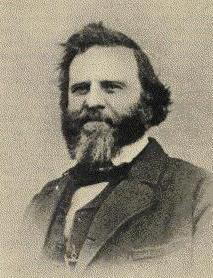
Historical · U.S. House · Tennessee · District 10
Frederick Stanton
Former U.S. Representative · Tennessee District 10 · 1845–1855 · Democratic
Frederick Stanton represented Tennessee's District 10 in the United States House of Representatives (1845–1855) for the Democratic party. The page below collects sourced biographical facts, term history, committee roles, and provenance for Stanton.
Bioguide ID: S000802
Key facts
- Full name
- Frederick Stanton
- State
- Tennessee
- District
- District 10
- Party
- Democratic
- House service
- 1845–1855
- First House term
- 1845
- Status
- Left office
- Current term ends
- —
- Born
- 1814
- Bioguide ID
- S000802
- Committee assignments
- —
- Dataset version
- 1.20260606
Biographical narrative
864 words · sourced from the Wikipedia REST extract
Frederick Stanton was an American lawyer and politician who served as a U.S. Representative for Tennessee's 10th congressional district from 1845 to 1855. A member of the Democratic Party, Stanton played a significant role in the early political landscape of the United States, particularly in the context of his service in Congress and his later involvement in the governance of the Kansas Territory. His career was marked by various leadership roles, including chairmanships of important congressional committees, and he was also active in peace advocacy in his later years.
Early life and career
Frederick Stanton was born on December 22, 1814, in Alexandria, Virginia, to Richard and Harriet Perry Stanton. His father, Richard, was a soldier in the American Revolutionary War and later became a bricklayer, a trade he imparted to his son. Frederick Stanton had several siblings, including his elder brother Richard Henry Stanton, who also pursued a political career and served as a U.S. Congressman from Kentucky. Another brother, Thomas Stanton, moved to Michigan, while their sister Jane Perry Gookin relocated to Tennessee.
Stanton's early education was influenced by a Quaker teacher named Benjamin Hallowell. He later attended Columbian University, where he focused on classical studies and graduated in 1833 at the age of 19. Following his graduation, Stanton initially pursued a career in education, teaching in Virginia and later at a college in North Carolina. Although he initially prepared for a Baptist ministry, he ultimately decided to focus on law. In 1834, he was admitted to the Tennessee bar and established a law practice in Memphis, Tennessee.
House tenure
Frederick Stanton's political career began when he was elected as a Democrat to the U.S. House of Representatives, serving from March 4, 1845, until March 3, 1855. He was elected to five consecutive terms, demonstrating a significant level of support from his constituents. His tenure in the House was marked by notable events, including an incident shortly after his first election, where he was shot in the neck by a Whig opponent, reflecting the intense political rivalries of the time.
During his time in Congress, Stanton held leadership positions that allowed him to influence key legislative areas. He served as the chairman of the Committee on Naval Affairs during the Thirty-first and Thirty-second Congresses, where he oversaw matters related to the U.S. Navy and maritime policy. In the Thirty-third Congress, he transitioned to the role of chairman of the Committee on the Judiciary, where he contributed to discussions and decisions regarding legal and constitutional issues.
Stanton's congressional career coincided with a period of significant national tension, particularly surrounding issues related to slavery and the expansion of the United States. His political activities during this time laid the groundwork for his later involvement in the governance of the Kansas Territory.
Legislative focus and committees
Throughout his congressional tenure, Frederick Stanton was involved in various legislative matters, particularly those related to naval and judicial affairs. His role as chairman of the Committee on Naval Affairs allowed him to address issues concerning the readiness and expansion of the U.S. Navy, which was crucial during a time when maritime power was increasingly recognized as vital to national security. His leadership in this committee positioned him as a key figure in shaping naval policy and addressing the needs of the military.
As chairman of the Committee on the Judiciary, Stanton engaged with complex legal issues that were pertinent to the evolving political landscape of the United States. This role required a deep understanding of constitutional law and the implications of legislative decisions on the rights and responsibilities of citizens. His work in this capacity contributed to the broader discussions surrounding civil rights and governance during a tumultuous era in American history.
After leaving Congress in 1855, Stanton continued his public service by becoming involved in the governance of the Kansas Territory. He was appointed Secretary of the Kansas Territory in 1857 and later served as acting governor during specific periods. His experience in Congress likely informed his approach to governance in Kansas, where he faced the challenges of a territory grappling with issues related to slavery and statehood.
In his later years, Stanton shifted his political alignment and joined the Republican Party at the onset of the Civil War. He opened a law office in Washington, D.C., where he practiced before the Supreme Court of the United States. Beyond his legal career, Stanton became an advocate for world peace, serving as president of the International Peace League and the National Arbitration League of America. His commitment to peace and arbitration reflected a broader concern for international relations and conflict resolution during a time when the United States was deeply divided.
Frederick Stanton's life came to an end on June 4, 1894, in Ocala, Florida. He is interred at South Lake Weir Cemetery in Florida. His contributions to American politics, particularly through his service in Congress and his later advocacy for peace, left a lasting impact on the political landscape of his time. A marble bust of Stanton is housed in the collections of the Kansas Historical Society, commemorating his role in the history of the Kansas Territory and his broader contributions to American governance.
Notable legislation
Sponsored and co-sponsored legislation for Frederick Stanton is pending operator curation. The biographical narrative above carries the same provenance trail until per-bill rows are written.
Sources
- [1]https://en.wikipedia.org/wiki/Frederick_P._StantonWikipedia · retrieved 2026-06-06
Notable quotes
Sourced quotes for Frederick Stanton are pending operator curation. Narrative-scope provenance remains attached below.
Sources
- [1]https://en.wikipedia.org/wiki/Frederick_P._StantonWikipedia · retrieved 2026-06-06
Key positions
Curated policy positions for Frederick Stanton are pending operator review. The biographical narrative above carries the same provenance trail until per-topic positions are written.
Sources
- [1]https://en.wikipedia.org/wiki/Frederick_P._StantonWikipedia · retrieved 2026-06-06
Terms served
- 1845–1847U.S. House · Term 1 · Democratic
- 1847–1849U.S. House · Term 2 · Democratic
- 1849–1851U.S. House · Term 3 · Democratic
- 1851–1853U.S. House · Term 4 · Democratic
- 1853–1855U.S. House · Term 5 · Democratic
Sources & provenance
Every attributable claim above carries a per-section [N] marker that resolves to the corresponding URL below. Each entry records the upstream provider, the canonical URL, and the timestamp at which the source was retrieved by the ingest pipeline.
Key facts
- https://bioguide.congress.gov/search/bio/S000802bioguide · retrieved 2026-06-06
- https://www.govtrack.us/congress/members/410268govtrack · retrieved 2026-06-06
Biographical narrative
- https://en.wikipedia.org/wiki/Frederick_P._Stantonwikipedia · retrieved 2026-06-06
Find your representative
Every U.S. state elects representatives by district. Browse Tennessee’s delegation, the full former-representative roster, or explore the role and term length.
Related on The Candidate
- Preceded by John AsheEarlier holder of the Tennessee District 10 House seat · Whig.Open
- Succeeded by Thomas RiversLater holder of the Tennessee District 10 House seat · American.Open
- Albert WatkinsFormer U.S. Representative · Tennessee District 1 · DemocraticOpen
- Alfred TaylorFormer U.S. Representative · Tennessee District 1 · RepublicanOpen
- Augustus PettiboneFormer U.S. Representative · Tennessee District 1 · RepublicanOpen
- Bill JenkinsFormer U.S. Representative · Tennessee District 1 · RepublicanOpen