
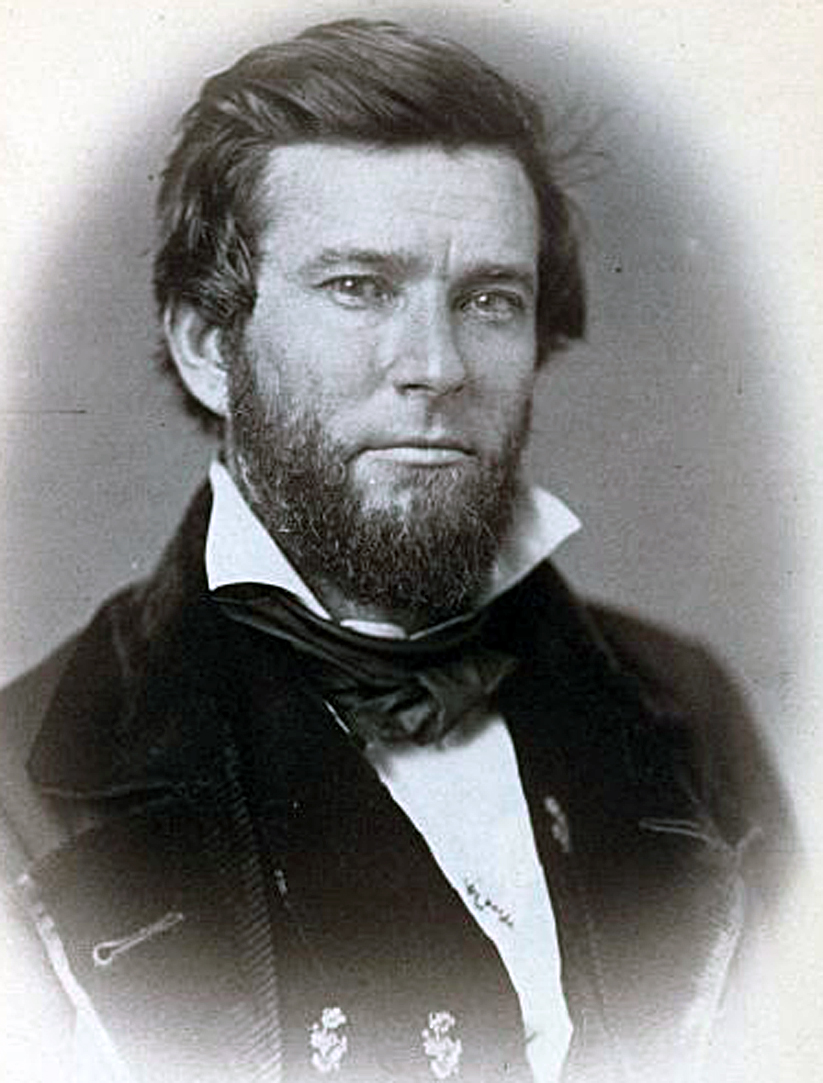
Historical · U.S. House · Tennessee · District 10
William Avery
Former U.S. Representative · Tennessee District 10 · 1857–1861 · Democratic
William Avery represented Tennessee's District 10 in the United States House of Representatives (1857–1861) for the Democratic party. The page below collects sourced biographical facts, term history, committee roles, and provenance for Avery.
Bioguide ID: A000347
Key facts
- Full name
- William Avery
- State
- Tennessee
- District
- District 10
- Party
- Democratic
- House service
- 1857–1861
- First House term
- 1857
- Status
- Left office
- Current term ends
- —
- Born
- 1819
- Bioguide ID
- A000347
- Committee assignments
- —
- Dataset version
- 1.20260606
Biographical narrative
944 words · sourced from the Wikipedia REST extract
William Avery was an American politician and lawyer who served as a U.S. Representative for Tennessee's 10th congressional district during the late 1850s and early 1860s. A member of the Democratic Party, Avery's political career unfolded against the backdrop of a nation deeply divided by issues surrounding slavery and states' rights. His tenure in the House of Representatives coincided with a tumultuous period leading up to the Civil War, and he later served as an officer in the Confederate Army. After his congressional service, Avery continued his legal career until his untimely death in 1880.
Early life and career
William Avery was born on November 11, 1819, in Hardeman County, Tennessee, to Nathan and Rebecca Jones Rivers Avery. His upbringing in Tennessee provided him with a foundation that would later influence his political and legal career. He received his early education in common schools, which were typical for the time, before graduating from Jackson College, an institution located near Columbia, Tennessee, in Maury County. This education would have equipped him with the knowledge and skills necessary for his future endeavors in law and politics.
Following his graduation, Avery pursued a career in law, studying the field and ultimately being admitted to the bar. In 1840, he relocated to Memphis, Tennessee, where he began practicing law. His legal career in Memphis would serve as a significant aspect of his professional life, allowing him to establish connections and gain prominence in the community. In December 1852, he married Emma Chastelette Jones, and together they had three children: William Thomas, Harry Edwin, and Emma Blythe. This family life would have played a role in shaping his values and perspectives as he navigated his political career.
Avery's political involvement began in earnest in 1843 when he was elected to the Tennessee House of Representatives. This early experience in state politics provided him with insight into legislative processes and governance, which would be valuable as he later transitioned to federal office. His work in the state legislature likely helped him build a network of political allies and supporters, setting the stage for his election to the U.S. Congress.
House tenure
William Avery was elected as a Democrat to the United States House of Representatives, where he served during the Thirty-fifth and Thirty-sixth Congresses from March 4, 1857, until March 3, 1861. His election to Congress came at a critical time in American history, as the nation was grappling with intense debates over slavery and the rights of states. During his time in office, Avery would have been involved in discussions and decisions that reflected the contentious political climate of the era.
As a member of the House, Avery participated in legislative activities that were pivotal to the functioning of the government. His tenure coincided with significant events leading up to the Civil War, a conflict that would ultimately reshape the United States. While specific details of his legislative actions are not provided, it can be inferred that he would have engaged with the pressing issues of his time, including those related to the expansion of slavery into new territories and the rights of Southern states.
In 1860, Avery chose not to seek renomination for a subsequent term in Congress. This decision may have been influenced by the escalating tensions surrounding the Civil War, as many politicians faced difficult choices regarding their political futures amid the national crisis. Following his congressional service, Avery's career took a different turn as he became involved in the military conflict that would define the era.
Legislative focus and committees
During his time in the House of Representatives, William Avery's legislative focus would have been shaped by the political landscape of the late 1850s. As a member of the Democratic Party, he likely aligned with the party's positions on issues such as states' rights and the expansion of slavery. However, specific details regarding the committees he served on or the legislation he championed are not available in the provided information.
Following his congressional career, Avery's involvement in the Civil War as a lieutenant colonel in the Confederate Army marked a significant chapter in his life. This military service reflected his commitment to the Southern cause during a time of national upheaval. After the war, Avery returned to Memphis, where he resumed his legal practice and continued to engage with the community.
In addition to his legal work, Avery served as a clerk of the criminal court of Shelby County from 1870 to 1874. This role would have allowed him to remain active in the legal system and contribute to the administration of justice in his community. His experiences in both the military and legal fields likely provided him with a unique perspective on the challenges facing the South in the post-war period.
William Avery's life came to an abrupt end on May 20, 1880, when he accidentally drowned in Ten Mile Bayou in Crittenden County, Arkansas, across from Memphis. His death at the age of 60 marked the conclusion of a life that had been intertwined with the political and social currents of his time. He was laid to rest at Elmwood Cemetery in Memphis, Tennessee, where his final resting place serves as a reminder of his contributions to his community and the nation.
In summary, William Avery's life and career were shaped by the complex historical context of 19th-century America. His journey from a young man in Tennessee to a U.S. Representative and Confederate officer illustrates the multifaceted nature of political life during a period of significant change. Avery's legacy is reflective of the broader struggles and transformations that characterized the United States leading up to and following the Civil War.
Notable legislation
Sponsored and co-sponsored legislation for William Avery is pending operator curation. The biographical narrative above carries the same provenance trail until per-bill rows are written.
Sources
- [1]https://en.wikipedia.org/wiki/William_T._AveryWikipedia · retrieved 2026-06-06
Notable quotes
Sourced quotes for William Avery are pending operator curation. Narrative-scope provenance remains attached below.
Sources
- [1]https://en.wikipedia.org/wiki/William_T._AveryWikipedia · retrieved 2026-06-06
Key positions
Curated policy positions for William Avery are pending operator review. The biographical narrative above carries the same provenance trail until per-topic positions are written.
Sources
- [1]https://en.wikipedia.org/wiki/William_T._AveryWikipedia · retrieved 2026-06-06
Terms served
- 1857–1859U.S. House · Term 1 · Democratic
- 1859–1861U.S. House · Term 2 · Democratic
Sources & provenance
Every attributable claim above carries a per-section [N] marker that resolves to the corresponding URL below. Each entry records the upstream provider, the canonical URL, and the timestamp at which the source was retrieved by the ingest pipeline.
Key facts
- https://bioguide.congress.gov/search/bio/A000347bioguide · retrieved 2026-06-06
- https://www.govtrack.us/congress/members/400998govtrack · retrieved 2026-06-06
Biographical narrative
- https://en.wikipedia.org/wiki/William_T._Averywikipedia · retrieved 2026-06-06
Find your representative
Every U.S. state elects representatives by district. Browse Tennessee’s delegation, the full former-representative roster, or explore the role and term length.
Related on The Candidate
- Preceded by Thomas RiversEarlier holder of the Tennessee District 10 House seat · American.Open
- Succeeded by Hiram YoungLater holder of the Tennessee District 10 House seat · Democratic.Open
- Albert WatkinsFormer U.S. Representative · Tennessee District 1 · DemocraticOpen
- Alfred TaylorFormer U.S. Representative · Tennessee District 1 · RepublicanOpen
- Augustus PettiboneFormer U.S. Representative · Tennessee District 1 · RepublicanOpen
- Bill JenkinsFormer U.S. Representative · Tennessee District 1 · RepublicanOpen