
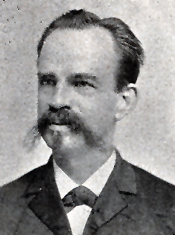
Historical · U.S. House · Tennessee · District 2
Henry Gibson
Former U.S. Representative · Tennessee District 2 · 1895–1905 · Republican
Henry Gibson represented Tennessee's District 2 in the United States House of Representatives (1895–1905) for the Republican party. The page below collects sourced biographical facts, term history, committee roles, and provenance for Gibson.
Bioguide ID: G000161
Key facts
- Full name
- Henry Gibson
- State
- Tennessee
- District
- District 2
- Party
- Republican
- House service
- 1895–1905
- First House term
- 1895
- Status
- Left office
- Current term ends
- —
- Born
- 1837
- Bioguide ID
- G000161
- Committee assignments
- —
- Dataset version
- 1.20260606
Biographical narrative
1,106 words · sourced from the Wikipedia REST extract
Henry Gibson was an American attorney and politician who served as a U.S. Representative for Tennessee's 2nd congressional district from 1895 to 1905. A member of the Republican Party, Gibson's political career was marked by his involvement in state and national politics, including his tenure as a chancery court judge and his participation in Tennessee's constitutional convention. In addition to his political endeavors, he was also a prolific writer and editor, contributing to legal literature and publishing poetry. Gibson's life spanned over a century, during which he witnessed significant changes in American society and governance.
Early life and career
Henry Gibson was born on December 24, 1837, in Kent Island, Maryland, in Queen Anne's County. He was the son of Woolman and Catherine (Carter) Gibson. Gibson's early education took place in the common schools of Kent Island and Bladensburg, Maryland. He graduated from Decker's Academy in Bladensburg in 1858 and later attended Hobart College in Geneva, New York, from which he graduated in 1862.
Following his college education, Gibson served in the Union Army during the American Civil War, specifically in the commissary department, from March 1863 until July 1865. After the war, he pursued a legal education at Albany Law School in New York, gaining admission to the bar in December 1865. He began his legal practice in Knoxville, Tennessee, in January 1866 and later moved to Jacksboro, Tennessee, in Campbell County in October 1866. In 1868, he was appointed commissioner of claims by Governor William G. Brownlow, which marked the beginning of his active involvement in public service.
Gibson's political career continued to develop as he represented Anderson and Campbell counties at the state constitutional convention in 1870, where he contributed to the creation of the current Tennessee State Constitution. He served on the legislative committee of the convention and proposed a resolution for the state to ratify the 15th Amendment to the U.S. Constitution, although this resolution did not pass. He also presented a memorial advocating for the establishment of Loudon County.
In addition to his role in the constitutional convention, Gibson was a member of the Tennessee Senate from 1871 to 1873, representing the fourth district, which included Claiborne, Grainger, Anderson, and Campbell counties. He later served in the Tennessee House of Representatives from 1875 to 1877, representing Union, Campbell, and Scott counties. After returning to Knoxville in 1876, he founded the Knoxville Republican, a campaign newspaper, and in 1882, he and a group of investors purchased the Knoxville Daily Chronicle, merging it with his newspaper to create the Knoxville Republican-Chronicle.
Gibson's career in public service included a position as a United States pension agent in Knoxville from June 1883 to June 1885. He served as chancellor of the second chancery division of Tennessee from 1886 to 1894 and published a legal text titled "Gibson’s Suits in Chancery" in 1891. Additionally, he worked as a professor of medical jurisprudence at the Tennessee Medical College from 1889 until 1906, further establishing his reputation in both legal and educational circles.
House tenure
Gibson's entry into the U.S. House of Representatives came after a period of political maneuvering within the Republican Party in Tennessee. His law partner, Leonidas C. Houk, had previously held the 2nd district seat from 1878 until his death in 1891, during which he built a significant political machine that dominated the state Republican Party. Following Houk's passing, Gibson was viewed by many as a potential successor, but he initially lacked the organizational support to mount a successful campaign.
In 1893, Gibson launched his campaign for the 2nd district seat. The political landscape had shifted, as Houk's son, John Chiles Houk, had gained notoriety but faced declining popularity due to controversies surrounding his actions in the party. The primary election between Gibson and Houk was characterized by intense rivalry and accusations, with Gibson ultimately winning the Republican nomination. He faced Houk again in the general election, where he secured victory, marking the beginning of his five terms in Congress.
During his time in the House, Gibson was involved in various legislative activities. He supported protectionist measures, including tariffs on imports, and generally advocated for prohibition. In January 1896, he introduced a bill aimed at providing pensions for survivors of the Sultana disaster, although this legislation did not pass. Gibson also voted in favor of the declaration of war with Spain in April 1898 and delivered a speech advocating for the annexation of Hawaii and the construction of the Nicaragua Canal.
Gibson's political alliances within the Republican Party were significant, particularly during the intraparty conflicts between factions led by Walter P. Brownlow and Henry Clay Evans. Gibson aligned himself with Brownlow, which influenced his political standing. In 1902, he faced a challenge for the Republican nomination from Nathan W. Hale, who was supported by the opposing faction, but Gibson successfully secured his position in the primary election. However, he chose not to seek reelection in 1904, concluding his congressional career.
Legislative focus and committees
Throughout his tenure in the U.S. House of Representatives, Henry Gibson's legislative focus reflected the political and social issues of his time. He was a proponent of protectionist economic policies, advocating for tariffs to support American industries and workers. His support for prohibition indicated his alignment with the temperance movement, which sought to reduce or eliminate alcohol consumption in society.
Gibson's legislative contributions included efforts to address veterans' issues, as evidenced by his introduction of a pension bill for survivors of the Sultana disaster. His vote in favor of the declaration of war with Spain demonstrated his support for military engagement during a pivotal moment in American history. Additionally, his advocacy for the annexation of Hawaii and the construction of the Nicaragua Canal highlighted his interest in expanding American influence and infrastructure.
While specific details about the committees on which Gibson served are not provided, it is common for members of Congress to participate in various committees that align with their legislative interests and the needs of their constituents. Gibson's background in law and his experience in state governance likely informed his contributions to discussions and decisions on legal and regulatory matters.
After leaving Congress, Gibson retired from public life and continued to engage in writing and editing. He contributed to legal literature and published poetry, showcasing his diverse interests and talents. His long life, which extended until May 25, 1938, allowed him to witness significant changes in American society, and he remained a notable figure in the history of Tennessee politics. His legacy includes his contributions to the legal field, his role in shaping state governance, and his service in the U.S. House of Representatives.
Notable legislation
Sponsored and co-sponsored legislation for Henry Gibson is pending operator curation. The biographical narrative above carries the same provenance trail until per-bill rows are written.
Sources
- [1]https://en.wikipedia.org/wiki/Henry_R._GibsonWikipedia · retrieved 2026-06-06
Notable quotes
Sourced quotes for Henry Gibson are pending operator curation. Narrative-scope provenance remains attached below.
Sources
- [1]https://en.wikipedia.org/wiki/Henry_R._GibsonWikipedia · retrieved 2026-06-06
Key positions
Curated policy positions for Henry Gibson are pending operator review. The biographical narrative above carries the same provenance trail until per-topic positions are written.
Sources
- [1]https://en.wikipedia.org/wiki/Henry_R._GibsonWikipedia · retrieved 2026-06-06
Terms served
- 1895–1897U.S. House · Term 1 · Republican
- 1897–1899U.S. House · Term 2 · Republican
- 1899–1901U.S. House · Term 3 · Republican
- 1901–1903U.S. House · Term 4 · Republican
- 1903–1905U.S. House · Term 5 · Republican
Sources & provenance
Every attributable claim above carries a per-section [N] marker that resolves to the corresponding URL below. Each entry records the upstream provider, the canonical URL, and the timestamp at which the source was retrieved by the ingest pipeline.
Key facts
- https://bioguide.congress.gov/search/bio/G000161bioguide · retrieved 2026-06-06
- https://www.govtrack.us/congress/members/404528govtrack · retrieved 2026-06-06
Biographical narrative
- https://en.wikipedia.org/wiki/Henry_R._Gibsonwikipedia · retrieved 2026-06-06
Find your representative
Every U.S. state elects representatives by district. Browse Tennessee’s delegation, the full former-representative roster, or explore the role and term length.
Related on The Candidate
- Preceded by John HoukEarlier holder of the Tennessee District 2 House seat · Republican.Open
- Succeeded by Nathan HaleLater holder of the Tennessee District 2 House seat · Republican.Open
- Albert WatkinsFormer U.S. Representative · Tennessee District 1 · DemocraticOpen
- Alfred TaylorFormer U.S. Representative · Tennessee District 1 · RepublicanOpen
- Augustus PettiboneFormer U.S. Representative · Tennessee District 1 · RepublicanOpen
- Bill JenkinsFormer U.S. Representative · Tennessee District 1 · RepublicanOpen