
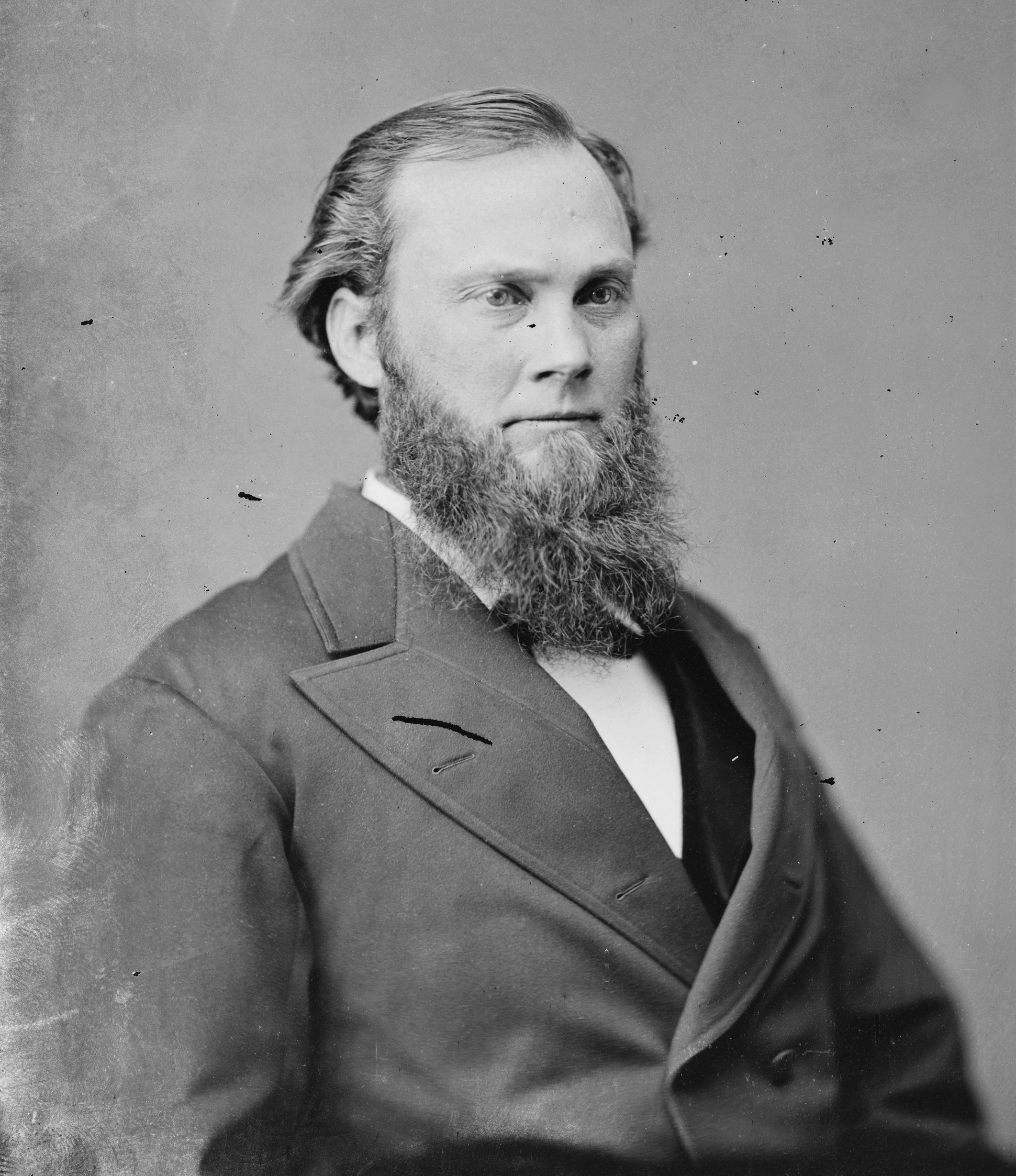
Historical · U.S. House · Tennessee · District 2
Jacob Thornburgh
Former U.S. Representative · Tennessee District 2 · 1873–1879 · Republican
Jacob Thornburgh represented Tennessee's District 2 in the United States House of Representatives (1873–1879) for the Republican party. The page below collects sourced biographical facts, term history, committee roles, and provenance for Thornburgh.
Bioguide ID: T000239
Key facts
- Full name
- Jacob Thornburgh
- State
- Tennessee
- District
- District 2
- Party
- Republican
- House service
- 1873–1879
- First House term
- 1873
- Status
- Left office
- Current term ends
- —
- Born
- 1837
- Bioguide ID
- T000239
- Committee assignments
- —
- Dataset version
- 1.20260606
Biographical narrative
1,001 words · sourced from the Wikipedia REST extract
Jacob Thornburgh was an American attorney and politician who served as a U.S. Representative for Tennessee's 2nd congressional district from 1873 to 1879. A member of the Republican Party, Thornburgh's political career was shaped by his experiences during the Civil War and his subsequent legal practice. He was born into a politically active family and maintained a commitment to public service throughout his life, engaging in both legal and philanthropic endeavors after his congressional tenure.
Early life and career
Jacob Montgomery Thornburgh was born on July 3, 1837, in New Market, Tennessee, located in Jefferson County. He was the son of Montgomery Thornburgh, a prominent state senator and attorney general, and his mother, Olivia Thornburgh. Growing up in a politically engaged family, Thornburgh was exposed to the workings of government from an early age. He pursued his education at Holston College in New Market and later studied law under the guidance of his father and Judge Robert McFarland. He was admitted to the bar in 1861, marking the beginning of his legal career in Jefferson County.
With the onset of the Civil War, Thornburgh's life took a significant turn. He initially fled to Kentucky to avoid the conflict but soon enlisted as a private in a brigade led by General George W. Morgan. In 1862, he joined the 4th Regiment Tennessee Volunteer Cavalry, where he quickly rose through the ranks to become a lieutenant colonel. Thornburgh commanded the regiment after the resignation of Colonel Richard M. Edwards in July 1863. His military service included participation in the Battle of Okolona and leading one of the first units into Mobile, Alabama, following its capture in 1865.
The Civil War had a profound impact on Thornburgh's family. His father, a staunch Unionist, was arrested by Confederate forces and died in a prison in Georgia. Thornburgh's brother, Major Thomas Tipton Thornburgh, also served in the military, eventually commanding Fort Steele before being killed in action during the Battle of Milk Creek in 1879. After the war, Thornburgh returned to Tennessee, where he was appointed attorney general of the third judicial circuit in 1866. He was subsequently elected to this position in 1868 and again in 1870. Despite the hardships his family faced during the war, Thornburgh demonstrated a conciliatory approach toward former Confederates, briefly practicing law with his former mentor, Robert McFarland, who had supported the Confederacy.
In 1872, Thornburgh's public service extended beyond state politics when he was appointed as the United States commissioner at the International Exposition held in Vienna, Austria. His early career laid a foundation for his later political endeavors, reflecting both his legal expertise and his commitment to public service.
House tenure
Thornburgh's congressional career began in the early 1870s, a period marked by significant political shifts in Tennessee. The state's Democratic-controlled legislature undertook gerrymandering efforts to diminish the electoral strength of the Republican Party, particularly in the 2nd Congressional District. In light of these changes and sensing potential defeat, the incumbent Republican congressman, Horace Maynard, opted to withdraw from the race for the 2nd District seat and instead pursued a position in the state's at-large congressional district.
In this context, Thornburgh accepted the Republican Party's nomination for the 2nd District seat. Despite the challenges posed by the redistricting, he successfully won the election, marking the beginning of his first term in the House of Representatives in 1873. His tenure included a re-election campaign in 1874, during which he faced a significant challenge from Leonidas C. Houk for the Republican nomination. The competition was intense, with both candidates claiming the nomination, which threatened to split the Republican vote in the general election. However, Senator William G. Brownlow intervened on Thornburgh's behalf, leading to Houk's withdrawal from the race. This support allowed Thornburgh to secure an easier victory in the general election.
Thornburgh's political fortunes continued in 1876 when he ran unchallenged for re-election, further solidifying his position within the party and the district. However, he chose not to seek re-election in 1878, concluding his congressional service after three terms. His time in the House was characterized by the challenges of navigating a politically divided landscape and the efforts to maintain Republican representation in a shifting electoral environment.
Legislative focus and committees
During his time in the U.S. House of Representatives, Thornburgh's legislative focus and committee assignments are not extensively documented in the available records. However, as a member of the Republican Party during a period of significant political transition, it can be inferred that his work would have aligned with the party's broader goals of reconstruction and governance in the post-Civil War era. The Republican Party at the time was primarily concerned with issues related to civil rights, economic development, and the integration of formerly Confederate states into the Union.
Following his departure from Congress in 1879, Thornburgh largely retreated from the political spotlight but remained active in legal and civic matters. He participated as a delegate to the Republican National Convention in 1880, reflecting his ongoing engagement with party politics. Upon returning to Knoxville, he established a law partnership with Charles D. McGuffey, who was related to the author of the McGuffey Readers, and later partnered with Edward Terry Sanford, who would go on to become a Supreme Court justice.
In addition to his legal career, Thornburgh engaged in philanthropic activities, including a significant donation of books to the Lawson McGhee Library in 1889, contributing to the educational resources of the community. His legacy continued through his family, with his daughter Laura Thornburgh becoming a journalist and author known for her contributions to literature and outdoor exploration, and his son John Minnis Thornburgh emerging as a notable lawyer and Republican leader in Knoxville during the early 20th century.
Jacob Thornburgh passed away on September 19, 1890, and was interred in Old Gray Cemetery in Knoxville, Tennessee. His life and career reflect the complexities of American politics during a transformative era, as well as a commitment to public service that extended beyond his time in office.
Notable legislation
Sponsored and co-sponsored legislation for Jacob Thornburgh is pending operator curation. The biographical narrative above carries the same provenance trail until per-bill rows are written.
Sources
- [1]https://en.wikipedia.org/wiki/Jacob_Montgomery_ThornburghWikipedia · retrieved 2026-06-06
Notable quotes
Sourced quotes for Jacob Thornburgh are pending operator curation. Narrative-scope provenance remains attached below.
Sources
- [1]https://en.wikipedia.org/wiki/Jacob_Montgomery_ThornburghWikipedia · retrieved 2026-06-06
Key positions
Curated policy positions for Jacob Thornburgh are pending operator review. The biographical narrative above carries the same provenance trail until per-topic positions are written.
Sources
- [1]https://en.wikipedia.org/wiki/Jacob_Montgomery_ThornburghWikipedia · retrieved 2026-06-06
Terms served
- 1873–1875U.S. House · Term 1 · Republican
- 1875–1877U.S. House · Term 2 · Republican
- 1877–1879U.S. House · Term 3 · Republican
Sources & provenance
Every attributable claim above carries a per-section [N] marker that resolves to the corresponding URL below. Each entry records the upstream provider, the canonical URL, and the timestamp at which the source was retrieved by the ingest pipeline.
Key facts
- https://bioguide.congress.gov/search/bio/T000239bioguide · retrieved 2026-06-06
- https://www.govtrack.us/congress/members/410817govtrack · retrieved 2026-06-06
Biographical narrative
- https://en.wikipedia.org/wiki/Jacob_Montgomery_Thornburghwikipedia · retrieved 2026-06-06
Find your representative
Every U.S. state elects representatives by district. Browse Tennessee’s delegation, the full former-representative roster, or explore the role and term length.
Related on The Candidate
- Preceded by William SneedEarlier holder of the Tennessee District 2 House seat · American.Open
- Succeeded by Leonidas HoukLater holder of the Tennessee District 2 House seat · Republican.Open
- Albert WatkinsFormer U.S. Representative · Tennessee District 1 · DemocraticOpen
- Alfred TaylorFormer U.S. Representative · Tennessee District 1 · RepublicanOpen
- Augustus PettiboneFormer U.S. Representative · Tennessee District 1 · RepublicanOpen
- Bill JenkinsFormer U.S. Representative · Tennessee District 1 · RepublicanOpen