
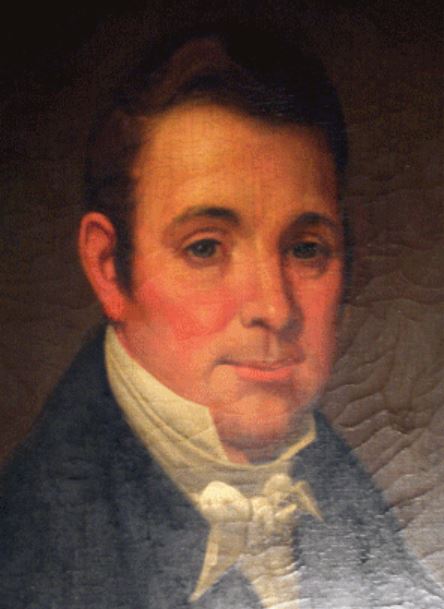
Historical · U.S. House · Tennessee · District 2
John Cocke
Former U.S. Representative · Tennessee District 2 · 1819–1827 · Jackson
John Cocke represented Tennessee's District 2 in the United States House of Representatives (1819–1827) for the Jackson party. The page below collects sourced biographical facts, term history, committee roles, and provenance for Cocke.
Bioguide ID: C000571
Key facts
- Full name
- John Cocke
- State
- Tennessee
- District
- District 2
- Party
- Jackson
- House service
- 1819–1827
- First House term
- 1819
- Status
- Left office
- Current term ends
- —
- Born
- —
- Bioguide ID
- C000571
- Committee assignments
- —
- Dataset version
- 1.20260606
Biographical narrative
1,066 words · sourced from the Wikipedia REST extract
John Cocke was an American politician and military leader who served as a U.S. Representative for Tennessee's 2nd congressional district from 1819 until 1827. A member of the Jackson party, Cocke's political career spanned several decades, during which he also held various positions in the Tennessee state legislature, including Speaker of the House. His involvement in military affairs during the Creek War further distinguished his public service. Cocke's legislative focus often revolved around issues pertinent to his constituents and the broader context of federal involvement in local matters.
Early life and career
John Cocke was born on December 28, 1772, in Brunswick, Virginia, within the Colony of Virginia. He was the eldest son of William Cocke, a frontiersman and future senator, and Mary Maclin Cocke. The Cocke family moved to what is now Tennessee when John was still a child, settling in an area that was part of Hawkins County at the time, which would later become Grainger County. This relocation was part of a broader movement of settlers into the Appalachian region, where William Cocke was actively involved in the State of Franklin movement, advocating for the establishment of a separate state.
Growing up in a frontier environment, John Cocke received an education that prepared him for a career in law. He studied law diligently and was admitted to the bar in 1793, marking the beginning of his professional career. His political journey began in earnest when he was elected to the inaugural Tennessee Senate in 1796, serving until 1801. This early involvement in state politics laid the groundwork for his later ascension to national office. In 1807, Cocke transitioned to the Tennessee House of Representatives, where he was elected Speaker in 1811, a position he would hold for two sessions.
Cocke's early political career was not without controversy. In April 1808, he was involved in a duel that resulted in the death of Knoxville merchant Thomas Dardis. This incident highlighted the volatile nature of political and social interactions during that era. Additionally, during his first term as Speaker of the House in November 1811, the Tennessee House voted to impeach his father, William Cocke, who was serving as a state supreme court justice at the time. These events showcased the complexities of familial and political relationships in early Tennessee politics.
House tenure
John Cocke's tenure in the U.S. House of Representatives began in 1819, following a series of electoral defeats in 1815 and 1817 for the seat vacated by John Sevier. After narrowly losing to William Grainger Blount on two occasions, Cocke finally secured his position in the House when Blount chose not to run for reelection in 1819. Cocke won the seat with a margin of approximately 358 votes over his opponent, James Porter. His congressional career spanned four terms, during which he served in the Sixteenth, Seventeenth, Eighteenth, and Nineteenth Congresses.
Throughout his time in Congress, Cocke was known for his opposition to federal involvement in local internal improvement projects. This stance was reflective of a broader political philosophy that favored limited federal government intervention in state and local matters. Although he did support some federal appropriations, such as those for the repair of the Cumberland Road in 1822, he was generally resistant to legislation that would empower the president to designate certain projects as having "national worth," thereby qualifying them for federal funding. His voting record included opposition to federal appropriations for various improvement projects, including enhancements to the Mississippi and Ohio rivers and the extension of the Cumberland Road.
During his congressional service, Cocke also held the position of chairman of the House Committee on Indian Affairs during the Eighteenth and Nineteenth Congresses. This role placed him at the center of discussions regarding Native American policy and relations, which were significant issues in the early 19th century as the United States expanded westward. His legislative decisions and committee work reflected the complexities of managing relations with Native American tribes, particularly in the context of land disputes and territorial expansion.
Cocke did not seek reelection in 1827, concluding his time in Congress on March 3 of that year. After leaving the House, he returned to Tennessee, where he engaged in agricultural pursuits, reflecting a common path for many politicians of his era who sought to reconnect with their roots after public service.
Legislative focus and committees
Throughout his congressional career, John Cocke's legislative focus was shaped by his background and the interests of his constituents. As a member of the Jackson party, he was aligned with the political currents of his time, which emphasized agrarian interests and skepticism toward centralized federal authority. His opposition to federal funding for internal improvements was indicative of a broader ideological stance that prioritized state and local governance over federal intervention.
Cocke's role as chairman of the House Committee on Indian Affairs was particularly significant during a period marked by intense interactions between the U.S. government and Native American tribes. His leadership in this committee involved navigating the complexities of treaties, land rights, and the implications of U.S. expansionism. The policies and decisions made during this time had lasting impacts on Native American communities and their relationships with the federal government.
In addition to his work on Indian Affairs, Cocke's legislative actions reflected a commitment to the interests of his constituents in Tennessee. His opposition to various federal improvement projects stemmed from a belief that such initiatives should be managed at the state or local level, rather than through federal oversight. This perspective resonated with many of his fellow Tennesseans, who valued autonomy and local control.
After his congressional service, Cocke continued to be active in Tennessee politics. He was elected to the Tennessee House of Representatives again in 1837 and served as Speaker during the 1837-1839 session. His return to state politics demonstrated his enduring commitment to public service and governance. In 1843, he was elected to the Tennessee Senate, where he served a single term. Notably, in 1844, he introduced legislation that established the Tennessee School for the Deaf in Knoxville, reflecting his interest in education and social welfare.
John Cocke passed away on February 16, 1854, in Rutledge, Tennessee, at the age of 81. He was interred at Rutledge's Methodist Church Cemetery. His life and career encapsulate the dynamic political landscape of early 19th-century America, marked by the challenges of governance, military service, and the complexities of expanding national interests.
Notable legislation
Sponsored and co-sponsored legislation for John Cocke is pending operator curation. The biographical narrative above carries the same provenance trail until per-bill rows are written.
Sources
- [1]https://en.wikipedia.org/wiki/John_Alexander_CockeWikipedia · retrieved 2026-06-06
Notable quotes
Sourced quotes for John Cocke are pending operator curation. Narrative-scope provenance remains attached below.
Sources
- [1]https://en.wikipedia.org/wiki/John_Alexander_CockeWikipedia · retrieved 2026-06-06
Key positions
Curated policy positions for John Cocke are pending operator review. The biographical narrative above carries the same provenance trail until per-topic positions are written.
Sources
- [1]https://en.wikipedia.org/wiki/John_Alexander_CockeWikipedia · retrieved 2026-06-06
Terms served
- 1819–1821U.S. House · Term 1 · Republican
- 1821–1823U.S. House · Term 2 · Republican
- 1823–1825U.S. House · Term 3
- 1825–1827U.S. House · Term 4 · Jackson
Sources & provenance
Every attributable claim above carries a per-section [N] marker that resolves to the corresponding URL below. Each entry records the upstream provider, the canonical URL, and the timestamp at which the source was retrieved by the ingest pipeline.
Key facts
- https://bioguide.congress.gov/search/bio/C000571bioguide · retrieved 2026-06-06
- https://www.govtrack.us/congress/members/402700govtrack · retrieved 2026-06-06
Biographical narrative
- https://en.wikipedia.org/wiki/John_Alexander_Cockewikipedia · retrieved 2026-06-06
Find your representative
Every U.S. state elects representatives by district. Browse Tennessee’s delegation, the full former-representative roster, or explore the role and term length.
Related on The Candidate
- Preceded by William BlountEarlier holder of the Tennessee District 2 House seat · Republican.Open
- Succeeded by Pryor LeaLater holder of the Tennessee District 2 House seat · Jackson.Open
- Albert WatkinsFormer U.S. Representative · Tennessee District 1 · DemocraticOpen
- Alfred TaylorFormer U.S. Representative · Tennessee District 1 · RepublicanOpen
- Augustus PettiboneFormer U.S. Representative · Tennessee District 1 · RepublicanOpen
- Bill JenkinsFormer U.S. Representative · Tennessee District 1 · RepublicanOpen