
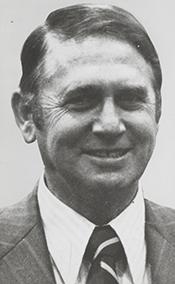
Historical · U.S. House · Tennessee · District 2
John Duncan
Former U.S. Representative · Tennessee District 2 · 1965–1988 · Republican
John Duncan represented Tennessee's District 2 in the United States House of Representatives (1965–1988) for the Republican party. The page below collects sourced biographical facts, term history, committee roles, and provenance for Duncan.
Bioguide ID: D000534
Key facts
- Full name
- John Duncan
- State
- Tennessee
- District
- District 2
- Party
- Republican
- House service
- 1965–1988
- First House term
- 1965
- Status
- Left office
- Current term ends
- —
- Born
- 1919
- Bioguide ID
- D000534
- Committee assignments
- —
- Dataset version
- 1.20260605
Biographical narrative
805 words · sourced from the Wikipedia REST extract
John J. Duncan was a prominent American attorney and politician who served as a U.S. Representative for Tennessee's 2nd congressional district from 1965 until his death in 1988. A member of the Republican Party, Duncan's political career was marked by his long tenure in Congress, where he was known for his conservative stance on various issues. Prior to his congressional service, he held several significant positions, including Mayor of Knoxville, Tennessee, and assistant attorney general of Knox County. His legacy includes not only his own political achievements but also the continuation of his family's political involvement, as his son and daughter have both pursued careers in public service.
Early life and career
John J. Duncan was born on March 24, 1919, in Huntsville, Tennessee, as the sixth of ten children in the family of Cassie (Lee) and Flem Baird Duncan. He completed his primary and secondary education in the Huntsville area, attending Huntsville High School. In 1939, he received a scholarship from Sears-Roebuck, which enabled him to enroll at the University of Tennessee. He graduated with a Bachelor of Science degree two years later, in 1941.
With the onset of World War II, Duncan enlisted in the United States Army, serving from May 1942 until December 1945. During his military service, he worked as a special agent in the Security and Intelligence Division, achieving the rank equivalent to that of a master sergeant. After the war, he pursued a legal education at Cumberland University School of Law, graduating in June 1947. Following his graduation, Duncan returned to Knoxville to begin his legal career, taking a position as assistant attorney general for Knox County.
Duncan's early political involvement began in the 1950s, when he became the state commander of the American Legion in 1954. His tenure in this role included a notable incident in which he drafted a resolution condemning a planned film showing at the University of Tennessee that featured Charlie Chaplin, who had been accused of communist sympathies. This action sparked controversy and highlighted Duncan's early engagement with political and social issues in his community.
House tenure
Duncan's congressional career began in 1965 after he won a competitive Republican primary election in Tennessee's 2nd congressional district. This election followed the death of the district's long-serving incumbent, Howard Baker Sr., with Baker's wife, Irene, serving as a caretaker for the remainder of his term. Duncan's popularity as the sitting mayor of Knoxville and the district's strong Republican leanings contributed to his victory over Democrat Willard Yarborough by a margin of just under ten percentage points. This election was particularly significant as it was one of the closest contests in the district since the 1950s, influenced by the broader political climate of the time.
Throughout his twelve terms in Congress, Duncan established himself as a prominent figure within the Republican Party. He was re-elected eleven times, often by substantial margins, and experienced only one close contest after his initial election. Notably, he ran unopposed in two elections, reflecting his strong support within his district. His tenure was characterized by his membership on the House Ways and Means Committee, where he contributed to discussions and legislation on a range of economic issues.
Duncan's political positions were consistently conservative. He supported U.S. involvement in the Vietnam War and advocated for stringent measures against antiwar demonstrators. His voting record included opposition to the Voting Rights Act of 1965, although he did support the Civil Rights Act of 1968. In 1967, he was among the first congressmen to endorse Richard Nixon's presidential candidacy, aligning himself with the emerging conservative movement within the Republican Party.
Legislative focus and committees
During his time in Congress, Duncan was involved in a variety of legislative issues, with a particular focus on economic and environmental matters. One of the most notable legislative battles he engaged in was related to the construction of the Tellico Dam on the Little Tennessee River, located within his district. This project faced significant opposition from environmentalists due to concerns over the endangered snail darter fish, which inhabited the river. Duncan's efforts to advance the dam's construction included multiple attempts to amend the Endangered Species Act, ultimately culminating in his successful insertion of a rider into the Energy and Water Development Appropriations Act. This legislative maneuver allowed for the completion of the dam, despite ongoing environmental concerns.
Duncan's long tenure in the House of Representatives concluded with his passing on June 21, 1988. His legacy continued through his family, as his son, John J. "Jimmy" Duncan Jr., succeeded him in Congress, and his daughter, Becky Duncan Massey, became a member of the Tennessee State Senate. Duncan's political career is marked by his steadfast commitment to his constituents and his influence on the political landscape of Tennessee, particularly in the context of the Republican Party's development in the region.
Notable legislation
Sponsored and co-sponsored legislation for John Duncan is pending operator curation. The biographical narrative above carries the same provenance trail until per-bill rows are written.
Sources
- [1]https://en.wikipedia.org/wiki/John_Duncan_Sr.Wikipedia · retrieved 2026-06-05
Notable quotes
Sourced quotes for John Duncan are pending operator curation. Narrative-scope provenance remains attached below.
Sources
- [1]https://en.wikipedia.org/wiki/John_Duncan_Sr.Wikipedia · retrieved 2026-06-05
Key positions
Curated policy positions for John Duncan are pending operator review. The biographical narrative above carries the same provenance trail until per-topic positions are written.
Sources
- [1]https://en.wikipedia.org/wiki/John_Duncan_Sr.Wikipedia · retrieved 2026-06-05
Terms served
- 1965–1967U.S. House · Term 1 · Republican
- 1967–1969U.S. House · Term 2 · Republican
- 1969–1971U.S. House · Term 3 · Republican
- 1971–1973U.S. House · Term 4 · Republican
- 1973–1975U.S. House · Term 5 · Republican
- 1975–1977U.S. House · Term 6 · Republican
- 1977–1979U.S. House · Term 7 · Republican
- 1979–1981U.S. House · Term 8 · Republican
- 1981–1983U.S. House · Term 9 · Republican
- 1983–1985U.S. House · Term 10 · Republican
- 1985–1987U.S. House · Term 11 · Republican
- 1987–1988U.S. House · Term 12 · Republican
Sources & provenance
Every attributable claim above carries a per-section [N] marker that resolves to the corresponding URL below. Each entry records the upstream provider, the canonical URL, and the timestamp at which the source was retrieved by the ingest pipeline.
Key facts
- https://bioguide.congress.gov/search/bio/D000534bioguide · retrieved 2026-06-05
- https://www.govtrack.us/congress/members/403641govtrack · retrieved 2026-06-05
Biographical narrative
- https://en.wikipedia.org/wiki/John_Duncan_Sr.wikipedia · retrieved 2026-06-05
Find your representative
Every U.S. state elects representatives by district. Browse Tennessee’s delegation, the full former-representative roster, or explore the role and term length.
Related on The Candidate
- Preceded by Howard BakerEarlier holder of the Tennessee District 2 House seat · Republican.Open
- Succeeded by Jimmy Duncan Jr.Later holder of the Tennessee District 2 House seat · Republican.Open
- Albert WatkinsFormer U.S. Representative · Tennessee District 1 · DemocraticOpen
- Alfred TaylorFormer U.S. Representative · Tennessee District 1 · RepublicanOpen
- Augustus PettiboneFormer U.S. Representative · Tennessee District 1 · RepublicanOpen
- Bill JenkinsFormer U.S. Representative · Tennessee District 1 · RepublicanOpen