
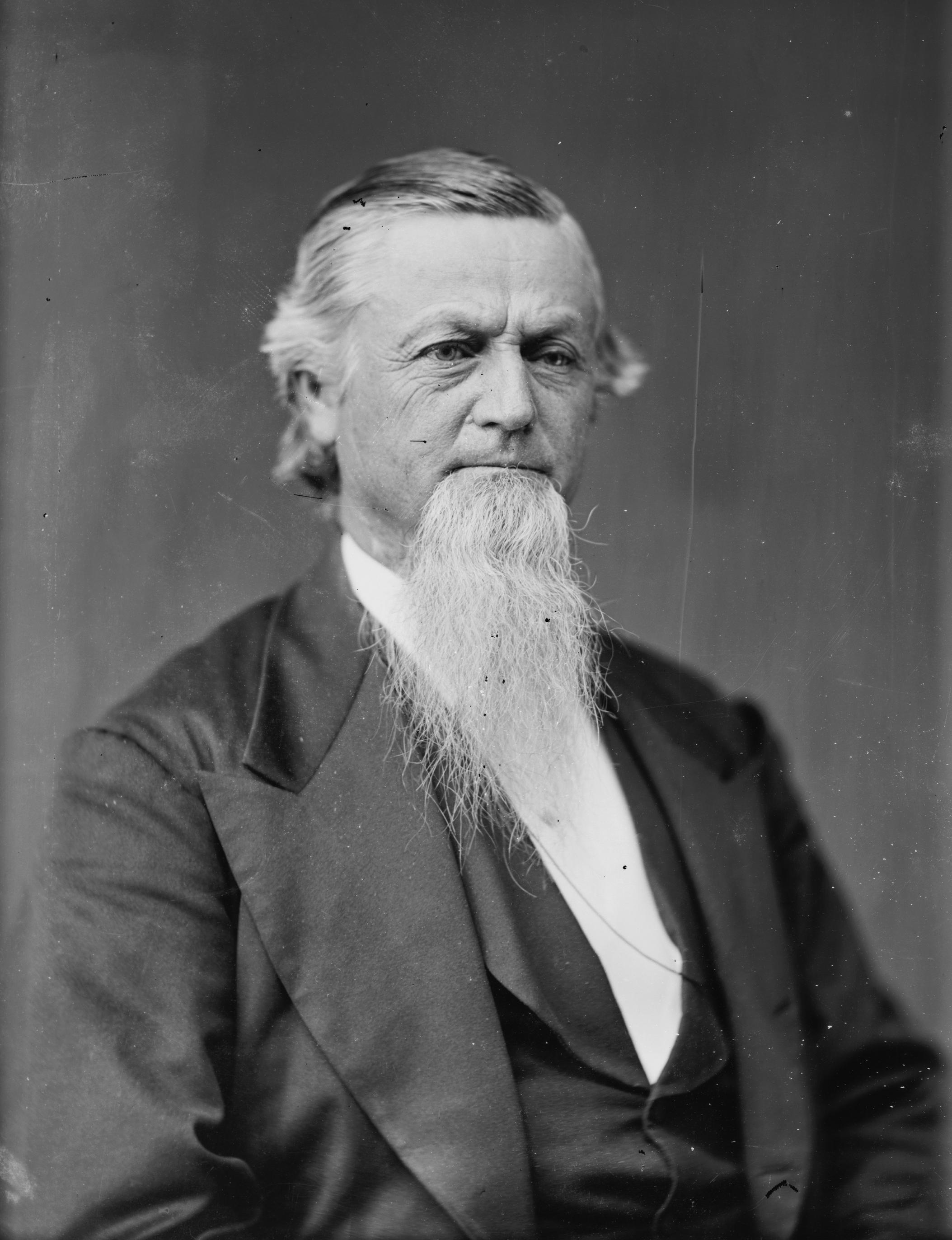
Historical · U.S. House · Tennessee · District 3
George Dibrell
Former U.S. Representative · Tennessee District 3 · 1875–1885 · Democratic
George Dibrell represented Tennessee's District 3 in the United States House of Representatives (1875–1885) for the Democratic party. The page below collects sourced biographical facts, term history, committee roles, and provenance for Dibrell.
Bioguide ID: D000301
Key facts
- Full name
- George Dibrell
- State
- Tennessee
- District
- District 3
- Party
- Democratic
- House service
- 1875–1885
- First House term
- 1875
- Status
- Left office
- Current term ends
- —
- Born
- 1822
- Bioguide ID
- D000301
- Committee assignments
- —
- Dataset version
- 1.20260606
Biographical narrative
910 words · sourced from the Wikipedia REST extract
George Dibrell was an American lawyer and politician who served as a five-term U.S. Representative for Tennessee's 3rd Congressional District. A member of the Democratic Party, he held office from 1875 until 1885. In addition to his political career, Dibrell was a general in the Confederate States Army during the American Civil War and had a background in railroad management. His life and career were marked by significant historical events and personal achievements, reflecting the complexities of 19th-century America.
Early life and career
George Dibrell was born on April 12, 1822, in Sparta, Tennessee. His family lineage traces back to Huguenot refugees from France, who settled in Virginia in the early 18th century. His grandfather was a participant in the American Revolutionary War and had familial ties to the prominent Lee family of Virginia. Dibrell's father, Anthony Dibrell, moved to White County, Tennessee, in 1811, where he held various public offices, including circuit court clerk, state legislator, and state treasurer. This familial background provided Dibrell with a foundation in both public service and the legal profession.
During his youth, Dibrell worked on his father's farm and gained practical experience by traveling alone to Virginia and Mississippi with livestock at the age of 15. His formal education was limited, consisting of local schooling during the winter months and a brief period at the University of Tennessee at Knoxville when he was 16 years old. In 1842, he married Mary Elizabeth Leftwich, a fellow Sparta native who was educated at the Nashville Female Academy. The couple became active members of the Southern Methodist Church, where Mary taught Sunday school. They had eight children together, beginning their family shortly after their marriage.
Dibrell pursued a legal career, studying law and gaining admission to the bar in 1843. He established a legal practice while also engaging in agricultural and mercantile activities. His early career included serving as the clerk of the local branch of the Bank of Tennessee in Sparta. He held positions as a justice of the peace and county clerk for White County, which further solidified his standing in the community. By 1850, Dibrell had accumulated a modest estate valued at $500, which grew significantly to $27,000 by 1860, making him one of the wealthiest landowners in the county. His wealth was partly derived from his ownership of enslaved individuals, as documented in census records from that period.
House tenure
Dibrell's political career began in earnest when he was elected to the United States House of Representatives, where he served five consecutive terms starting in 1875. His tenure in Congress coincided with a period of significant transformation in the United States, particularly in the aftermath of the Civil War and during the Reconstruction era. As a member of the Democratic Party, Dibrell represented the interests of his constituents in Tennessee's 3rd Congressional District, which included a diverse population with varying needs and concerns.
Throughout his time in the House, Dibrell participated in various legislative activities and debates, contributing to the shaping of policies that affected his state and the nation. His experience as a lawyer and his background in local governance provided him with valuable insights into the legislative process. Although specific details about the bills he sponsored or voted on are not available, his role as a representative would have involved addressing issues pertinent to his constituents, including economic recovery, civil rights, and infrastructure development.
Dibrell's service in the House lasted until March 3, 1885, when he completed his final term. His departure from Congress marked the end of a significant chapter in his political career, but he remained a notable figure in Tennessee politics and continued to engage with community affairs.
Legislative focus and committees
During his time in the House of Representatives, George Dibrell's legislative focus would have reflected the priorities and concerns of his constituents in Tennessee. While specific committee assignments and legislative initiatives are not detailed, it can be inferred that his background as a lawyer and his experience in local governance would have influenced his approach to various issues. Given the historical context of his tenure, it is likely that he addressed matters related to the post-war economy, civil rights, and infrastructure development, which were critical topics during the Reconstruction era.
Dibrell's military service as a general in the Confederate Army also shaped his perspective on issues related to veterans and military affairs. His experiences during the Civil War, including his rise through the ranks and his involvement in significant battles, would have provided him with insights into the needs of veterans returning to civilian life. This background may have informed his legislative priorities and advocacy for policies that supported veterans and their families.
In addition to his legislative work, Dibrell's involvement in the railroad industry as an executive would have further influenced his focus on infrastructure development. Railroads were vital to the economic growth of the United States during the 19th century, and as a representative from Tennessee, he would have been attuned to the importance of transportation and commerce in his district.
After leaving Congress, Dibrell continued to be active in public life until his death on May 9, 1888. His contributions to Tennessee and the nation during a pivotal time in American history remain part of the broader narrative of the post-Civil War era. Through his legal career, military service, and political endeavors, George Dibrell exemplified the complexities and challenges faced by individuals navigating the changing landscape of 19th-century America.
Notable legislation
Sponsored and co-sponsored legislation for George Dibrell is pending operator curation. The biographical narrative above carries the same provenance trail until per-bill rows are written.
Sources
- [1]https://en.wikipedia.org/wiki/George_G._DibrellWikipedia · retrieved 2026-06-06
Notable quotes
Sourced quotes for George Dibrell are pending operator curation. Narrative-scope provenance remains attached below.
Sources
- [1]https://en.wikipedia.org/wiki/George_G._DibrellWikipedia · retrieved 2026-06-06
Key positions
Curated policy positions for George Dibrell are pending operator review. The biographical narrative above carries the same provenance trail until per-topic positions are written.
Sources
- [1]https://en.wikipedia.org/wiki/George_G._DibrellWikipedia · retrieved 2026-06-06
Terms served
- 1875–1877U.S. House · Term 1 · Democratic
- 1877–1879U.S. House · Term 2 · Democratic
- 1879–1881U.S. House · Term 3 · Democratic
- 1881–1883U.S. House · Term 4 · Democratic
- 1883–1885U.S. House · Term 5 · Democratic
Sources & provenance
Every attributable claim above carries a per-section [N] marker that resolves to the corresponding URL below. Each entry records the upstream provider, the canonical URL, and the timestamp at which the source was retrieved by the ingest pipeline.
Key facts
- https://bioguide.congress.gov/search/bio/D000301bioguide · retrieved 2026-06-06
- https://www.govtrack.us/congress/members/403423govtrack · retrieved 2026-06-06
Biographical narrative
- https://en.wikipedia.org/wiki/George_G._Dibrellwikipedia · retrieved 2026-06-06
Find your representative
Every U.S. state elects representatives by district. Browse Tennessee’s delegation, the full former-representative roster, or explore the role and term length.
Related on The Candidate
- Preceded by William CrutchfieldEarlier holder of the Tennessee District 3 House seat · Republican.Open
- Succeeded by John NealLater holder of the Tennessee District 3 House seat · Democratic.Open
- Albert WatkinsFormer U.S. Representative · Tennessee District 1 · DemocraticOpen
- Alfred TaylorFormer U.S. Representative · Tennessee District 1 · RepublicanOpen
- Augustus PettiboneFormer U.S. Representative · Tennessee District 1 · RepublicanOpen
- Bill JenkinsFormer U.S. Representative · Tennessee District 1 · RepublicanOpen