
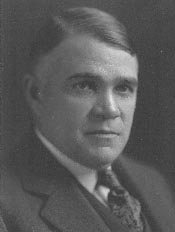
Historical · U.S. House · Tennessee · District 3
Joseph Brown
Former U.S. Representative · Tennessee District 3 · 1921–1923 · Republican
Joseph Brown represented Tennessee's District 3 in the United States House of Representatives (1921–1923) for the Republican party. The page below collects sourced biographical facts, term history, committee roles, and provenance for Brown.
Bioguide ID: B000935
Key facts
- Full name
- Joseph Brown
- State
- Tennessee
- District
- District 3
- Party
- Republican
- House service
- 1921–1923
- First House term
- 1921
- Status
- Left office
- Current term ends
- —
- Born
- 1880
- Bioguide ID
- B000935
- Committee assignments
- —
- Dataset version
- 1.20260606
Biographical narrative
856 words · sourced from the Wikipedia REST extract
Joseph Brown was a U.S. Representative from Tennessee, serving in the 3rd congressional district as a member of the Republican Party. His congressional career was marked by a single term in the early 1920s, during which he participated in the Sixty-seventh Congress. Born in 1880, Brown's early life and subsequent legal career laid the foundation for his entry into politics. After leaving Congress, he continued to be active in the Republican Party and in his legal practice until his death in 1939.
Early life and career
Joseph Edgar Brown was born on February 11, 1880, in Jasper, Tennessee. He was the son of Foster Vincent Brown and Lula (Farrior) Brown. Growing up in a small town, Brown's early education took place at the Baylor School in Chattanooga, a well-regarded institution that provided him with a solid academic foundation. Following his secondary education, he pursued higher education at Cumberland University in Lebanon, Tennessee, where he graduated in 1902. At Cumberland, he studied law at the Cumberland School of Law, which equipped him with the necessary legal knowledge and skills to embark on a career in law.
After completing his studies, Brown was admitted to the Tennessee bar in 1904, allowing him to begin practicing law in his hometown of Jasper. His legal career commenced in a small-town setting, where he likely dealt with a variety of cases that would have provided him with valuable experience. In 1907, he relocated to Chattanooga, Tennessee, where he continued his legal practice. This move to a larger city likely expanded his professional opportunities and connections, facilitating his eventual entry into the political arena.
In addition to his professional pursuits, Brown's personal life included his marriage to Hester Jefferson McClain. The couple's life together in Chattanooga would have been influenced by the social and political dynamics of the time, particularly as Brown became more involved in public service and politics.
House tenure
Joseph Brown's political career took a significant turn when he was elected as a Republican to the Sixty-seventh Congress, which spanned from March 4, 1921, to March 3, 1923. Representing Tennessee's 3rd congressional district, he entered Congress during a period of significant change and development in the United States. His election to the House of Representatives marked a notable achievement, as he became a part of the legislative body responsible for shaping national policy and addressing the issues facing the country.
During his time in Congress, Brown participated in various legislative activities and discussions, contributing to the work of the House. However, his tenure was relatively brief, as he did not seek renomination in 1922. The reasons for his decision not to run again are not detailed in the available records, but it is not uncommon for politicians to step back from public office for various personal or political reasons.
After concluding his term in the House, Brown returned to Chattanooga, where he resumed his legal practice. His experience in Congress likely enriched his understanding of the law and governance, which he could apply in his legal work. Additionally, he took on a leadership role within the Republican Party, serving as the chairman of the Republican State Executive Committee from 1922 to 1924. This position allowed him to influence party strategy and organization in Tennessee during a time when the Republican Party was working to establish its presence in the region.
Legislative focus and committees
While specific details about Joseph Brown's legislative focus and committee assignments during his time in Congress are not provided in the available records, it can be inferred that, as a member of the Republican Party during the early 1920s, he would have engaged with the key issues of the time. The early 1920s were characterized by post-World War I recovery, economic changes, and evolving social dynamics in the United States. As a representative from Tennessee, Brown would have been particularly attuned to the interests and concerns of his constituents, which may have included agricultural issues, economic development, and veterans' affairs.
The broader context of his congressional service included a Republican majority in the House, which influenced the legislative agenda. Brown's participation in this environment would have required him to navigate party politics and collaborate with colleagues on various initiatives. His legal background may have informed his approach to legislative matters, as he would have been familiar with the intricacies of law and policy.
After leaving Congress, Brown remained active in the political landscape, including his role as a delegate to the Republican National Convention in 1924. This involvement underscored his continued commitment to the party and its principles, as well as his desire to contribute to national political discourse.
Joseph Brown passed away on June 13, 1939, in Charleston, Tennessee, at the age of 59. His contributions to public service and the legal profession left a lasting impact on his community and the state of Tennessee. He was interred in Forest Hills Cemetery, where he rests alongside other notable figures from the region. Brown's life and career reflect the journey of a local lawyer who transitioned into a role of national significance, embodying the complexities and challenges of early 20th-century American politics.
Notable legislation
Sponsored and co-sponsored legislation for Joseph Brown is pending operator curation. The biographical narrative above carries the same provenance trail until per-bill rows are written.
Sources
- [1]https://en.wikipedia.org/wiki/Joe_Brown_(politician)Wikipedia · retrieved 2026-06-06
Notable quotes
Sourced quotes for Joseph Brown are pending operator curation. Narrative-scope provenance remains attached below.
Sources
- [1]https://en.wikipedia.org/wiki/Joe_Brown_(politician)Wikipedia · retrieved 2026-06-06
Key positions
Curated policy positions for Joseph Brown are pending operator review. The biographical narrative above carries the same provenance trail until per-topic positions are written.
Sources
- [1]https://en.wikipedia.org/wiki/Joe_Brown_(politician)Wikipedia · retrieved 2026-06-06
Terms served
- 1921–1923U.S. House · Term 1 · Republican
Sources & provenance
Every attributable claim above carries a per-section [N] marker that resolves to the corresponding URL below. Each entry records the upstream provider, the canonical URL, and the timestamp at which the source was retrieved by the ingest pipeline.
Key facts
- https://bioguide.congress.gov/search/bio/B000935bioguide · retrieved 2026-06-06
- https://www.govtrack.us/congress/members/401889govtrack · retrieved 2026-06-06
Biographical narrative
- https://en.wikipedia.org/wiki/Joe_Brown_(politician)wikipedia · retrieved 2026-06-06
Find your representative
Every U.S. state elects representatives by district. Browse Tennessee’s delegation, the full former-representative roster, or explore the role and term length.
Related on The Candidate
- Preceded by John MoonEarlier holder of the Tennessee District 3 House seat · Democratic.Open
- Succeeded by Samuel McReynoldsLater holder of the Tennessee District 3 House seat · Democratic.Open
- Albert WatkinsFormer U.S. Representative · Tennessee District 1 · DemocraticOpen
- Alfred TaylorFormer U.S. Representative · Tennessee District 1 · RepublicanOpen
- Augustus PettiboneFormer U.S. Representative · Tennessee District 1 · RepublicanOpen
- Bill JenkinsFormer U.S. Representative · Tennessee District 1 · RepublicanOpen