
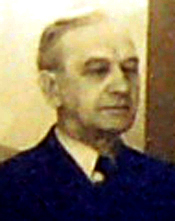
Historical · U.S. House · Tennessee · District 6
Clarence Turner
Former U.S. Representative · Tennessee District 6 · 1921–1941 · Democratic
Clarence Turner represented Tennessee's District 6 in the United States House of Representatives (1921–1941) for the Democratic party. The page below collects sourced biographical facts, term history, committee roles, and provenance for Turner.
Bioguide ID: T000417
Key facts
- Full name
- Clarence Turner
- State
- Tennessee
- District
- District 6
- Party
- Democratic
- House service
- 1921–1941
- First House term
- 1921
- Status
- Left office
- Current term ends
- —
- Born
- 1866
- Bioguide ID
- T000417
- Committee assignments
- —
- Dataset version
- 1.20260605
Biographical narrative
917 words · sourced from the Wikipedia REST extract
Clarence Turner was an American politician who served as a member of the United States House of Representatives from Tennessee. A member of the Democratic Party, Turner represented the 6th congressional district of Tennessee during his tenure in Congress. His political career spanned multiple terms, beginning in the early 1920s and concluding with his death in 1939. Turner’s life and career were marked by his deep roots in Tennessee, his involvement in local governance, and his contributions to the legislative process during a transformative period in American history.
Early life and career
Clarence Wyly Turner was born on October 22, 1866, in a rural setting near Clydeton, located in Humphreys County, Tennessee. He was the son of Charles N. Turner and Hettie B. Turner. Growing up on a farm, Turner experienced the challenges and opportunities of rural life, which would later inform his political perspectives and priorities. His early education was conducted in public schools, supplemented by attendance at a preparatory school in Edgewood, Dickson County, Tennessee. He furthered his education at the National Normal Institute in Lebanon, Ohio, where he laid the groundwork for his future career in law and politics.
In 1904, Turner graduated from the law department of the Northern Indiana Normal School at Valparaiso, Indiana. That same year, he was admitted to the bar, allowing him to commence his legal practice in Waverly, Tennessee, which is also located in Humphreys County. His legal career was complemented by his role as the editor of the Waverly Sentinel, a local newspaper that likely provided him with a platform to express his views and engage with the community on various issues.
Turner’s political involvement began to take shape as he became actively engaged in local Democratic Party politics. He served as the chairman of the Democratic committee of Humphreys County for fifteen years, a position that underscored his leadership and commitment to the party at the local level. His political career was further enhanced by his election to the Tennessee Senate, where he served during two separate periods: initially in 1900 and 1901, and later from 1909 to 1912. These experiences in state governance provided him with valuable insights into legislative processes and constituent needs.
In 1920, Turner was a delegate to the Democratic National Committee, participating in the national political landscape during a pivotal election year. That same year, he was elected mayor of Waverly, Tennessee, and also served as the city attorney. His roles in local government allowed him to develop a strong connection with his constituents and gain practical experience in public administration.
House tenure
Clarence Turner’s congressional career began when he was elected to the Sixty-seventh Congress to fill a vacancy caused by the death of Lemuel P. Padgett. He took office on November 7, 1922, representing Tennessee's 7th congressional district. However, his time in this role was brief, as he did not seek re-election for the Sixty-eighth Congress and returned to his previous pursuits in Waverly.
Turner’s political journey did not end there. He re-entered public service and was elected as the county judge of Humphreys County, a position he held from 1924 to 1933. This role further solidified his reputation as a dedicated public servant and allowed him to continue influencing local governance.
In 1933, Turner was elected to represent Tennessee's 6th congressional district in the Seventy-third Congress, marking the beginning of a more extended tenure in the U.S. House of Representatives. He was re-elected to three subsequent Congresses, serving until his death in Washington, D.C., on March 23, 1939. Throughout his time in Congress, Turner was involved in various legislative initiatives and contributed to the discussions and decisions that shaped national policy during a time of significant economic and social change in the United States.
Legislative focus and committees
During his tenure in the U.S. House of Representatives, Clarence Turner was known for his commitment to the Democratic Party and its platform, which included a focus on social welfare, economic recovery, and infrastructure development. The 1930s were marked by the Great Depression, and Turner’s legislative efforts were likely influenced by the pressing needs of his constituents, many of whom faced economic hardships.
While specific details regarding the bills he sponsored or supported are not provided, it is reasonable to infer that Turner participated in discussions related to New Deal legislation, which aimed to provide relief and recovery for those affected by the economic downturn. His background in local governance and law would have equipped him with the knowledge and skills necessary to address the challenges faced by his district and the nation.
Turner’s involvement in various committees during his time in Congress would have further shaped his legislative focus. Committees play a crucial role in the legislative process, allowing members to specialize in specific areas of policy and influence the development of legislation. Although the exact committees he served on are not detailed, it is common for representatives to be involved in committees related to agriculture, commerce, or local government issues, especially given his background and the interests of his constituents.
Clarence Turner’s legacy is marked by his dedication to public service and his contributions to the legislative process during a critical period in American history. His life journey, from a farm in Tennessee to the halls of Congress, reflects the opportunities and challenges of American democracy. After his death, Turner was interred in Marable Cemetery in Waverly, Tennessee, leaving behind a legacy of public service that continues to be remembered in his community and beyond.
Notable legislation
Sponsored and co-sponsored legislation for Clarence Turner is pending operator curation. The biographical narrative above carries the same provenance trail until per-bill rows are written.
Sources
- [1]https://en.wikipedia.org/wiki/Clarence_W._TurnerWikipedia · retrieved 2026-06-05
Notable quotes
Sourced quotes for Clarence Turner are pending operator curation. Narrative-scope provenance remains attached below.
Sources
- [1]https://en.wikipedia.org/wiki/Clarence_W._TurnerWikipedia · retrieved 2026-06-05
Key positions
Curated policy positions for Clarence Turner are pending operator review. The biographical narrative above carries the same provenance trail until per-topic positions are written.
Sources
- [1]https://en.wikipedia.org/wiki/Clarence_W._TurnerWikipedia · retrieved 2026-06-05
Terms served
- 1921–1923U.S. House · Term 1 · Democratic
- 1933–1935U.S. House · Term 2 · Democratic
- 1935–1937U.S. House · Term 3 · Democratic
- 1937–1939U.S. House · Term 4 · Democratic
- 1939–1941U.S. House · Term 5 · Democratic
Sources & provenance
Every attributable claim above carries a per-section [N] marker that resolves to the corresponding URL below. Each entry records the upstream provider, the canonical URL, and the timestamp at which the source was retrieved by the ingest pipeline.
Key facts
- https://bioguide.congress.gov/search/bio/T000417bioguide · retrieved 2026-06-05
- https://www.govtrack.us/congress/members/410986govtrack · retrieved 2026-06-05
Biographical narrative
- https://en.wikipedia.org/wiki/Clarence_W._Turnerwikipedia · retrieved 2026-06-05
Find your representative
Every U.S. state elects representatives by district. Browse Tennessee’s delegation, the full former-representative roster, or explore the role and term length.
Related on The Candidate
- Preceded by John GainesEarlier holder of the Tennessee District 6 House seat · Democratic.Open
- Succeeded by James SuttonLater holder of the Tennessee District 6 House seat · Democratic.Open
- Albert WatkinsFormer U.S. Representative · Tennessee District 1 · DemocraticOpen
- Alfred TaylorFormer U.S. Representative · Tennessee District 1 · RepublicanOpen
- Augustus PettiboneFormer U.S. Representative · Tennessee District 1 · RepublicanOpen
- Bill JenkinsFormer U.S. Representative · Tennessee District 1 · RepublicanOpen