
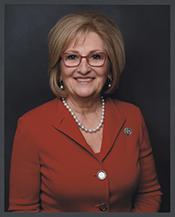
Historical · U.S. House · Tennessee · District 6
Diane Black
Former U.S. Representative · Tennessee District 6 · 2011–2019 · Republican
Diane Black represented Tennessee's District 6 in the United States House of Representatives (2011–2019) for the Republican party. The page below collects sourced biographical facts, term history, committee roles, and provenance for Black.
Bioguide ID: B001273
Key facts
- Full name
- Diane Black
- State
- Tennessee
- District
- District 6
- Party
- Republican
- House service
- 2011–2019
- First House term
- 2011
- Status
- Left office
- Current term ends
- —
- Born
- 1951
- Bioguide ID
- B001273
- Committee assignments
- —
- Dataset version
- 1.20260605
Biographical narrative
1,028 words · sourced from the Wikipedia REST extract
Diane Lynn Black is a former American politician who served as a U.S. Representative for Tennessee's 6th congressional district from January 3, 2011, until January 3, 2019. A member of the Republican Party, Black represented a district that encompasses various suburban and rural areas located east of Nashville. Before her tenure in the U.S. House of Representatives, she held positions in the Tennessee legislature, where she was known for her leadership roles and legislative initiatives. Following her time in Congress, Black sought the Republican nomination for the governorship of Tennessee in 2018 but was unsuccessful.
Early life and career
Diane Lynn Warren was born on January 16, 1951, in Baltimore, Maryland, to Joseph and Audrey Warren. Growing up in a family that valued education, she became the first member of her family to earn a college degree. After completing her secondary education at Andover High School in Linthicum, Maryland, in 1969, she pursued a career in nursing. Black earned an associate's degree in nursing from Anne Arundel Community College in Arnold, Maryland, before furthering her education at Belmont University, where she obtained a bachelor's degree in nursing in 1991.
Before entering politics, Black worked as a registered nurse, a profession that underscored her commitment to healthcare and community service. Her experience in the medical field provided her with insights into health-related issues, which would later influence her legislative priorities. In addition to her nursing career, she served as an educator at Volunteer State Community College in Gallatin, Tennessee, where she contributed to the education of future healthcare professionals.
Black's political career began in 1998 when she ran for a seat in the Tennessee House of Representatives. She served in this capacity for six years, during which she gained valuable experience in state governance. Her tenure in the state legislature laid the groundwork for her subsequent election to the Tennessee Senate in 2004. Throughout her time in the Tennessee legislature, Black held various leadership positions, including serving as the Assistant Floor Leader of the Senate Republican Caucus and as the Vice-Chairwoman of the Senate General Welfare, Health, and Human Resources Committee. In 2006, she was elected as the Chairwoman of the Tennessee Senate Republican Caucus, further solidifying her leadership role within the party.
House tenure
Diane Black's entry into the U.S. House of Representatives came after she successfully won the Republican primary for Tennessee's 6th congressional district in August 2010. This election was significant as she succeeded Bart Gordon, who chose not to seek re-election. Black faced notable competition in the primary, including former Rutherford County GOP chairwoman Lou Ann Zelenik and State Senator Jim Tracy. Ultimately, she emerged victorious with approximately 31% of the vote, narrowly defeating her opponents, who each garnered around 30%. Following her primary win, Black faced Democratic nominee Brett Carter in the general election, which was widely regarded as a safe seat for Republicans. In November 2010, she won the election with a substantial majority, securing 67% of the vote.
During her time in the House, Black was recognized as one of the few female U.S. Representatives who preferred the title "congressman" alongside her colleagues Marsha Blackburn and Cynthia Lummis. Throughout her four terms in Congress, which spanned from 2011 to 2019, Black was actively involved in various legislative initiatives and committee assignments. She served on several important committees, including the Committee on the Budget, the Committee on Ways and Means, and the Subcommittee on Human Resources. Additionally, she was a member of the Tea Party Caucus and the Republican Study Committee, reflecting her alignment with conservative principles.
In 2012, Black played a prominent role as a surrogate for Republican presidential candidate Mitt Romney, participating in campaign events and media appearances to support his candidacy. Her involvement in national politics during this time underscored her commitment to the Republican Party and its platform. In October 2013, she introduced the Student and Family Tax Simplification Act, a legislative proposal aimed at amending the Internal Revenue Code to streamline education tax incentives. This bill sought to expand the American Opportunity Tax Credit, providing financial support to students and families pursuing higher education.
Black's legislative focus included a range of issues, particularly those related to healthcare, taxation, and government regulation. In October 2015, she was appointed to the Select Investigative Panel on Planned Parenthood, where she contributed to discussions surrounding healthcare services and funding. Her membership in the U.S.-Japan Caucus also indicated her interest in international relations and trade.
Legislative focus and committees
Throughout her congressional career, Diane Black maintained a consistent focus on several key policy areas. Her background as a nurse informed her approach to healthcare legislation, where she often advocated for reforms aimed at improving access and affordability. Black was particularly vocal in her opposition to the Obama administration's Environmental Protection Agency (EPA) regulations, arguing that they imposed undue burdens on businesses and hindered economic growth. She supported the Trump administration's efforts to repeal the Clean Power Plan, which she viewed as an overreach of federal authority.
In addition to her stance on environmental regulations, Black positioned herself as a proponent of tax reform and fiscal responsibility. Her introduction of the Student and Family Tax Simplification Act exemplified her commitment to simplifying the tax code and providing financial relief to families. Black's legislative efforts garnered endorsements from various conservative organizations and prominent figures within the Republican Party, including former Governor Sarah Palin and Governor Mitt Romney.
In 2018, Black announced her candidacy for the governorship of Tennessee, seeking to build on her experience in public service. However, her campaign faced challenges, including a reported high number of missed votes in the House as she focused on her gubernatorial bid. Ultimately, she lost the Republican primary to Bill Lee, concluding her tenure in elected office.
Diane Black's political career reflects her dedication to public service and her commitment to the values of the Republican Party. Her experience in nursing and education, combined with her legislative roles in both the state and federal government, shaped her approach to governance and policy-making. Following her departure from Congress, Black's influence in Tennessee politics remains a point of interest for observers of the state's political landscape.
Notable legislation
Sponsored and co-sponsored legislation for Diane Black is pending operator curation. The biographical narrative above carries the same provenance trail until per-bill rows are written.
Sources
- [1]https://en.wikipedia.org/wiki/Diane_BlackWikipedia · retrieved 2026-06-05
Notable quotes
Sourced quotes for Diane Black are pending operator curation. Narrative-scope provenance remains attached below.
Sources
- [1]https://en.wikipedia.org/wiki/Diane_BlackWikipedia · retrieved 2026-06-05
Key positions
Curated policy positions for Diane Black are pending operator review. The biographical narrative above carries the same provenance trail until per-topic positions are written.
Sources
- [1]https://en.wikipedia.org/wiki/Diane_BlackWikipedia · retrieved 2026-06-05
Terms served
- 2011–2013U.S. House · Term 1 · Republican
- 2013–2015U.S. House · Term 2 · Republican
- 2015–2017U.S. House · Term 3 · Republican
- 2017–2019U.S. House · Term 4 · Republican
Sources & provenance
Every attributable claim above carries a per-section [N] marker that resolves to the corresponding URL below. Each entry records the upstream provider, the canonical URL, and the timestamp at which the source was retrieved by the ingest pipeline.
Key facts
- https://bioguide.congress.gov/search/bio/B001273bioguide · retrieved 2026-06-05
- https://black.house.govhouse.gov · retrieved 2026-06-05
Biographical narrative
- https://en.wikipedia.org/wiki/Diane_Blackwikipedia · retrieved 2026-06-05
Find your representative
Every U.S. state elects representatives by district. Browse Tennessee’s delegation, the full former-representative roster, or explore the role and term length.
Related on The Candidate
- Preceded by Bart GordonEarlier holder of the Tennessee District 6 House seat · Democratic.Open
- Albert WatkinsFormer U.S. Representative · Tennessee District 1 · DemocraticOpen
- Alfred TaylorFormer U.S. Representative · Tennessee District 1 · RepublicanOpen
- Augustus PettiboneFormer U.S. Representative · Tennessee District 1 · RepublicanOpen
- Bill JenkinsFormer U.S. Representative · Tennessee District 1 · RepublicanOpen
- Republican PartyFederal candidates and office holders on the Republican line.Open