
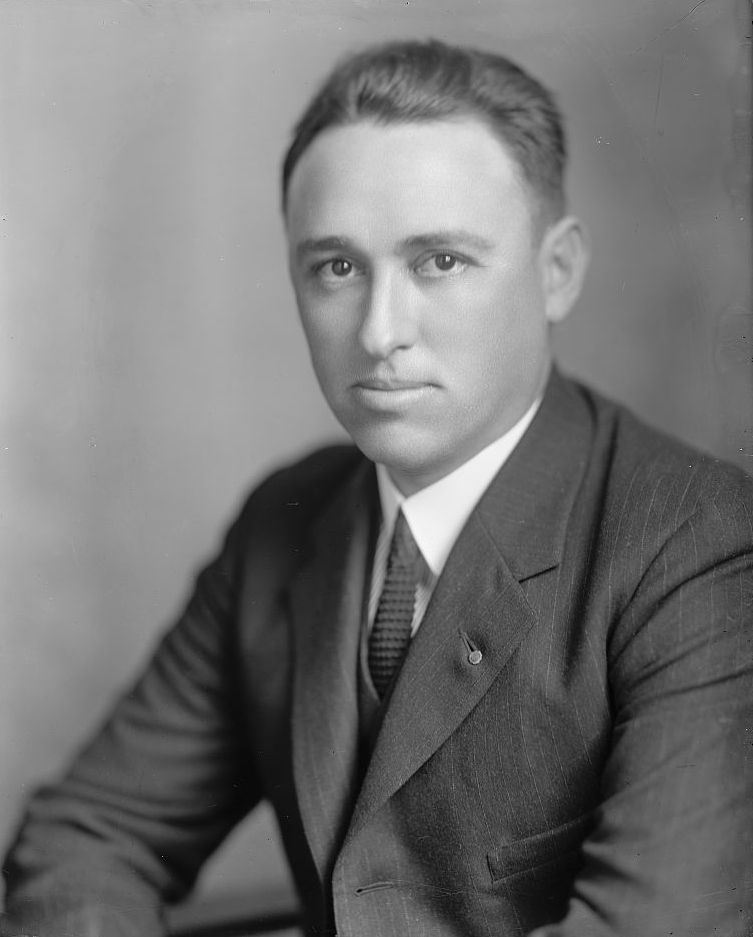
Historical · U.S. House · Tennessee · District 7
Gordon Browning
Former U.S. Representative · Tennessee District 7 · 1923–1935 · Democratic
Gordon Browning represented Tennessee's District 7 in the United States House of Representatives (1923–1935) for the Democratic party. The page below collects sourced biographical facts, term history, committee roles, and provenance for Browning.
Bioguide ID: B000959
Key facts
- Full name
- Gordon Browning
- State
- Tennessee
- District
- District 7
- Party
- Democratic
- House service
- 1923–1935
- First House term
- 1923
- Status
- Left office
- Current term ends
- —
- Born
- 1889
- Bioguide ID
- B000959
- Committee assignments
- —
- Dataset version
- 1.20260606
Biographical narrative
857 words · sourced from the Wikipedia REST extract
Gordon Browning was a prominent American politician who served as a U.S. Representative for Tennessee's 7th congressional district and later as the 38th governor of Tennessee. His political career spanned several decades, during which he was known for his progressive policies and significant contributions to state governance. Browning's legislative tenure in the U.S. House of Representatives lasted from 1923 until 1935, after which he continued to influence Tennessee politics through his gubernatorial terms and other roles until his passing in 1976.
Early life and career
Gordon Browning was born on November 22, 1889, near Atwood in Carroll County, Tennessee. He was the son of James and Melissa Browning and spent his early years in Milan, Tennessee, where his father served as a justice of the peace. Browning grew up in a historic family home known as the Browning House. He completed his secondary education at Milan High School in 1908 and subsequently enrolled at Valparaiso University in Indiana. To support his education, he worked as a waiter, ultimately earning a Bachelor of Science and a Bachelor of Pedagogy degree in 1913.
After graduating, Browning briefly worked as a teacher before pursuing a law degree at the Cumberland School of Law in Lebanon, Tennessee. He graduated in 1915 and was admitted to the bar shortly thereafter. In March of the same year, he began practicing law in Huntingdon, Tennessee, under the mentorship of George McCall.
With the outbreak of World War I, Browning enlisted in the Tennessee National Guard in June 1917, rising to the rank of captain in the 114th Field Artillery of the 30th Infantry Division. His service included combat in northern France, where he was recognized for his bravery. After his discharge in 1919, Browning returned to his law practice in Huntingdon.
In 1920, he made his first attempt at a political career by running for the U.S. House of Representatives from the 8th district but was narrowly defeated. Undeterred, he ran again in 1922 and won, marking the beginning of his six-term congressional career. Browning's tenure in the House was characterized by his representation of the 7th district, which he held after redistricting in 1933.
House tenure
Browning's congressional career began in 1923, and he served in the House of Representatives until 1935. Over the course of his six terms, he was known for frequently running unopposed, reflecting his strong support within his district. His legislative work included a variety of issues pertinent to his constituents and the broader national landscape of the time.
During his final term in the House, Browning played a significant role as one of the managers in the impeachment hearings of California judge Harold Louderback. This position underscored his involvement in critical legislative processes and his commitment to upholding judicial accountability.
In 1934, Browning sought the Democratic Party nomination for a U.S. Senate seat that had become vacant following Cordell Hull's resignation. His campaign faced challenges, particularly from Nathan L. Bachman, who had the backing of influential political figures, including Memphis political boss E. H. Crump. Browning's defeat in this primary election marked a turning point in his political career, as he faced difficulties in garnering support from voters in East Tennessee.
Following his congressional tenure, Browning's political aspirations continued, leading him to seek the governorship of Tennessee.
Legislative focus and committees
During his time in the U.S. House of Representatives, Browning's legislative focus aligned with the progressive ideals of the Democratic Party. His commitment to social and economic reforms was evident in his advocacy for policies aimed at improving the lives of his constituents. While specific details of the bills he sponsored or supported are not documented, his alignment with progressive principles suggests a focus on issues such as labor rights, economic recovery, and social welfare.
Browning's service on various committees during his congressional tenure allowed him to influence legislation across multiple domains. His role as a manager in the impeachment hearings demonstrated his engagement with judicial matters, reflecting his understanding of the importance of maintaining the integrity of the judicial system.
After leaving Congress, Browning's political career continued to evolve. He was elected as the 38th governor of Tennessee, serving two non-consecutive terms. His governorship was marked by efforts to stabilize state finances, improve infrastructure, and implement reforms aimed at curbing voter fraud. These initiatives were indicative of his ongoing commitment to public service and governance.
In addition to his political roles, Browning also served in the Allied occupational government in Germany after World War II, where he contributed as a civil affairs advisor on General Dwight D. Eisenhower's staff. This experience further highlighted his dedication to public service and his involvement in significant historical events.
Browning's legacy in Tennessee politics is characterized by his progressive approach to governance and his contributions to both state and national legislative processes. His career reflects the complexities of American political life during the early to mid-20th century, marked by significant social and economic challenges. Gordon Browning passed away on May 23, 1976, leaving behind a record of public service that spanned multiple decades and encompassed various roles within the political landscape of Tennessee and the United States.
Notable legislation
Sponsored and co-sponsored legislation for Gordon Browning is pending operator curation. The biographical narrative above carries the same provenance trail until per-bill rows are written.
Sources
- [1]https://en.wikipedia.org/wiki/Gordon_BrowningWikipedia · retrieved 2026-06-06
Notable quotes
Sourced quotes for Gordon Browning are pending operator curation. Narrative-scope provenance remains attached below.
Sources
- [1]https://en.wikipedia.org/wiki/Gordon_BrowningWikipedia · retrieved 2026-06-06
Key positions
Curated policy positions for Gordon Browning are pending operator review. The biographical narrative above carries the same provenance trail until per-topic positions are written.
Sources
- [1]https://en.wikipedia.org/wiki/Gordon_BrowningWikipedia · retrieved 2026-06-06
Terms served
- 1923–1925U.S. House · Term 1 · Democratic
- 1925–1927U.S. House · Term 2 · Democratic
- 1927–1929U.S. House · Term 3 · Democratic
- 1929–1931U.S. House · Term 4 · Democratic
- 1931–1933U.S. House · Term 5 · Democratic
- 1933–1935U.S. House · Term 6 · Democratic
Sources & provenance
Every attributable claim above carries a per-section [N] marker that resolves to the corresponding URL below. Each entry records the upstream provider, the canonical URL, and the timestamp at which the source was retrieved by the ingest pipeline.
Key facts
- https://bioguide.congress.gov/search/bio/B000959bioguide · retrieved 2026-06-06
- https://www.govtrack.us/congress/members/401911govtrack · retrieved 2026-06-06
Biographical narrative
- https://en.wikipedia.org/wiki/Gordon_Browningwikipedia · retrieved 2026-06-06
Find your representative
Every U.S. state elects representatives by district. Browse Tennessee’s delegation, the full former-representative roster, or explore the role and term length.
Related on The Candidate
- Preceded by Lemuel PadgettEarlier holder of the Tennessee District 7 House seat · Democratic.Open
- Succeeded by Herron PearsonLater holder of the Tennessee District 7 House seat · Democratic.Open
- Albert WatkinsFormer U.S. Representative · Tennessee District 1 · DemocraticOpen
- Alfred TaylorFormer U.S. Representative · Tennessee District 1 · RepublicanOpen
- Augustus PettiboneFormer U.S. Representative · Tennessee District 1 · RepublicanOpen
- Bill JenkinsFormer U.S. Representative · Tennessee District 1 · RepublicanOpen