
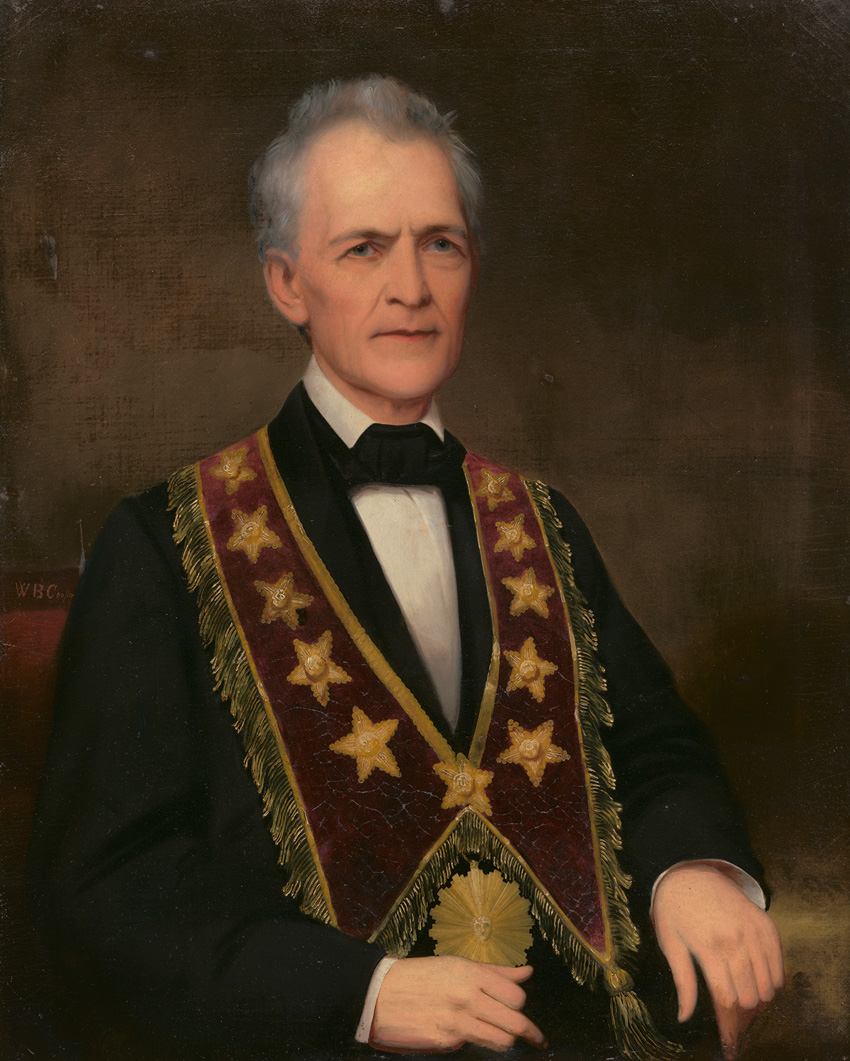
Historical · U.S. House · Tennessee · District 7
Robert Caruthers
Former U.S. Representative · Tennessee District 7 · 1841–1843 · Whig
Robert Caruthers represented Tennessee's District 7 in the United States House of Representatives (1841–1843) for the Whig party. The page below collects sourced biographical facts, term history, committee roles, and provenance for Caruthers.
Bioguide ID: C000209
Key facts
- Full name
- Robert Caruthers
- State
- Tennessee
- District
- District 7
- Party
- Whig
- House service
- 1841–1843
- First House term
- 1841
- Status
- Left office
- Current term ends
- —
- Born
- 1800
- Bioguide ID
- C000209
- Committee assignments
- —
- Dataset version
- 1.20260606
Biographical narrative
969 words · sourced from the Wikipedia REST extract
Robert Caruthers was a prominent American politician, judge, and educator in the 19th century. He served as a U.S. Representative for Tennessee's 7th congressional district from 1841 to 1843 as a member of the Whig Party. In addition to his political career, Caruthers was instrumental in the establishment of Cumberland University and the Cumberland School of Law, contributing significantly to legal education in the South. His career also included roles as a state attorney general and a justice of the Tennessee Supreme Court, reflecting his deep involvement in the legal and political landscape of Tennessee during a tumultuous period in American history.
Early life and career
Robert Looney Caruthers was born on July 31, 1800, near Carthage, Tennessee, into a family with a notable political background. He was the youngest of seven children born to Samuel and Elizabeth Looney Caruthers. His grandfather had participated in the constitutional convention of the State of Franklin in the late 18th century, indicating a family legacy of civic engagement. After the death of his grandfather, Caruthers moved to Columbia, Tennessee, to live with an uncle, where he began his formal education at Woodward Academy. He furthered his studies at Washington College, located near Jonesborough, and Greeneville College in Greeneville. His legal education was completed under the tutelage of Judge Samuel Powell in Greeneville.
Caruthers returned to his hometown of Carthage in 1823 to begin practicing law. His early career included serving as the clerk for the Tennessee House of Representatives during the 1823-1824 term. He also took on the role of editor for the Tennessee Republican newsletter, which provided him with a platform to influence public opinion. In 1826, he relocated to Lebanon, Tennessee, where he married Sally Sanders, a relative of Rachel Donelson Jackson, the wife of President Andrew Jackson. That same year, he was appointed as the attorney general for the Sixth Judicial District by Governor Sam Houston, a position he held until 1832.
In 1834, Caruthers was elected as a brigadier general in the Tennessee militia, showcasing his involvement in both legal and military affairs. His contributions to legal literature included co-authoring "A Compilation of the Statutes of Tennessee" in 1836, which became the standard reference for state statutes for over twenty years. Caruthers also entered politics as a member of the Tennessee House of Representatives, where he represented Wilson County in 1835 and served on the House Judiciary Committee. After one term, he chose not to seek reelection.
In 1841, Caruthers was elected to the U.S. House of Representatives for Tennessee's 7th District, serving a single term until 1843. Following his congressional service, he was active in the Whig Party, serving as an elector for Tennessee's at-large district in 1844, where he campaigned for the presidential candidacy of Henry Clay.
House tenure
Caruthers' tenure in the U.S. House of Representatives began in 1841 and concluded in 1843. During this period, he was part of a legislative body that was navigating the complexities of a nation on the brink of significant change. His time in Congress was marked by the political dynamics of the Whig Party, which was emerging as a major political force in opposition to the Democratic Party. Although he served only one term, Caruthers' involvement in national politics during this era contributed to the broader discourse on issues such as states' rights, economic policy, and the role of the federal government.
After his congressional term, Caruthers continued to engage in public service and legal work. He was appointed by Governor William B. Campbell in 1852 to fill a vacancy on the Tennessee Supreme Court, marking a significant transition in his career from legislative to judicial responsibilities. His judicial tenure would further solidify his influence in shaping Tennessee's legal landscape.
Legislative focus and committees
During his time in the U.S. House of Representatives, Caruthers was involved in various legislative matters, although specific details regarding his committee assignments or legislative initiatives are not extensively documented. His broader political career, including his roles in state government and the judiciary, reflects a consistent focus on legal and governance issues. Caruthers' legal background informed his approach to legislation, particularly as he transitioned to the judiciary, where he would make significant contributions to legal precedent.
As a justice on the Tennessee Supreme Court, Caruthers was known for his judicial opinions, including a notable decision in the case of Rippy v. State, which addressed the parameters of self-defense in legal contexts. His rulings contributed to the evolution of legal interpretations in Tennessee, demonstrating his commitment to ensuring justice and clarity in the law.
In addition to his political and judicial roles, Caruthers played a pivotal part in the establishment of educational institutions that would shape future generations of lawyers and leaders. He was a co-founder of Cumberland University in 1842 and served as the first president of its board of trustees. His efforts in founding the Cumberland School of Law further underscored his dedication to legal education, providing a foundation for aspiring lawyers in the South.
Caruthers' legacy extends beyond his political and judicial service; he is remembered for his contributions to education and the legal profession in Tennessee. His involvement in the founding of Cumberland University and the Cumberland School of Law illustrates his commitment to fostering legal scholarship and training in a region that was experiencing significant social and political changes.
In summary, Robert Caruthers was a multifaceted figure whose career spanned law, politics, and education. His service as a U.S. Representative, coupled with his roles as a state attorney general and a justice of the Tennessee Supreme Court, reflects a life dedicated to public service and the advancement of legal education in Tennessee. His contributions to the establishment of Cumberland University and the Cumberland School of Law further solidified his impact on the legal landscape of the region.
Notable legislation
Sponsored and co-sponsored legislation for Robert Caruthers is pending operator curation. The biographical narrative above carries the same provenance trail until per-bill rows are written.
Sources
- [1]https://en.wikipedia.org/wiki/Robert_L._CaruthersWikipedia · retrieved 2026-06-06
Notable quotes
Sourced quotes for Robert Caruthers are pending operator curation. Narrative-scope provenance remains attached below.
Sources
- [1]https://en.wikipedia.org/wiki/Robert_L._CaruthersWikipedia · retrieved 2026-06-06
Key positions
Curated policy positions for Robert Caruthers are pending operator review. The biographical narrative above carries the same provenance trail until per-topic positions are written.
Sources
- [1]https://en.wikipedia.org/wiki/Robert_L._CaruthersWikipedia · retrieved 2026-06-06
Terms served
- 1841–1843U.S. House · Term 1 · Whig
Sources & provenance
Every attributable claim above carries a per-section [N] marker that resolves to the corresponding URL below. Each entry records the upstream provider, the canonical URL, and the timestamp at which the source was retrieved by the ingest pipeline.
Key facts
- https://bioguide.congress.gov/search/bio/C000209bioguide · retrieved 2026-06-06
- https://www.govtrack.us/congress/members/402355govtrack · retrieved 2026-06-06
Biographical narrative
- https://en.wikipedia.org/wiki/Robert_L._Carutherswikipedia · retrieved 2026-06-06
Find your representative
Every U.S. state elects representatives by district. Browse Tennessee’s delegation, the full former-representative roster, or explore the role and term length.
Related on The Candidate
- Succeeded by Robert BuggLater holder of the Tennessee District 7 House seat · Whig.Open
- Albert WatkinsFormer U.S. Representative · Tennessee District 1 · DemocraticOpen
- Alfred TaylorFormer U.S. Representative · Tennessee District 1 · RepublicanOpen
- Augustus PettiboneFormer U.S. Representative · Tennessee District 1 · RepublicanOpen
- Bill JenkinsFormer U.S. Representative · Tennessee District 1 · RepublicanOpen
- Representatives from TennesseeEvery former U.S. Representative who has represented Tennessee.Open