
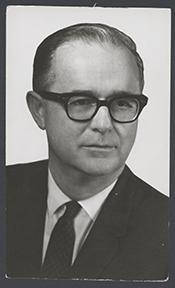
Historical · U.S. House · Tennessee · District 8
Dan Kuykendall
Former U.S. Representative · Tennessee District 8 · 1967–1975 · Republican
Dan Kuykendall represented Tennessee's District 8 in the United States House of Representatives (1967–1975) for the Republican party. The page below collects sourced biographical facts, term history, committee roles, and provenance for Kuykendall.
Bioguide ID: K000348
Key facts
- Full name
- Dan Kuykendall
- State
- Tennessee
- District
- District 8
- Party
- Republican
- House service
- 1967–1975
- First House term
- 1967
- Status
- Left office
- Current term ends
- —
- Born
- 1924
- Bioguide ID
- K000348
- Committee assignments
- —
- Dataset version
- 1.20260605
Biographical narrative
859 words · sourced from the Wikipedia REST extract
Dan H. Kuykendall was an American politician and businessman who served as a United States Representative for Tennessee's 8th Congressional District from 1967 until 1975. A member of the Republican Party, Kuykendall was notable for being the first Republican elected to represent the 8th district since 1920 and the first in the 9th district since 1872. His tenure in the House of Representatives was marked by a strong conservative stance and active involvement in various legislative matters, particularly during a tumultuous period in American politics.
Early life and career
Dan Heflin Kuykendall was born on July 9, 1924, in Cherokee, Texas. His early life was characterized by a commitment to service, as he served as a B-29 pilot during World War II from 1942 to 1945. Following the war, Kuykendall pursued higher education at Texas A&M University, graduating in 1947. After completing his studies, he relocated to Memphis, Tennessee, in 1955, where he began his career in business as an executive with Procter & Gamble.
On July 6, 1951, Kuykendall married Jacqueline Meyer, and together they raised four children. His entry into politics began in earnest during the 1956 presidential election when he volunteered for Dwight D. Eisenhower's campaign. He continued his political involvement by supporting Richard Nixon during the 1960 presidential election. Kuykendall's political aspirations grew, and in 1962, he managed the campaign of Ed Davis, a former city councilman, in a bid for Congress in the 9th Congressional District. Although Davis narrowly lost to the incumbent, Kuykendall's efforts helped to revitalize the Republican Party in Memphis, which had been struggling for prominence.
From 1963 to 1964, Kuykendall served as co-chairman of the Shelby County Republican Party, contributing to its resurgence in a region where the party had been largely marginalized. His political ambitions continued to evolve, and in 1964, he announced his candidacy for the Republican nomination to challenge incumbent Senator Albert Gore, Sr. Despite losing the election, Kuykendall garnered a significant percentage of the vote, reflecting his growing influence within the party.
House tenure
Kuykendall's congressional career began when he announced his candidacy for the 9th Congressional District in April 1966, challenging incumbent Representative George W. Grider. He won the Republican nomination without opposition and subsequently defeated Grider in the general election, making history as the first Republican to represent Memphis in Congress in the 20th century. His first term in the House commenced in 1967.
During his time in the House, Kuykendall established himself as one of its more conservative members. He was known for his lengthy speeches, which earned him the nickname "The Tennessee Talking Horse." His legislative focus included serving on the Interstate and Foreign Commerce Committee and the Subcommittee on Aeronautics and Transportation. In 1971, he co-sponsored an attempt to impeach Supreme Court Justice William O. Douglas, although the effort did not lead to any significant outcomes.
Kuykendall quickly gained popularity in his district, which had not been represented by a Republican for decades. He successfully won re-election in both 1968 and 1970 by substantial margins, reflecting his strong support among constituents. His political alignment with Richard Nixon during the 1968 presidential election further solidified his standing within the party.
Following the 1970 United States census, Tennessee lost a congressional district, resulting in a renumbering of Kuykendall's district to the 8th District. This change brought new challenges, as the district included more Democratic areas. Despite this shift, Kuykendall managed to secure re-election in 1972 against J. O. Patterson Jr., a black pastor, albeit by a narrower margin than in previous elections.
Legislative focus and committees
Throughout his tenure in the House of Representatives, Kuykendall was known for his conservative viewpoints and active participation in legislative matters. His involvement in the Watergate scandal was particularly notable. Initially, he defended President Nixon, attributing the controversy to "nonpoliticians" and expressing strong opposition to impeachment efforts. Kuykendall's rhetoric included dramatic imagery, such as appearing on the House floor with a noose to caution against what he perceived as lynch law tactics.
However, as the scandal unfolded and evidence mounted against Nixon, Kuykendall began to reassess his position. By August 1974, he indicated a willingness to support impeachment, particularly in light of Nixon's refusal to cooperate with congressional inquiries. This shift in stance occurred during a period of significant political upheaval, as the nation grappled with the implications of the Watergate scandal.
In the 1974 election, Kuykendall faced a formidable challenge from Harold Ford, a young state representative who mobilized a strong grassroots campaign within the Memphis black community. Ford's campaign capitalized on discontent with Kuykendall's earlier support for Nixon, leading to a highly competitive race. Although initial reports suggested a close contest, Ford's campaign ultimately succeeded, marking the end of Kuykendall's congressional career.
Kuykendall's legacy as a U.S. Representative is characterized by his role in a transformative period for the Republican Party in Tennessee, his conservative legislative priorities, and his engagement in significant national issues. After leaving office on January 3, 1975, he continued to be involved in various business ventures until his passing on June 12, 2008. His contributions to the political landscape of Tennessee remain a notable aspect of his biography.
Notable legislation
Sponsored and co-sponsored legislation for Dan Kuykendall is pending operator curation. The biographical narrative above carries the same provenance trail until per-bill rows are written.
Sources
- [1]https://en.wikipedia.org/wiki/Dan_KuykendallWikipedia · retrieved 2026-06-05
Notable quotes
Sourced quotes for Dan Kuykendall are pending operator curation. Narrative-scope provenance remains attached below.
Sources
- [1]https://en.wikipedia.org/wiki/Dan_KuykendallWikipedia · retrieved 2026-06-05
Key positions
Curated policy positions for Dan Kuykendall are pending operator review. The biographical narrative above carries the same provenance trail until per-topic positions are written.
Sources
- [1]https://en.wikipedia.org/wiki/Dan_KuykendallWikipedia · retrieved 2026-06-05
Terms served
- 1967–1969U.S. House · Term 1 · Republican
- 1969–1971U.S. House · Term 2 · Republican
- 1971–1973U.S. House · Term 3 · Republican
- 1973–1975U.S. House · Term 4 · Republican
Sources & provenance
Every attributable claim above carries a per-section [N] marker that resolves to the corresponding URL below. Each entry records the upstream provider, the canonical URL, and the timestamp at which the source was retrieved by the ingest pipeline.
Key facts
- https://bioguide.congress.gov/search/bio/K000348bioguide · retrieved 2026-06-05
- https://www.govtrack.us/congress/members/406501govtrack · retrieved 2026-06-05
Biographical narrative
- https://en.wikipedia.org/wiki/Dan_Kuykendallwikipedia · retrieved 2026-06-05
Find your representative
Every U.S. state elects representatives by district. Browse Tennessee’s delegation, the full former-representative roster, or explore the role and term length.
Related on The Candidate
- Preceded by Jere CooperEarlier holder of the Tennessee District 8 House seat · Democratic.Open
- Succeeded by John TannerLater holder of the Tennessee District 8 House seat · Democratic.Open
- Albert WatkinsFormer U.S. Representative · Tennessee District 1 · DemocraticOpen
- Alfred TaylorFormer U.S. Representative · Tennessee District 1 · RepublicanOpen
- Augustus PettiboneFormer U.S. Representative · Tennessee District 1 · RepublicanOpen
- Bill JenkinsFormer U.S. Representative · Tennessee District 1 · RepublicanOpen