
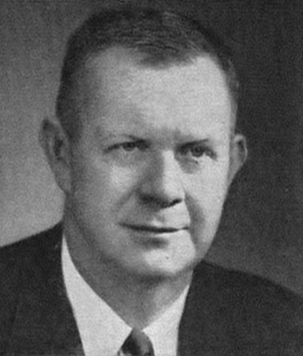
Historical · U.S. House · Tennessee · District 8
Robert Everett
Former U.S. Representative · Tennessee District 8 · 1957–1971 · Democratic
Robert Everett represented Tennessee's District 8 in the United States House of Representatives (1957–1971) for the Democratic party. The page below collects sourced biographical facts, term history, committee roles, and provenance for Everett.
Bioguide ID: E000266
Key facts
- Full name
- Robert Everett
- State
- Tennessee
- District
- District 8
- Party
- Democratic
- House service
- 1957–1971
- First House term
- 1957
- Status
- Left office
- Current term ends
- —
- Born
- 1915
- Bioguide ID
- E000266
- Committee assignments
- —
- Dataset version
- 1.20260605
Biographical narrative
987 words · sourced from the Wikipedia REST extract
Robert Everett was a prominent American politician who served as a U.S. Representative for Tennessee's Eighth Congressional District. A member of the Democratic Party, he held office from February 1, 1958, until his death on January 26, 1969. Over the course of his political career, Everett was known for his liberal voting record and his dedication to public service, which included a range of roles prior to his congressional tenure. His contributions to both local and national politics have left a lasting impact, particularly in his home state of Tennessee.
Early life and career
Robert Everett was born on February 24, 1915, in Obion County, Tennessee, specifically on a farm near the town of Union City. Growing up in a rural environment, he experienced the challenges and opportunities of farm life, which likely shaped his perspectives on community and service. He pursued higher education at Murray State College, now known as Murray State University, where he graduated in 1936. This educational background provided him with a foundation that would support his future endeavors in public service and politics.
Everett's political career began shortly after his graduation when he was elected to the Obion County Court in 1936. This role, which is now referred to as the County Commission, marked the beginning of his involvement in local governance. In 1938, he further advanced his political career by being elected as the Obion County Circuit Court Clerk. These early positions allowed him to gain valuable experience in the workings of government and public administration.
With the onset of World War II, Everett enlisted in the United States Army, serving from 1942 to 1945. His military service during this critical period in history not only contributed to the war effort but also instilled in him a sense of duty and commitment to his country. After returning from the war, he transitioned into a role as an administrative assistant to Senator Tom Stewart from 1945 to 1949. This position provided him with insight into federal legislation and the workings of the U.S. Senate.
Following his tenure with Senator Stewart, Everett continued to build his political credentials by serving as an administrative assistant to Governor Gordon Browning from 1950 to 1952. This experience at the state level further solidified his understanding of governance and public policy. After his time with the governor, he took on the role of executive secretary of the Tennessee County Services Association, where he worked to improve the services provided by county governments across the state.
House tenure
In 1958, Robert Everett entered the political arena at the national level by running for the Eighth Congressional District seat in Tennessee, which had become vacant following the death of long-serving Congressman Jere Cooper. Everett won the special election to fill the remainder of Cooper's term, marking the beginning of his congressional career. He was sworn into office on February 1, 1958, and subsequently won five additional terms, serving a total of seven terms in the House of Representatives until his death in January 1969.
During his time in Congress, Everett was known for his liberal voting record, which aligned with the Democratic Party's platform during the 1960s. His legislative actions and decisions reflected a commitment to social justice, civil rights, and economic equality, issues that were particularly relevant during this transformative period in American history. Everett's ability to navigate the complexities of national politics and advocate for his constituents in Tennessee was a hallmark of his service.
Throughout his congressional tenure, Everett was involved in various legislative initiatives and discussions that aimed to address the pressing issues of the day. His engagement with constituents and responsiveness to their needs were key aspects of his approach to governance. Everett's dedication to public service was evident in his efforts to represent the interests of his district, which included a diverse population with varying needs and concerns.
Legislative focus and committees
As a member of the House of Representatives, Robert Everett served on several committees that were instrumental in shaping legislation during his time in office. His committee assignments allowed him to influence policy in areas that were critical to his constituents and the nation as a whole. While specific details of his committee memberships are not provided, it is common for representatives to serve on committees related to appropriations, public works, and social welfare, among others.
Everett's legislative focus was characterized by a commitment to progressive policies that aimed to improve the quality of life for all Americans. He supported initiatives that promoted civil rights, education, healthcare, and infrastructure development. His liberal stance on social issues resonated with many of his constituents, particularly during a time when the civil rights movement was gaining momentum and significant changes were being advocated at both the state and federal levels.
Throughout his congressional career, Everett was known for his ability to build coalitions and work across party lines when necessary. This collaborative approach was essential in navigating the often contentious political landscape of the 1960s. His efforts to advocate for the needs of his district while also addressing broader national concerns exemplified his role as a representative of the people.
Tragically, Robert Everett's life and career were cut short when he passed away on January 26, 1969, due to complications from pneumonia and flu at a Veterans Hospital in Nashville, Tennessee. His death marked the end of a significant chapter in Tennessee politics, and he was laid to rest at East View Cemetery in Union City. In recognition of his contributions, a statue of Everett was erected at the Obion County Courthouse in Union City, serving as a lasting tribute to his legacy and commitment to public service.
Everett's career reflects the complexities and challenges of American politics during a transformative era. His dedication to his constituents and his active participation in legislative processes underscore the important role that representatives play in shaping the policies that affect the lives of citizens.
Notable legislation
Sponsored and co-sponsored legislation for Robert Everett is pending operator curation. The biographical narrative above carries the same provenance trail until per-bill rows are written.
Sources
- [1]https://en.wikipedia.org/wiki/Fats_EverettWikipedia · retrieved 2026-06-05
Notable quotes
Sourced quotes for Robert Everett are pending operator curation. Narrative-scope provenance remains attached below.
Sources
- [1]https://en.wikipedia.org/wiki/Fats_EverettWikipedia · retrieved 2026-06-05
Key positions
Curated policy positions for Robert Everett are pending operator review. The biographical narrative above carries the same provenance trail until per-topic positions are written.
Sources
- [1]https://en.wikipedia.org/wiki/Fats_EverettWikipedia · retrieved 2026-06-05
Terms served
- 1957–1959U.S. House · Term 1 · Democratic
- 1959–1961U.S. House · Term 2 · Democratic
- 1961–1963U.S. House · Term 3 · Democratic
- 1963–1965U.S. House · Term 4 · Democratic
- 1965–1967U.S. House · Term 5 · Democratic
- 1967–1969U.S. House · Term 6 · Democratic
- 1969–1971U.S. House · Term 7 · Democratic
Sources & provenance
Every attributable claim above carries a per-section [N] marker that resolves to the corresponding URL below. Each entry records the upstream provider, the canonical URL, and the timestamp at which the source was retrieved by the ingest pipeline.
Key facts
- https://bioguide.congress.gov/search/bio/E000266bioguide · retrieved 2026-06-05
- https://www.govtrack.us/congress/members/403946govtrack · retrieved 2026-06-05
Biographical narrative
- https://en.wikipedia.org/wiki/Fats_Everettwikipedia · retrieved 2026-06-05
Find your representative
Every U.S. state elects representatives by district. Browse Tennessee’s delegation, the full former-representative roster, or explore the role and term length.
Related on The Candidate
- Preceded by Lon ScottEarlier holder of the Tennessee District 8 House seat · Republican.Open
- Succeeded by John TannerLater holder of the Tennessee District 8 House seat · Democratic.Open
- Albert WatkinsFormer U.S. Representative · Tennessee District 1 · DemocraticOpen
- Alfred TaylorFormer U.S. Representative · Tennessee District 1 · RepublicanOpen
- Augustus PettiboneFormer U.S. Representative · Tennessee District 1 · RepublicanOpen
- Bill JenkinsFormer U.S. Representative · Tennessee District 1 · RepublicanOpen