
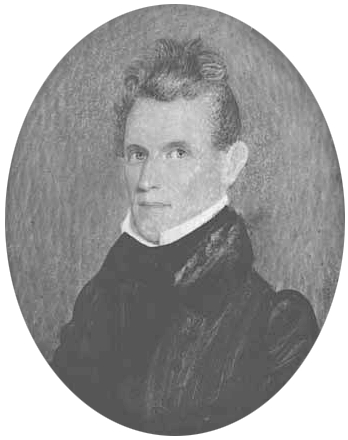
Historical · U.S. House · Tennessee · District 8
Washington Barrow
Former U.S. Representative · Tennessee District 8 · 1847–1849 · Whig
Washington Barrow represented Tennessee's District 8 in the United States House of Representatives (1847–1849) for the Whig party. The page below collects sourced biographical facts, term history, committee roles, and provenance for Barrow.
Bioguide ID: B000185
Key facts
- Full name
- Washington Barrow
- State
- Tennessee
- District
- District 8
- Party
- Whig
- House service
- 1847–1849
- First House term
- 1847
- Status
- Left office
- Current term ends
- —
- Born
- 1807
- Bioguide ID
- B000185
- Committee assignments
- —
- Dataset version
- 1.20260606
Biographical narrative
974 words · sourced from the Wikipedia REST extract
Washington Barrow was a prominent American politician and slave owner who served as a U.S. Representative for Tennessee's 8th congressional district during the late 1840s. A member of the Whig Party, Barrow's political career was marked by his involvement in both state and national politics, as well as his later participation in the Confederate Army during the American Civil War. His life and career reflect the complexities of the antebellum South, including the institution of slavery and the political tensions that would eventually lead to civil conflict.
Early life and career
Washington Barrow was born on October 5, 1807, in Davidson County, Tennessee, to Wylie Barrow and Ann Beck Barrow, who was Wylie's second wife. Growing up in a region that was deeply influenced by agricultural practices and the institution of slavery, Barrow's early life was shaped by the socio-economic conditions of the South. He received his education at Davidson Academy, a local institution that provided foundational learning in the early 19th century. In 1826, he became one of the first graduates of the University of Nashville, an achievement that marked the beginning of his professional journey.
Following his graduation, Barrow pursued a career in law. He read law and was admitted to the Tennessee Bar in 1827, which allowed him to practice law and engage in the legal profession. That same year, he married Anna Marian Shelby, the daughter of Dr. John Shelby, a prominent and wealthy figure in Tennessee. This marriage not only connected Barrow to influential circles but also likely provided him with additional social and economic capital.
Barrow's political career began in earnest in 1837 when he served a term in the Tennessee House of Representatives. This experience in state politics laid the groundwork for his later national political aspirations. From December 28, 1841, to February 24, 1844, he held the position of U.S. Minister to Portugal, where he represented American interests abroad. His diplomatic service contributed to his understanding of international relations and governance.
Upon returning to Tennessee, Barrow became involved in journalism, editing the Nashville Republican Banner from 1845 to 1847. This role in the media allowed him to influence public opinion and engage with the political issues of the day, further solidifying his reputation as a public figure.
House tenure
Washington Barrow was elected to the Thirtieth Congress as a member of the Whig Party, beginning his term on March 4, 1847. His tenure in the U.S. House of Representatives lasted until March 3, 1849. During this period, Barrow participated in the legislative processes of the time, contributing to discussions and decisions that would shape the nation. However, he did not seek renomination for the Thirty-first Congress in 1848, which marked the end of his formal legislative career at the federal level.
After completing his term in Congress, Barrow returned to Tennessee, where he continued to engage in various business ventures. He was notably involved in the Nashville Gas Light Company, where he served as the first president. This role reflected his interest in infrastructure and public utilities, which were becoming increasingly important in urban areas during the mid-19th century.
In 1850, Barrow was a delegate to the Nashville Convention, a significant event that addressed issues related to the Union and the rights of states, reflecting the growing tensions in the country leading up to the Civil War. His involvement in this convention indicated his continued engagement in political discourse, even after his congressional tenure.
Legislative focus and committees
While specific details about Barrow's legislative focus during his time in Congress are not extensively documented, his affiliation with the Whig Party suggests that he was likely involved in issues pertinent to that political platform. The Whig Party, active in the mid-19th century, generally supported a strong legislative role in economic development, infrastructure improvement, and a cautious approach to the expansion of slavery into new territories. Barrow's background as a lawyer and businessman may have influenced his perspectives on economic and legal matters during his congressional service.
Barrow's post-congressional life was marked by significant personal and political developments. In 1853, he and his son, John C. Barrow, purchased a plantation in Maringouin, Louisiana, along with 112 slaves. This acquisition underscored Barrow's deep involvement in the institution of slavery, which was a central aspect of the Southern economy and society at the time. The plantation and its enslaved individuals were part of a broader system that would later be challenged during the Civil War.
During the Civil War, Barrow aligned himself with the Confederate cause. He served as a member of the Confederate faction of the Tennessee Senate in 1861 and 1862. His military involvement included raising Company C of the 11th Tennessee Cavalry, known as the "Barrow Guards." This role as a military leader reflected his commitment to the Confederate cause and his willingness to engage in armed conflict.
Barrow was captured by Union forces in Nashville and subsequently charged with treason. His refusal to take an oath of allegiance to the Union led to his imprisonment, which had a lasting impact on his health. He was held in various locations, including Ohio and Mackinac Island, Michigan, before being paroled in a prisoner exchange. After his release, he returned to Nashville and served as a private in the retreating Army of Tennessee in 1863.
Following the Civil War, Washington Barrow's life came to an end on October 19, 1866, while he was visiting his brother in St. Louis, Missouri. He was 59 years old at the time of his death. Barrow was interred at the family vault of Dr. John Shelby, his father-in-law, located at Mount Olivet Cemetery in Nashville, Tennessee. His legacy is intertwined with the complex history of the South during a tumultuous period in American history, reflecting the challenges of his time and the lasting impact of his actions on the region.
Notable legislation
Sponsored and co-sponsored legislation for Washington Barrow is pending operator curation. The biographical narrative above carries the same provenance trail until per-bill rows are written.
Sources
- [1]https://en.wikipedia.org/wiki/Washington_BarrowWikipedia · retrieved 2026-06-06
Notable quotes
Sourced quotes for Washington Barrow are pending operator curation. Narrative-scope provenance remains attached below.
Sources
- [1]https://en.wikipedia.org/wiki/Washington_BarrowWikipedia · retrieved 2026-06-06
Key positions
Curated policy positions for Washington Barrow are pending operator review. The biographical narrative above carries the same provenance trail until per-topic positions are written.
Sources
- [1]https://en.wikipedia.org/wiki/Washington_BarrowWikipedia · retrieved 2026-06-06
Terms served
- 1847–1849U.S. House · Term 1 · Whig
Sources & provenance
Every attributable claim above carries a per-section [N] marker that resolves to the corresponding URL below. Each entry records the upstream provider, the canonical URL, and the timestamp at which the source was retrieved by the ingest pipeline.
Key facts
- https://bioguide.congress.gov/search/bio/B000185bioguide · retrieved 2026-06-06
- https://www.govtrack.us/congress/members/401184govtrack · retrieved 2026-06-06
Biographical narrative
- https://en.wikipedia.org/wiki/Washington_Barrowwikipedia · retrieved 2026-06-06
Find your representative
Every U.S. state elects representatives by district. Browse Tennessee’s delegation, the full former-representative roster, or explore the role and term length.
Related on The Candidate
- Preceded by Edwin EwingEarlier holder of the Tennessee District 8 House seat · Whig.Open
- Succeeded by Andrew EwingLater holder of the Tennessee District 8 House seat · Democratic.Open
- Albert WatkinsFormer U.S. Representative · Tennessee District 1 · DemocraticOpen
- Alfred TaylorFormer U.S. Representative · Tennessee District 1 · RepublicanOpen
- Augustus PettiboneFormer U.S. Representative · Tennessee District 1 · RepublicanOpen
- Bill JenkinsFormer U.S. Representative · Tennessee District 1 · RepublicanOpen