
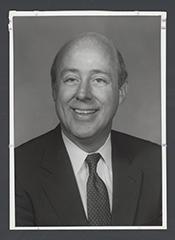
Historical · U.S. House · Texas · District 1
Jim Chapman
Former U.S. Representative · Texas District 1 · 1985–1997 · Democratic
Jim Chapman represented Texas's District 1 in the United States House of Representatives (1985–1997) for the Democratic party. The page below collects sourced biographical facts, term history, committee roles, and provenance for Chapman.
Bioguide ID: C000312
Key facts
- Full name
- Jim Chapman
- State
- Texas
- District
- District 1
- Party
- Democratic
- House service
- 1985–1997
- First House term
- 1985
- Status
- Left office
- Current term ends
- —
- Born
- 1945
- Bioguide ID
- C000312
- Committee assignments
- —
- Dataset version
- 1.20260605
Biographical narrative
966 words · sourced from the Wikipedia REST extract
James Louis Chapman is a former American politician and business leader who served as a Democratic member of the United States House of Representatives, representing Texas's 1st congressional district from 1985 until 1997. Born on March 8, 1945, in Washington, D.C., Chapman grew up in Sulphur Springs, Texas, where he attended public schools. He pursued higher education, earning a degree in business administration from the University of Texas at Austin and later obtaining a Juris Doctor from the Southern Methodist University School of Law. Before entering politics, Chapman had a successful career in law, culminating in his role as the District Attorney for the Eighth Judicial District of Texas. His tenure in Congress was marked by significant legislative contributions and leadership roles within the Democratic Party.
Early life and career
Jim Chapman was born in Washington, D.C., but his formative years were spent in Sulphur Springs, Texas. He completed his primary and secondary education in the local public school system, which laid the foundation for his future academic pursuits. In 1968, he graduated from the University of Texas at Austin with a degree in business administration. Following his undergraduate studies, Chapman continued his education at Southern Methodist University, where he earned his Juris Doctor degree in 1970.
After completing his legal education, Chapman entered private practice, where he began to establish his reputation in the legal community. His career took a significant turn when he was elected as the District Attorney for the Eighth Judicial District of Texas, a position he held from 1976 until 1985. During his time as District Attorney, Chapman gained a reputation for his tough stance on crime, achieving a remarkable conviction record of 99 percent. His effectiveness in this role earned him national recognition as a law-and-order prosecutor. He was actively involved in professional organizations, serving in leadership capacities with both the Texas District and County Attorneys Association and the National District Attorneys Association.
In addition to his prosecutorial work, Chapman also established his own law practice, becoming the senior partner at the firm of Chapman, Price, Hughes & Bauer. His legal expertise extended beyond criminal law, as he also engaged in various aspects of civil law. Furthermore, he took on a leadership role in the financial sector as the chairman of a local community bank, showcasing his versatility and commitment to public service.
House tenure
Chapman's political career in the U.S. House of Representatives began when he was elected in a special election in 1985 to fill the vacancy left by the resignation of U.S. Representative Sam B. Hall. This election was notable for its visibility and competitiveness, as Chapman defeated his Republican opponent, Edd Hargett, a former professional football player, by a margin of just over 1,900 votes. This initial victory set the stage for his subsequent six terms in Congress, during which he was reelected in each of the following elections without facing contests as close as his first.
Chapman's tenure in the House spanned from August 3, 1985, until January 3, 1997. Throughout his time in office, he was actively involved in various legislative initiatives and served in several key roles within the Democratic Party. He was a member of the Democratic Steering and Policy Committee for four years, a group responsible for setting committee assignments and establishing the legislative agenda for the Democratic caucus. Additionally, he held the position of chairman of the Texas Democratic congressional delegation, which allowed him to advocate for the interests of Texas constituents on a national level.
In 1996, Chapman chose not to seek reelection for the One Hundred Fifth Congress. Instead, he pursued a nomination for the United States Senate but was unsuccessful in that endeavor. His decision to step away from the House marked the end of a significant chapter in his political career.
Legislative focus and committees
During his time in Congress, Jim Chapman was a member of several important committees, which shaped his legislative focus and allowed him to contribute to various policy areas. One of his most notable roles was on the House Appropriations Committee, where he worked on funding and resource allocation for a range of projects. His efforts included significant work on the restoration and development of Cooper Lake, an Army Corps of Engineers-maintained lake located between Cooper and Sulphur Springs. In recognition of his contributions to this project, Congress later enacted legislation to officially rename the lake as "Jim Chapman Lake," reflecting his commitment to local infrastructure and environmental initiatives.
In addition to his work on the Appropriations Committee, Chapman served on several other committees during his congressional career. He was a member of the Public Works and Transportation Committee, where he dealt with issues related to infrastructure and transportation policy. His involvement in the Small Business Committee highlighted his interest in supporting small businesses and fostering economic growth. Furthermore, he served on the Science, Space and Technology Committee, which allowed him to engage with issues related to scientific research and technological advancement.
Chapman's congressional career was not without its controversies. He gained notoriety during the Clinton–Lewinsky scandal when it was revealed in the Starr Report that President Bill Clinton was engaged in an inappropriate relationship with Monica Lewinsky while on the phone with Chapman. This incident brought additional attention to Chapman and his role in the political landscape during a tumultuous period in American politics.
Throughout his six terms in Congress, Jim Chapman established himself as a dedicated public servant with a focus on legislative initiatives that benefited his constituents and the broader Texas community. His background in law and his experience as a prosecutor informed his approach to governance, emphasizing accountability and effective representation. After leaving Congress, Chapman continued to be involved in various professional and civic activities, reflecting his ongoing commitment to public service and community engagement.
Notable legislation
Sponsored and co-sponsored legislation for Jim Chapman is pending operator curation. The biographical narrative above carries the same provenance trail until per-bill rows are written.
Sources
- [1]https://en.wikipedia.org/wiki/Jim_Chapman_(politician)Wikipedia · retrieved 2026-06-05
Notable quotes
Sourced quotes for Jim Chapman are pending operator curation. Narrative-scope provenance remains attached below.
Sources
- [1]https://en.wikipedia.org/wiki/Jim_Chapman_(politician)Wikipedia · retrieved 2026-06-05
Key positions
Curated policy positions for Jim Chapman are pending operator review. The biographical narrative above carries the same provenance trail until per-topic positions are written.
Sources
- [1]https://en.wikipedia.org/wiki/Jim_Chapman_(politician)Wikipedia · retrieved 2026-06-05
Terms served
- 1985–1987U.S. House · Term 1 · Democratic
- 1987–1989U.S. House · Term 2 · Democratic
- 1989–1991U.S. House · Term 3 · Democratic
- 1991–1993U.S. House · Term 4 · Democratic
- 1993–1995U.S. House · Term 5 · Democratic
- 1995–1997U.S. House · Term 6 · Democratic
Sources & provenance
Every attributable claim above carries a per-section [N] marker that resolves to the corresponding URL below. Each entry records the upstream provider, the canonical URL, and the timestamp at which the source was retrieved by the ingest pipeline.
Key facts
- https://bioguide.congress.gov/search/bio/C000312bioguide · retrieved 2026-06-05
- https://www.govtrack.us/congress/members/402454govtrack · retrieved 2026-06-05
Biographical narrative
- https://en.wikipedia.org/wiki/Jim_Chapman_(politician)wikipedia · retrieved 2026-06-05
Find your representative
Every U.S. state elects representatives by district. Browse Texas’s delegation, the full former-representative roster, or explore the role and term length.
Related on The Candidate
- Preceded by John PatmanEarlier holder of the Texas District 1 House seat · Democratic.Open
- Succeeded by Max Sandlin Jr.Later holder of the Texas District 1 House seat · Democratic.Open
- Charles StewartFormer U.S. Representative · Texas District 1 · DemocraticOpen
- David KaufmanFormer U.S. Representative · Texas District 1 · DemocraticOpen
- Eugene BlackFormer U.S. Representative · Texas District 1 · DemocraticOpen
- George SmythFormer U.S. Representative · Texas District 1 · DemocraticOpen