
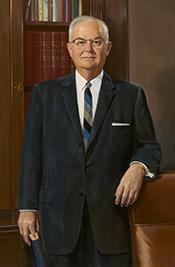
Historical · U.S. House · Texas · District 1
John Patman
Former U.S. Representative · Texas District 1 · 1929–1977 · Democratic
John Patman represented Texas's District 1 in the United States House of Representatives (1929–1977) for the Democratic party. The page below collects sourced biographical facts, term history, committee roles, and provenance for Patman.
Bioguide ID: P000103
Key facts
- Full name
- John Patman
- State
- Texas
- District
- District 1
- Party
- Democratic
- House service
- 1929–1977
- First House term
- 1929
- Status
- Left office
- Current term ends
- —
- Born
- 1893
- Bioguide ID
- P000103
- Committee assignments
- —
- Dataset version
- 1.20260605
Biographical narrative
969 words · sourced from the Wikipedia REST extract
Wright Patman was a prominent American politician who served as a U.S. Representative for Texas's 1st congressional district from 1929 until 1976. A member of the Democratic Party, Patman was known for his long tenure in Congress, spanning 24 consecutive terms, making him one of the longest-serving members in the history of the House of Representatives. His legislative career was marked by a focus on fiscal issues, consumer protection, and significant involvement in key historical events, including the Watergate scandal.
Early life and career
Wright Patman was born on August 6, 1893, in Cass County, Texas, to parents John N. Patman and Emma Spurlin. He grew up in Hughes Springs, Texas, where he completed his education at Hughes Springs High School in 1912. Following high school, Patman pursued a legal education at Cumberland University Law School in Lebanon, Tennessee, graduating in 1916. He was admitted to the Texas bar the same year and began his legal career in his hometown.
Patman's initial foray into public service began in 1916 when he was appointed as assistant county attorney for Cass County, Texas. His political career was temporarily interrupted by World War I, during which he enlisted in the United States Army. Patman served as a private and later received a commission as a first lieutenant, serving as a machine gun officer in the Texas Army National Guard's 144th Infantry Regiment, part of the 36th Division. After the war, he returned to Texas and continued his legal practice.
In 1920, Patman was elected to the Texas House of Representatives, where he served two terms. He left the state legislature in 1924 when he was appointed as the district attorney for the fifth judicial district of Texas, a position he held until 1929. His legal and political experiences during this time laid the groundwork for his subsequent election to the U.S. House of Representatives.
House tenure
Wright Patman was first elected to the U.S. House of Representatives in 1928, representing Texas's 1st congressional district. He officially began his congressional service in 1929 and continued to serve until January 3, 1977. Throughout his tenure, Patman was known for his commitment to fiscal responsibility and consumer protection. He was a vocal advocate for the interests of small businesses and independent retailers, often challenging the practices of large banks and the Federal Reserve.
During his early years in Congress, Patman introduced significant legislation aimed at supporting World War I veterans. In 1932, he proposed a bill that sought to mandate the immediate payment of bonuses to these veterans, coinciding with the arrival of the Bonus Army in Washington, D.C. His support for the New Deal initiatives also characterized his early congressional career, aligning him with the broader Democratic agenda of the time.
One of Patman's notable legislative achievements was the co-sponsorship of the Robinson-Patman Act in 1935, which aimed to protect small retailers from competition posed by larger chain stores. This act sought to establish fair pricing practices and prevent monopolistic behaviors in the retail sector. Patman's advocacy for independent businesses underscored his populist approach to economic issues.
In addition to his legislative work, Patman played a significant role in the Watergate scandal. His committee investigated the financial connections between the Watergate "plumbers" and the Committee to Re-elect the President (CREEP), uncovering critical information that contributed to the broader inquiry into the Nixon administration's activities. Despite facing pressure from the White House, Patman's efforts were instrumental in bringing attention to the financial irregularities associated with the scandal.
As a senior member of the House, Patman also served as the Dean of the United States House of Representatives from 1973 until the end of his tenure in 1976. His long service and experience made him a respected figure among his colleagues, although he faced challenges related to his age and effectiveness in later years.
Legislative focus and committees
Throughout his congressional career, Wright Patman was deeply involved in various legislative committees, most notably the House Committee on Banking and Currency. He served as the chairman of this committee from 1963 to 1975, where he focused on issues related to banking regulation, monetary policy, and consumer protection. His leadership in this role allowed him to influence significant legislation affecting the financial sector and the broader economy.
Patman's legislative focus extended beyond banking and consumer issues. He was known for his opposition to civil rights legislation during the 1950s and 1960s, having voted against several key Civil Rights Acts and the Voting Rights Act of 1965. His stance on these issues reflected the complex political landscape of his time and his alignment with certain regional sentiments.
Despite his long-standing commitment to consumer protection and fiscal oversight, Patman's later years in Congress were marked by challenges to his leadership. In 1975, he was voted out of his position as chairman of the Banking Committee by a caucus of younger Congress members, who expressed concerns about his age and effectiveness. This change in leadership reflected a broader shift within the Democratic Party and the House, as newer members sought to assert their influence.
Wright Patman's legacy is characterized by his extensive service in the U.S. House of Representatives and his commitment to the interests of his constituents in Texas. He is remembered as a liberal and populist figure who advocated for federal jobs and works projects, contributing to the economic development of his district. His son, Bill Patman, continued the family legacy in public service by serving in a different U.S. House seat from 1981 to 1985.
Wright Patman passed away on March 7, 1976, in Bethesda, Maryland, due to pneumonia. He was buried in Hillcrest Cemetery in Texarkana, Texas. His funeral was noted as one of the most significant events in the history of Texarkana, reflecting his impact on the community he served for many decades.
Notable legislation
Sponsored and co-sponsored legislation for John Patman is pending operator curation. The biographical narrative above carries the same provenance trail until per-bill rows are written.
Sources
- [1]https://en.wikipedia.org/wiki/Wright_PatmanWikipedia · retrieved 2026-06-05
Notable quotes
Sourced quotes for John Patman are pending operator curation. Narrative-scope provenance remains attached below.
Sources
- [1]https://en.wikipedia.org/wiki/Wright_PatmanWikipedia · retrieved 2026-06-05
Key positions
Curated policy positions for John Patman are pending operator review. The biographical narrative above carries the same provenance trail until per-topic positions are written.
Sources
- [1]https://en.wikipedia.org/wiki/Wright_PatmanWikipedia · retrieved 2026-06-05
Terms served
- 1929–1931U.S. House · Term 1 · Democratic
- 1931–1933U.S. House · Term 2 · Democratic
- 1933–1935U.S. House · Term 3 · Democratic
- 1935–1937U.S. House · Term 4 · Democratic
- 1937–1939U.S. House · Term 5 · Democratic
- 1939–1941U.S. House · Term 6 · Democratic
- 1941–1943U.S. House · Term 7 · Democratic
- 1943–1945U.S. House · Term 8 · Democratic
- 1945–1947U.S. House · Term 9 · Democratic
- 1947–1949U.S. House · Term 10 · Democratic
- 1949–1951U.S. House · Term 11 · Democratic
- 1951–1953U.S. House · Term 12 · Democratic
- 1953–1955U.S. House · Term 13 · Democratic
- 1955–1957U.S. House · Term 14 · Democratic
- 1957–1959U.S. House · Term 15 · Democratic
- 1959–1961U.S. House · Term 16 · Democratic
- 1961–1963U.S. House · Term 17 · Democratic
- 1963–1965U.S. House · Term 18 · Democratic
- 1965–1967U.S. House · Term 19 · Democratic
- 1967–1969U.S. House · Term 20 · Democratic
- 1969–1971U.S. House · Term 21 · Democratic
- 1971–1973U.S. House · Term 22 · Democratic
- 1973–1975U.S. House · Term 23 · Democratic
- 1975–1977U.S. House · Term 24 · Democratic
Sources & provenance
Every attributable claim above carries a per-section [N] marker that resolves to the corresponding URL below. Each entry records the upstream provider, the canonical URL, and the timestamp at which the source was retrieved by the ingest pipeline.
Key facts
- https://bioguide.congress.gov/search/bio/P000103bioguide · retrieved 2026-06-05
- https://www.govtrack.us/congress/members/408511govtrack · retrieved 2026-06-05
Biographical narrative
- https://en.wikipedia.org/wiki/Wright_Patmanwikipedia · retrieved 2026-06-05
Find your representative
Every U.S. state elects representatives by district. Browse Texas’s delegation, the full former-representative roster, or explore the role and term length.
Related on The Candidate
- Preceded by Eugene BlackEarlier holder of the Texas District 1 House seat · Democratic.Open
- Succeeded by Jim ChapmanLater holder of the Texas District 1 House seat · Democratic.Open
- Charles StewartFormer U.S. Representative · Texas District 1 · DemocraticOpen
- David KaufmanFormer U.S. Representative · Texas District 1 · DemocraticOpen
- George SmythFormer U.S. Representative · Texas District 1 · DemocraticOpen
- Democratic PartyFederal candidates and office holders on the Democratic line.Open