
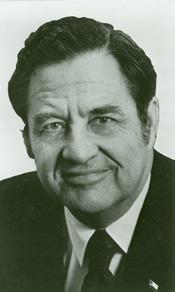
Historical · U.S. House · Texas · District 10
Jake Pickle
Former U.S. Representative · Texas District 10 · 1963–1995 · Democratic
Jake Pickle represented Texas's District 10 in the United States House of Representatives (1963–1995) for the Democratic party. The page below collects sourced biographical facts, term history, committee roles, and provenance for Pickle.
Bioguide ID: P000328
Key facts
- Full name
- Jake Pickle
- State
- Texas
- District
- District 10
- Party
- Democratic
- House service
- 1963–1995
- First House term
- 1963
- Status
- Left office
- Current term ends
- —
- Born
- 1913
- Bioguide ID
- P000328
- Committee assignments
- —
- Dataset version
- 1.20260605
Biographical narrative
1,058 words · sourced from the Wikipedia REST extract
James Jarrell "Jake" Pickle was a prominent United States Representative who served Texas's 10th congressional district from 1963 until 1995. A member of the Democratic Party, Pickle was known for his long tenure in Congress, spanning over three decades, during which he played a significant role in various legislative initiatives and community developments. His political career was marked by a commitment to social issues, particularly in the areas of civil rights and social security reform.
Early life and career
Jake Pickle was born on October 11, 1913, in Roscoe, Texas, and spent much of his formative years in Big Spring, Texas. His early life was characterized by a strong involvement in community activities, including achieving the rank of Eagle Scout, for which he received the Distinguished Eagle Scout Award from the Boy Scouts of America. Pickle's education began in the public schools of Big Spring, where he demonstrated leadership qualities that would later define his political career. He attended the University of Texas at Austin, where he earned a Bachelor of Arts degree. During his time at the university, he was a member of the 1934 Southwest Conference championship swimming team and served as the student body president in 1937. He was also affiliated with the Friar Society, a prestigious honor society at the university.
Pickle's political journey began when he was introduced to then-Representative Lyndon B. Johnson by future Texas Governor John Connally. Johnson became a significant mentor to Pickle, guiding him through the early stages of his political career. He worked on Johnson's re-election campaign in 1940 and later assisted Lady Bird Johnson in managing the congressional office. With the onset of World War II, Pickle enlisted in the U.S. Navy, serving as a gunnery officer on the cruisers USS St. Louis and USS Miami. His military service was marked by resilience, as he survived three torpedo attacks during the conflict.
After the war, Pickle, along with Johnson and Connally, co-founded a radio station in Austin, Texas, known as KVET. He spent a decade in the advertising business before transitioning into politics, joining the Democratic Election Executive Committee of Texas in 1957. This experience laid the groundwork for his eventual election to Congress.
In 1963, Pickle was elected as a Democrat to the 88th Congress through a special election, filling the vacancy left by the resignation of U.S. Representative Homer Thornberry, who had been appointed as a U.S. District Judge. Representing the Austin-based district that Johnson had previously held, Pickle quickly established himself as a key figure in Texas politics. Over the course of his career, he was re-elected 15 times, ultimately retiring at the end of the 103rd Congress in 1995. His campaign strategy included a unique personal touch, as he became known for distributing a "squeaky pickle" rubber toy during parades and community events.
House tenure
During his extensive tenure in the House of Representatives, Pickle rose through the ranks to become the third-ranking Democrat on the influential House Ways and Means Committee. This position allowed him to play a pivotal role in shaping significant legislation, particularly in the areas of taxation and social welfare. Pickle's voting record reflected a commitment to civil rights, as he supported landmark legislation such as the Civil Rights Acts of 1964 and 1968, as well as the Voting Rights Act of 1965. Notably, he was one of only eight Southern Representatives to vote in favor of the Civil Rights Act of 1964, demonstrating his willingness to take a stand on contentious issues.
One of Pickle's most significant legislative achievements was his involvement in the Social Security reform legislation of 1983. This comprehensive reform was aimed at addressing the impending insolvency of the Social Security system. The reforms included an increase in the payroll tax rate, a gradual rise in the full retirement age to 67, and the taxation of certain benefits. Pickle regarded this legislation as one of his greatest accomplishments, reflecting his dedication to ensuring the long-term viability of social safety nets for future generations.
In addition to his legislative work, Pickle was instrumental in securing research funding for the University of Texas. The university's J. J. Pickle Research Campus stands as a testament to his contributions to education and research in the state. He also played a crucial role in local infrastructure development, particularly in the relocation of Austin's main airport from Robert Mueller Municipal Airport to Austin-Bergstrom International Airport. His efforts to attract technological consortiums, such as SEMATECH and MCC, to Austin further underscored his commitment to fostering economic growth and innovation in the region.
Legislative focus and committees
Throughout his congressional career, Pickle's legislative focus encompassed a wide range of issues, reflecting the evolving needs of his constituents and the nation. His work on the House Ways and Means Committee allowed him to influence key policies related to taxation, healthcare, and social services. Pickle's support for civil rights legislation was a defining aspect of his tenure, as he consistently advocated for equality and justice.
In addition to civil rights, Pickle was deeply invested in social welfare programs, particularly those aimed at protecting vulnerable populations. His role in the Social Security reform of 1983 highlighted his commitment to ensuring that the program remained sustainable for future beneficiaries. Pickle's legislative initiatives often sought to balance fiscal responsibility with the need for social support, a reflection of his pragmatic approach to governance.
Pickle's contributions extended beyond legislation; he was also known for his ability to build coalitions and foster bipartisanship. His reputation as a "people's politician" resonated with constituents, and he was often seen as a representative who genuinely cared about the needs of his district. His legacy includes not only the policies he championed but also the relationships he cultivated throughout his career.
After retiring from Congress, Pickle remained active in various civic and philanthropic endeavors. He continued to support educational initiatives and contributed to the University of Texas at Austin, where his daughter Peggy Pickle has also been involved in promoting his legacy. Jake Pickle passed away on June 18, 2005, at his home in Austin, Texas, leaving behind a lasting impact on both his community and the broader political landscape. His contributions to Texas and the nation continue to be recognized and honored, including the designation of the SH 130 Toll Road as "Pickle Parkway" by the Texas Legislature in 2007.
Notable legislation
Sponsored and co-sponsored legislation for Jake Pickle is pending operator curation. The biographical narrative above carries the same provenance trail until per-bill rows are written.
Sources
- [1]https://en.wikipedia.org/wiki/J._J._PickleWikipedia · retrieved 2026-06-05
Notable quotes
Sourced quotes for Jake Pickle are pending operator curation. Narrative-scope provenance remains attached below.
Sources
- [1]https://en.wikipedia.org/wiki/J._J._PickleWikipedia · retrieved 2026-06-05
Key positions
Curated policy positions for Jake Pickle are pending operator review. The biographical narrative above carries the same provenance trail until per-topic positions are written.
Sources
- [1]https://en.wikipedia.org/wiki/J._J._PickleWikipedia · retrieved 2026-06-05
Terms served
- 1963–1965U.S. House · Term 1 · Democratic
- 1965–1967U.S. House · Term 2 · Democratic
- 1967–1969U.S. House · Term 3 · Democratic
- 1969–1971U.S. House · Term 4 · Democratic
- 1971–1973U.S. House · Term 5 · Democratic
- 1973–1975U.S. House · Term 6 · Democratic
- 1975–1977U.S. House · Term 7 · Democratic
- 1977–1979U.S. House · Term 8 · Democratic
- 1979–1981U.S. House · Term 9 · Democratic
- 1981–1983U.S. House · Term 10 · Democratic
- 1983–1985U.S. House · Term 11 · Democratic
- 1985–1987U.S. House · Term 12 · Democratic
- 1987–1989U.S. House · Term 13 · Democratic
- 1989–1991U.S. House · Term 14 · Democratic
- 1991–1993U.S. House · Term 15 · Democratic
- 1993–1995U.S. House · Term 16 · Democratic
Sources & provenance
Every attributable claim above carries a per-section [N] marker that resolves to the corresponding URL below. Each entry records the upstream provider, the canonical URL, and the timestamp at which the source was retrieved by the ingest pipeline.
Key facts
- https://bioguide.congress.gov/search/bio/P000328bioguide · retrieved 2026-06-05
- https://www.govtrack.us/congress/members/408725govtrack · retrieved 2026-06-05
Biographical narrative
- https://en.wikipedia.org/wiki/J._J._Picklewikipedia · retrieved 2026-06-05
Find your representative
Every U.S. state elects representatives by district. Browse Texas’s delegation, the full former-representative roster, or explore the role and term length.
Related on The Candidate
- Preceded by James BuchananEarlier holder of the Texas District 10 House seat · Democratic.Open
- Charles StewartFormer U.S. Representative · Texas District 1 · DemocraticOpen
- David KaufmanFormer U.S. Representative · Texas District 1 · DemocraticOpen
- Eugene BlackFormer U.S. Representative · Texas District 1 · DemocraticOpen
- George SmythFormer U.S. Representative · Texas District 1 · DemocraticOpen
- Democratic PartyFederal candidates and office holders on the Democratic line.Open