
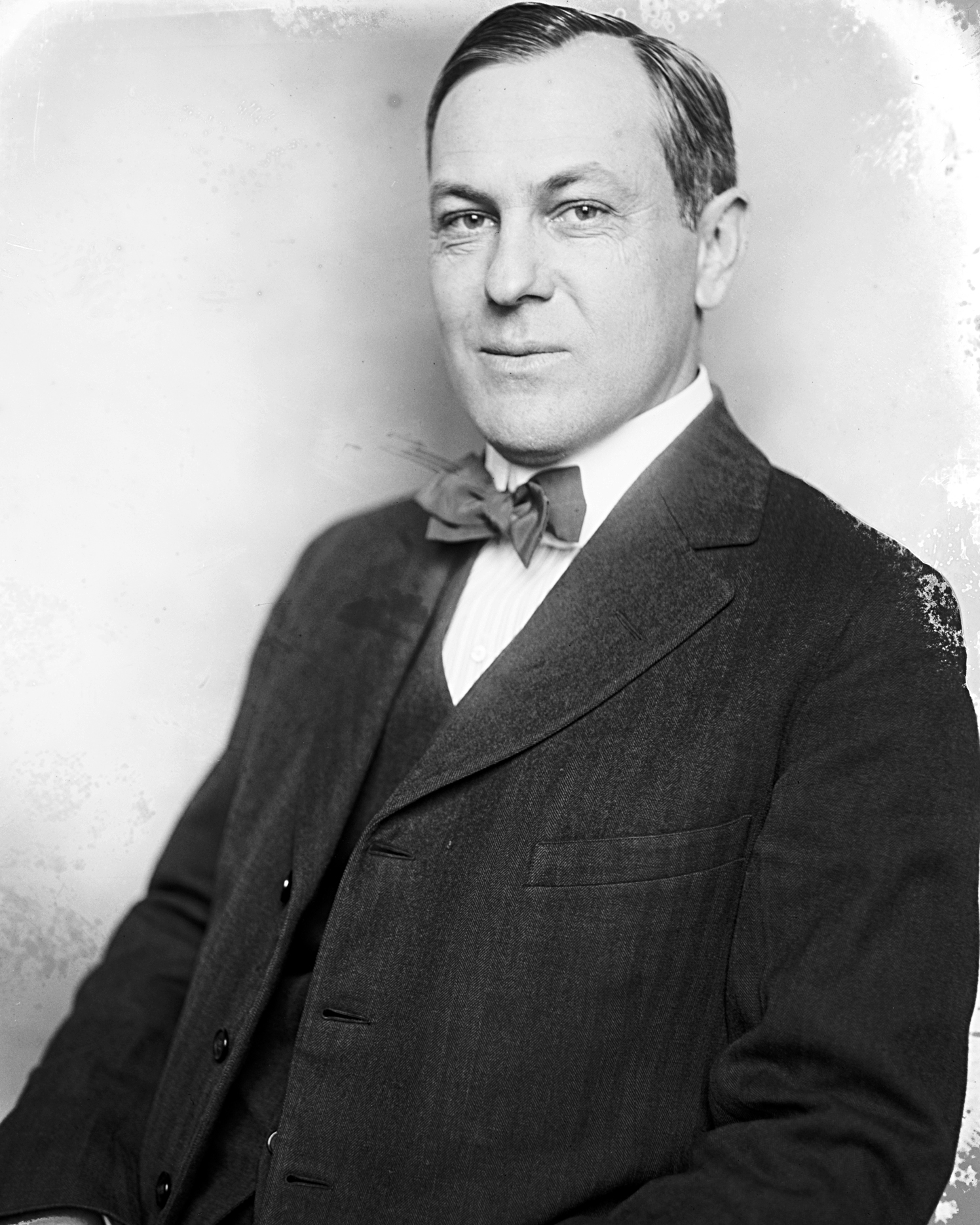
Historical · U.S. House · Texas · District 12
Fritz Lanham
Former U.S. Representative · Texas District 12 · 1919–1947 · Democratic
Fritz Lanham represented Texas's District 12 in the United States House of Representatives (1919–1947) for the Democratic party. The page below collects sourced biographical facts, term history, committee roles, and provenance for Lanham.
Bioguide ID: L000076
Key facts
- Full name
- Fritz Lanham
- State
- Texas
- District
- District 12
- Party
- Democratic
- House service
- 1919–1947
- First House term
- 1919
- Status
- Left office
- Current term ends
- —
- Born
- 1880
- Bioguide ID
- L000076
- Committee assignments
- —
- Dataset version
- 1.20260605
Biographical narrative
864 words · sourced from the Wikipedia REST extract
Frederick Garland "Fritz" Lanham was a prominent Democratic politician who served as a U.S. Representative for Texas's 12th congressional district from 1919 until 1947. Born on January 3, 1880, in Weatherford, Texas, he was the son of Samuel Willis Tucker Lanham, a notable political figure who served multiple terms in the U.S. House of Representatives and held the office of Governor of Texas. Lanham's lengthy congressional career spanned 14 terms, during which he played a significant role in various legislative initiatives and served on several important committees.
Early life and career
Fritz Lanham was born into a politically engaged family, which likely influenced his future career in public service. He was the son of Sarah Beona Meng and Samuel Willis Tucker Lanham, who was a well-known political figure in Texas. Lanham's early education took place in public schools in Washington, D.C., where he lived during his father's congressional tenure. He graduated with a Bachelor of Arts degree from Weatherford College in 1897 and continued his education at Vanderbilt University for a brief period before transferring to the University of Texas at Austin. At the University of Texas, he became the first editor of the student newspaper, The Texan, and graduated in 1900.
After completing his education, Lanham worked as a secretary for his father and held various positions, including working at a local bank in Weatherford. He later returned to the University of Texas to study law, although he did not complete a formal legal degree. Instead, he was admitted to the bar in 1909 and began practicing law in Weatherford. His career also included roles at the Texas School for the Deaf in Austin and as a journalist for The Dallas Morning News. In addition to his legal and journalistic endeavors, Lanham had a creative side; he was an amateur magician and co-wrote two musical comedies with his brother, as well as touring with a stage company in 1907.
During World War I, Lanham was active in supporting the war effort, participating in Liberty bond drives, soliciting subscriptions for the Red Cross, and entertaining troops stationed in camps around Fort Worth. His early experiences in public service and community involvement laid the groundwork for his later political career.
House tenure
Fritz Lanham's political career began in earnest when he ran for the office of Parker County Attorney, although this initial attempt was unsuccessful. In 1917, he relocated to Fort Worth, Texas, where he served as an assistant county attorney in Tarrant County. His political aspirations were realized in 1919 when he won a special election to represent Texas's 12th congressional district in the U.S. House of Representatives. This election followed the resignation of fellow Democrat James Clifton Wilson, who left to accept a judgeship on the U.S. District Court for the Northern District of Texas.
Lanham's congressional career was marked by a significant period of service, as he was re-elected thirteen times, allowing him to serve continuously until his retirement in 1946. Throughout his tenure, he was involved in various legislative efforts and was a member of several important committees. His committee assignments included the Committee on the District of Columbia, the Committee on Patents, the Committee on Public Lands, and the Committee on Public Buildings and Grounds. Notably, he became the chairman of the Committee on Public Buildings and Grounds in 1931, a position that allowed him to influence decisions regarding federal infrastructure and facilities.
Legislative focus and committees
During his time in Congress, Fritz Lanham was known for his involvement in significant legislative initiatives that addressed pressing national issues. He was the lead sponsor of the National Housing for Defense Act, which aimed to provide housing solutions in anticipation of increased military needs during World War II. Additionally, he played a key role in the passage of the Community Facilities Act of 1940, commonly referred to as the Lanham Act. This legislation was designed to support the construction of community facilities and infrastructure, reflecting Lanham's commitment to improving public services and resources.
Lanham's legislative contributions extended beyond housing and community facilities. He was also instrumental in the Lanham Act, a federal law that established protections against trademark infringement, trademark dilution, and false advertising. This act has had a lasting impact on intellectual property law in the United States, demonstrating Lanham's influence in shaping legal frameworks that govern commerce and trade.
After retiring from Congress in 1947, Lanham continued to engage in public service as a lobbyist. He represented various organizations, including the National Patent Council, the American Fair Trade Council, and the Trinity Improvement Association of Texas, where he served as vice president starting in 1946. His post-congressional career allowed him to maintain an active role in advocating for issues related to patents and fair trade practices.
Fritz Lanham's legacy is commemorated in part by the Fritz G. Lanham Federal Building in Fort Worth, which was constructed in 1966 and named in his honor. He passed away on July 31, 1965, in Austin, Texas, after suffering a heart attack. He was buried at City Greenwood Cemetery in Weatherford, Texas. His contributions to Texas and the nation during his lengthy congressional career remain a significant part of his legacy.
Notable legislation
Sponsored and co-sponsored legislation for Fritz Lanham is pending operator curation. The biographical narrative above carries the same provenance trail until per-bill rows are written.
Sources
- [1]https://en.wikipedia.org/wiki/Fritz_G._LanhamWikipedia · retrieved 2026-06-05
Notable quotes
Sourced quotes for Fritz Lanham are pending operator curation. Narrative-scope provenance remains attached below.
Sources
- [1]https://en.wikipedia.org/wiki/Fritz_G._LanhamWikipedia · retrieved 2026-06-05
Key positions
Curated policy positions for Fritz Lanham are pending operator review. The biographical narrative above carries the same provenance trail until per-topic positions are written.
Sources
- [1]https://en.wikipedia.org/wiki/Fritz_G._LanhamWikipedia · retrieved 2026-06-05
Terms served
- 1919–1921U.S. House · Term 1 · Democratic
- 1921–1923U.S. House · Term 2 · Democratic
- 1923–1925U.S. House · Term 3 · Democratic
- 1925–1927U.S. House · Term 4 · Democratic
- 1927–1929U.S. House · Term 5 · Democratic
- 1929–1931U.S. House · Term 6 · Democratic
- 1931–1933U.S. House · Term 7 · Democratic
- 1933–1935U.S. House · Term 8 · Democratic
- 1935–1937U.S. House · Term 9 · Democratic
- 1937–1939U.S. House · Term 10 · Democratic
- 1939–1941U.S. House · Term 11 · Democratic
- 1941–1943U.S. House · Term 12 · Democratic
- 1943–1945U.S. House · Term 13 · Democratic
- 1945–1947U.S. House · Term 14 · Democratic
Sources & provenance
Every attributable claim above carries a per-section [N] marker that resolves to the corresponding URL below. Each entry records the upstream provider, the canonical URL, and the timestamp at which the source was retrieved by the ingest pipeline.
Key facts
- https://bioguide.congress.gov/search/bio/L000076bioguide · retrieved 2026-06-05
- https://www.govtrack.us/congress/members/406585govtrack · retrieved 2026-06-05
Biographical narrative
- https://en.wikipedia.org/wiki/Fritz_G._Lanhamwikipedia · retrieved 2026-06-05
Find your representative
Every U.S. state elects representatives by district. Browse Texas’s delegation, the full former-representative roster, or explore the role and term length.
Related on The Candidate
- Preceded by Oscar CallawayEarlier holder of the Texas District 12 House seat · Democratic.Open
- Succeeded by Wingate LucasLater holder of the Texas District 12 House seat · Democratic.Open
- Charles StewartFormer U.S. Representative · Texas District 1 · DemocraticOpen
- David KaufmanFormer U.S. Representative · Texas District 1 · DemocraticOpen
- Eugene BlackFormer U.S. Representative · Texas District 1 · DemocraticOpen
- George SmythFormer U.S. Representative · Texas District 1 · DemocraticOpen