
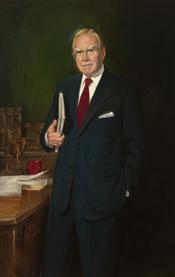
Historical · U.S. House · Texas · District 12
James Wright Jr.
Former U.S. Representative · Texas District 12 · 1955–1989 · Democratic
James Wright Jr. represented Texas's District 12 in the United States House of Representatives (1955–1989) for the Democratic party. The page below collects sourced biographical facts, term history, committee roles, and provenance for Jr..
Bioguide ID: W000763
Key facts
- Full name
- James Wright Jr.
- State
- Texas
- District
- District 12
- Party
- Democratic
- House service
- 1955–1989
- First House term
- 1955
- Status
- Left office
- Current term ends
- —
- Born
- 1922
- Bioguide ID
- W000763
- Committee assignments
- —
- Dataset version
- 1.20260605
Biographical narrative
916 words · sourced from the Wikipedia REST extract
James C. Wright Jr. was an American politician who served as a Democratic U.S. Representative for Texas's 12th congressional district from 1955 until 1989. He held the position of Speaker of the House from 1987 to 1989, becoming a prominent figure in American politics during his extensive congressional career. Wright's legislative actions and leadership roles significantly influenced both his district and the broader political landscape of the United States.
Early life and career
James Claude Wright Jr. was born on December 22, 1922, in Fort Worth, Texas. He was the son of Marie Lyster and James Claude Wright, and his heritage included English and Irish ancestry. Due to his father's profession as a traveling salesman, Wright spent his formative years moving between various communities in Texas and Oklahoma. He attended public schools in Fort Worth and Dallas, ultimately graduating from Adamson High School, which was formerly known as Oak Cliff High School.
Following high school, Wright pursued higher education at Weatherford College and the University of Texas at Austin, although he did not complete a degree. His academic pursuits were interrupted by World War II, during which he enlisted in the United States Army Air Forces in December 1941. After completing his training, he was commissioned as a second lieutenant in the Air Corps in 1942. Wright served as a bombardier in the South Pacific, flying combat missions in B-24 Liberators with the 530th Bomb Squadron, 380th Bomb Group (Heavy). His military service earned him a Distinguished Flying Cross. In 2005, he published a book detailing his wartime experiences titled "The Flying Circus: Pacific War—1943—As Seen through A Bombsight."
After returning from the war, Wright settled in Weatherford, Texas, where he entered the business world by co-founding a trade show exhibition and marketing firm. His political career began in 1946 when he was elected to the Texas House of Representatives without opposition. He served in this capacity from 1947 until 1949 but faced defeat in his re-election bid in 1948. During this period, his opponent criticized him for perceived weaknesses in his stances on communism and interracial marriage. Following his time in the Texas legislature, Wright served as the mayor of Weatherford from 1950 to 1954 and held the presidency of the League of Texas Municipalities in 1953.
House tenure
In 1954, Wright successfully ran for the U.S. House of Representatives, representing Texas's 12th congressional district, which included Fort Worth and Weatherford. His election came despite significant opposition from Amon G. Carter, the publisher of the Fort Worth Star-Telegram, who supported the incumbent Democrat Wingate Lucas. Wright's political career in Congress spanned 18 terms, during which he built a reputation for his ability to navigate the complexities of legislative politics and foster relationships across party lines. He developed a notable friendship with Amon G. Carter Jr., often emphasizing the importance of turning adversaries into allies.
Wright's tenure in Congress was marked by significant historical events, including his appearance alongside President John F. Kennedy at a breakfast event in Fort Worth on November 22, 1963, the day of Kennedy's assassination in Dallas. Throughout his congressional career, Wright was involved in various legislative matters, particularly those related to civil rights and infrastructure.
In 1976, Wright was elected House Majority Leader, a position that further elevated his influence within the Democratic Party and the House of Representatives. He played a crucial role in various legislative initiatives, including voting for the establishment of Martin Luther King Jr. Day as a federal holiday in 1983. His leadership culminated in his election as Speaker of the House in 1987, following the retirement of Tip O'Neill.
Legislative focus and committees
During his time in Congress, Wright was known for his complex positions on civil rights legislation. He distinguished himself from many of his Southern colleagues by refusing to sign the Southern Manifesto in 1956, which opposed desegregation. He voted in favor of the Civil Rights Acts of 1960 and 1968 and supported the Senate amendment to the Civil Rights Act of 1957. However, he voted against the Civil Rights Act of 1964, expressing concerns about its voting rights provisions, which he believed were essential for true civil rights advancement. He also opposed the 24th Amendment to the U.S. Constitution.
Wright's legislative focus extended beyond civil rights; he was a senior member of the House Public Works Committee, where he contributed to various infrastructure projects and initiatives. One of the most notable pieces of legislation associated with him is the Wright Amendment, enacted in 1979. This law restricted air travel from Dallas's Love Field airport to certain nearby states, a measure intended to protect the newly established Dallas Fort Worth International Airport. The Wright Amendment became a contentious topic in Texas, particularly as it limited competition for airlines operating in the region.
As Speaker of the House, Wright led the Democratic Caucus in March 1988 to successfully override President Ronald Reagan's veto of the Civil Rights Restoration Act of 1987, demonstrating his commitment to civil rights legislation. However, his career faced challenges, and he resigned from Congress in June 1989 amid an investigation by the House Ethics Committee regarding compensation received by him and his wife.
After leaving Congress, Wright transitioned to academia, becoming a professor at Texas Christian University. He continued to engage with political and historical discourse until his passing on May 6, 2015, in Fort Worth, Texas. His lengthy career in public service and his contributions to legislative processes left a lasting impact on Texas and the nation.
Notable legislation
Sponsored and co-sponsored legislation for James Wright Jr. is pending operator curation. The biographical narrative above carries the same provenance trail until per-bill rows are written.
Sources
- [1]https://en.wikipedia.org/wiki/Jim_WrightWikipedia · retrieved 2026-06-05
Notable quotes
Sourced quotes for James Wright Jr. are pending operator curation. Narrative-scope provenance remains attached below.
Sources
- [1]https://en.wikipedia.org/wiki/Jim_WrightWikipedia · retrieved 2026-06-05
Key positions
Curated policy positions for James Wright Jr. are pending operator review. The biographical narrative above carries the same provenance trail until per-topic positions are written.
Sources
- [1]https://en.wikipedia.org/wiki/Jim_WrightWikipedia · retrieved 2026-06-05
Terms served
- 1955–1957U.S. House · Term 1 · Democratic
- 1957–1959U.S. House · Term 2 · Democratic
- 1959–1961U.S. House · Term 3 · Democratic
- 1961–1963U.S. House · Term 4 · Democratic
- 1963–1965U.S. House · Term 5 · Democratic
- 1965–1967U.S. House · Term 6 · Democratic
- 1967–1969U.S. House · Term 7 · Democratic
- 1969–1971U.S. House · Term 8 · Democratic
- 1971–1973U.S. House · Term 9 · Democratic
- 1973–1975U.S. House · Term 10 · Democratic
- 1975–1977U.S. House · Term 11 · Democratic
- 1977–1979U.S. House · Term 12 · Democratic
- 1979–1981U.S. House · Term 13 · Democratic
- 1981–1983U.S. House · Term 14 · Democratic
- 1983–1985U.S. House · Term 15 · Democratic
- 1985–1987U.S. House · Term 16 · Democratic
- 1987–1989U.S. House · Term 17 · Democratic
- 1989–1989U.S. House · Term 18 · Democratic
Sources & provenance
Every attributable claim above carries a per-section [N] marker that resolves to the corresponding URL below. Each entry records the upstream provider, the canonical URL, and the timestamp at which the source was retrieved by the ingest pipeline.
Key facts
- https://bioguide.congress.gov/search/bio/W000763bioguide · retrieved 2026-06-05
- https://www.govtrack.us/congress/members/411912govtrack · retrieved 2026-06-05
Biographical narrative
- https://en.wikipedia.org/wiki/Jim_Wrightwikipedia · retrieved 2026-06-05
Find your representative
Every U.S. state elects representatives by district. Browse Texas’s delegation, the full former-representative roster, or explore the role and term length.
Related on The Candidate
- Preceded by Wingate LucasEarlier holder of the Texas District 12 House seat · Democratic.Open
- Succeeded by Pete GerenLater holder of the Texas District 12 House seat · Democratic.Open
- Charles StewartFormer U.S. Representative · Texas District 1 · DemocraticOpen
- David KaufmanFormer U.S. Representative · Texas District 1 · DemocraticOpen
- Eugene BlackFormer U.S. Representative · Texas District 1 · DemocraticOpen
- George SmythFormer U.S. Representative · Texas District 1 · DemocraticOpen