
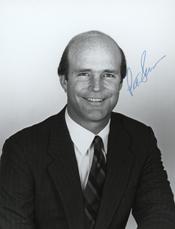
Historical · U.S. House · Texas · District 12
Pete Geren
Former U.S. Representative · Texas District 12 · 1989–1997 · Democratic
Pete Geren represented Texas's District 12 in the United States House of Representatives (1989–1997) for the Democratic party. The page below collects sourced biographical facts, term history, committee roles, and provenance for Geren.
Bioguide ID: G000134
Key facts
- Full name
- Pete Geren
- State
- Texas
- District
- District 12
- Party
- Democratic
- House service
- 1989–1997
- First House term
- 1989
- Status
- Left office
- Current term ends
- —
- Born
- 1952
- Bioguide ID
- G000134
- Committee assignments
- —
- Dataset version
- 1.20260605
Biographical narrative
902 words · sourced from the Wikipedia REST extract
Preston Murdoch "Pete" Geren III is a former American politician and attorney who served as a Democratic member of the United States House of Representatives, representing Texas's 12th congressional district from 1989 until 1997. Geren's political career is marked by his tenure in Congress, where he was known for his moderate stance within the Democratic Party and for coining the term "Blue Dog Democrat." After leaving Congress, he held several significant positions within the Department of Defense, culminating in his role as the 20th Secretary of the Army. In his later career, Geren has taken on leadership roles in philanthropic organizations, including his current position as president of the Sid W. Richardson Foundation.
Early life and career
Pete Geren was born on January 29, 1952, in Fort Worth, Texas. He is the son of Preston Geren Jr. and grew up in a family engaged in public service and politics. Geren pursued higher education at the Georgia Institute of Technology in Atlanta, Georgia, from 1970 to 1973, where he distinguished himself as the starting center on the football team. He later transferred to the University of Texas, where he earned a Bachelor of Arts degree in 1974. Geren continued his education at the University of Texas School of Law, receiving his Juris Doctor in 1978.
Before entering the political arena, Geren worked as an attorney and businessman in Fort Worth. His early career included a significant role as an aide to U.S. Senator Lloyd Bentsen, a prominent Texas Democrat, from 1983 to 1985. This experience in the Senate provided Geren with insights into the legislative process and the workings of federal government, laying the groundwork for his future political career.
Geren's family has a notable political background; his older brother, Charlie Geren, is a Republican member of the Texas House of Representatives, representing District 99 in Tarrant County. This familial connection to politics may have influenced Geren's own path into public service.
House tenure
Geren's congressional career began when he was elected to the United States House of Representatives in a special election in 1989, succeeding former Speaker of the House Jim Wright. His victory over Republican candidate Bob Lanier, a well-known allergist in Fort Worth, marked the beginning of a four-term tenure in the House. Geren was re-elected three times, serving until January 3, 1997, when he opted not to seek re-election. He was succeeded by Kay Granger.
During his time in Congress, Geren was recognized for his moderate views and his efforts to bridge the divide within the Democratic Party. He played a significant role in the formation of the Blue Dog Coalition, a group of moderate and conservative Democrats who sought to promote fiscal responsibility and a centrist approach to governance. Geren coined the term "Blue Dog Democrat," which reflected the coalition's stance that its members felt "choked blue" by the more liberal factions within the party. This term has since become a significant part of the political lexicon, illustrating the dynamics within the Democratic Party.
Geren's legislative work focused on various issues, including defense, education, and health care. His background as an attorney and his experience in the Senate informed his approach to policy-making, allowing him to navigate complex legislative challenges effectively.
Legislative focus and committees
Throughout his tenure in the House, Geren was involved in several committees that aligned with his interests and expertise. His work on these committees allowed him to influence legislation in areas critical to his constituents and the broader national interest. While specific details regarding the committees he served on are not provided, it is known that his legislative focus included defense and military issues, which would later play a significant role in his career after leaving Congress.
Geren's time in Congress was marked by a commitment to bipartisan cooperation and a focus on pragmatic solutions to the challenges facing his district and the nation. His moderate stance often positioned him as a bridge between more liberal and conservative factions, allowing him to advocate for policies that aimed to benefit a wide range of constituents.
After leaving Congress, Geren continued his public service career by joining the Department of Defense in September 2001. He initially served as Special Assistant to the Defense Secretary, where he was involved in inter-agency initiatives and legislative affairs. His experience in Congress likely contributed to his effectiveness in this role, as he navigated the complexities of defense policy and legislative interactions.
In 2005, Geren was appointed as the acting United States Secretary of the Air Force, a position he held until the confirmation of his successor later that year. He then became the 28th Undersecretary of the Army in 2006, where he served as a senior advisor to the Secretary of the Army. His leadership in the Department of Defense culminated in his appointment as Secretary of the Army in 2007, a role he held until 2009.
Following his departure from government service, Geren took on a leadership role in the philanthropic sector, becoming the president and CEO of the Sid W. Richardson Foundation in Fort Worth, Texas, in 2011. In this capacity, he has focused on initiatives that support education, health, and community development, reflecting his ongoing commitment to public service and community engagement.
Geren's career reflects a blend of legal expertise, political acumen, and a dedication to public service, with a focus on fostering cooperation and pragmatic solutions in both legislative and philanthropic endeavors.
Notable legislation
Sponsored and co-sponsored legislation for Pete Geren is pending operator curation. The biographical narrative above carries the same provenance trail until per-bill rows are written.
Sources
- [1]https://en.wikipedia.org/wiki/Pete_GerenWikipedia · retrieved 2026-06-05
Notable quotes
Sourced quotes for Pete Geren are pending operator curation. Narrative-scope provenance remains attached below.
Sources
- [1]https://en.wikipedia.org/wiki/Pete_GerenWikipedia · retrieved 2026-06-05
Key positions
Curated policy positions for Pete Geren are pending operator review. The biographical narrative above carries the same provenance trail until per-topic positions are written.
Sources
- [1]https://en.wikipedia.org/wiki/Pete_GerenWikipedia · retrieved 2026-06-05
Terms served
- 1989–1991U.S. House · Term 1 · Democratic
- 1991–1993U.S. House · Term 2 · Democratic
- 1993–1995U.S. House · Term 3 · Democratic
- 1995–1997U.S. House · Term 4 · Democratic
Sources & provenance
Every attributable claim above carries a per-section [N] marker that resolves to the corresponding URL below. Each entry records the upstream provider, the canonical URL, and the timestamp at which the source was retrieved by the ingest pipeline.
Key facts
- https://bioguide.congress.gov/search/bio/G000134bioguide · retrieved 2026-06-05
- https://www.govtrack.us/congress/members/404503govtrack · retrieved 2026-06-05
Biographical narrative
- https://en.wikipedia.org/wiki/Pete_Gerenwikipedia · retrieved 2026-06-05
Find your representative
Every U.S. state elects representatives by district. Browse Texas’s delegation, the full former-representative roster, or explore the role and term length.
Related on The Candidate
- Preceded by James Wright Jr.Earlier holder of the Texas District 12 House seat · Democratic.Open
- Succeeded by Kay GrangerLater holder of the Texas District 12 House seat · Republican.Open
- Charles StewartFormer U.S. Representative · Texas District 1 · DemocraticOpen
- David KaufmanFormer U.S. Representative · Texas District 1 · DemocraticOpen
- Eugene BlackFormer U.S. Representative · Texas District 1 · DemocraticOpen
- George SmythFormer U.S. Representative · Texas District 1 · DemocraticOpen