
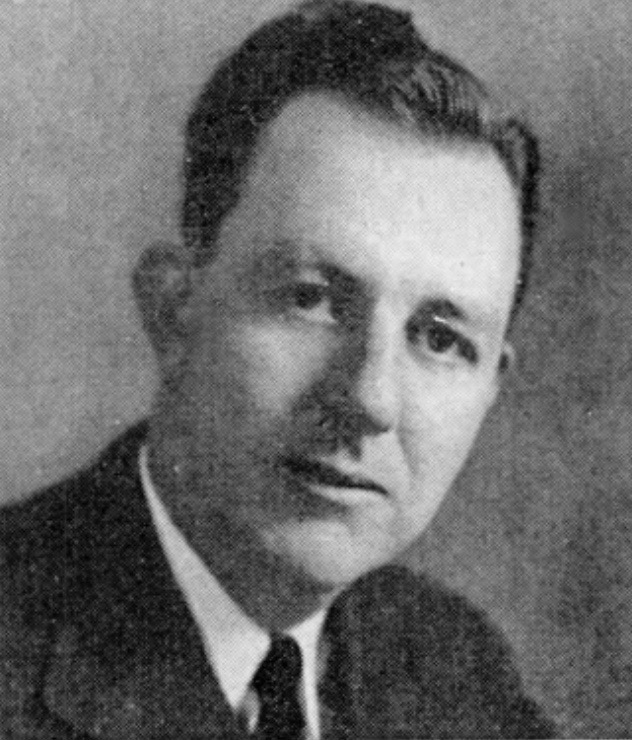
Historical · U.S. House · Texas · District 14
John Lyle Jr.
Former U.S. Representative · Texas District 14 · 1945–1955 · Democratic
John Lyle Jr. represented Texas's District 14 in the United States House of Representatives (1945–1955) for the Democratic party. The page below collects sourced biographical facts, term history, committee roles, and provenance for Jr..
Bioguide ID: L000525
Key facts
- Full name
- John Lyle Jr.
- State
- Texas
- District
- District 14
- Party
- Democratic
- House service
- 1945–1955
- First House term
- 1945
- Status
- Left office
- Current term ends
- —
- Born
- 1910
- Bioguide ID
- L000525
- Committee assignments
- —
- Dataset version
- 1.20260605
Biographical narrative
814 words · sourced from the Wikipedia REST extract
John Lyle Jr. was a prominent American politician who served as a U.S. Representative for Texas's 14th congressional district from 1945 until 1955. A member of the Democratic Party, Lyle's political career spanned a decade during which he was involved in various legislative activities and served on multiple committees. His tenure in Congress was marked by a strong anti-communist stance and a commitment to his constituents in Texas.
Early life and career
John Lyle Jr. was born on September 4, 1910, in Boyd, Texas, into a family with deep roots in the state, being a third-generation Texan. He completed his secondary education at Wichita Falls High School in Wichita Falls, Texas. Following high school, Lyle pursued higher education at the Junior College in Wichita Falls before transferring to the University of Texas. During his time at the University, he worked as a night watchman in the Capitol basement, which provided him with an early glimpse into the workings of government.
Lyle later attended Houston Law School at night while continuing to work. He was admitted to the bar in 1934, marking the beginning of his legal career in Corpus Christi, Texas. His legal practice laid the groundwork for his future political endeavors, as he became familiar with the legal and legislative processes that would later inform his work in Congress.
Before his election to the U.S. House of Representatives, Lyle served in the Texas House of Representatives from 1941 to 1944. His political career was temporarily interrupted by his service in the United States Army during World War II, where he served as a Captain of artillery in Italy from 1942 to 1944. His military service not only contributed to his leadership skills but also enhanced his public profile, which would later aid his political ambitions.
In 1944, while still on active duty, Lyle won the Democratic primary for nomination to the United States House of Representatives. His military service and political connections helped him secure the nomination, and he was subsequently elected to Congress.
House tenure
Lyle's congressional career began on January 3, 1945, when he was elected to the Seventy-ninth Congress. He served a total of five terms in the House, with his last term concluding on January 3, 1955. Throughout his time in office, Lyle enjoyed considerable support from influential political families, particularly the Parr family of Duval County, which bolstered his electoral success.
During his tenure, Lyle was known for his strong anti-communist views, which were particularly prominent in the post-World War II era. His stance on this issue led him to become a chief witness against Leland Olds, who had served as Chairman of the Federal Power Commission. Olds faced significant opposition regarding his reappointment, largely due to allegations of past associations with the Communist Party. Lyle's testimony against Olds highlighted his commitment to combating perceived threats to American values and governance.
Despite his active role in Congress and his involvement in various legislative matters, Lyle chose not to seek renomination in 1954, marking the end of his congressional career. His decision not to run again may have been influenced by the shifting political landscape of the time, as well as his own aspirations beyond the House of Representatives.
Legislative focus and committees
Throughout his time in Congress, Lyle's legislative focus was characterized by a commitment to his constituents and a strong stance against communism. His anti-communist position was a defining aspect of his political identity and influenced his actions and decisions within the House.
While specific details about the committees on which Lyle served are not provided, it is common for members of Congress to participate in committees that align with their interests and the needs of their constituents. Given Lyle's background in law and his focus on public service, it is likely that he was involved in committees that addressed issues pertinent to Texas and the broader national interest.
Lyle's legislative efforts were also shaped by the political context of the time, including the post-war recovery period and the onset of the Cold War. His alignment with the Democratic Party during this era meant that he was part of broader legislative initiatives aimed at addressing economic recovery, social issues, and national security concerns.
After leaving Congress, Lyle continued to be active in public service and leadership roles. He served as a director of Falcon Seaboard and St. Luke's Episcopal Hospital in Houston, Texas. His commitment to public service extended to his appointment to the Federal Council on Aging in 1994, reflecting his ongoing engagement with issues affecting older Americans.
John Lyle Jr. passed away on November 11, 2003, in Houston, Texas. His contributions to Texas politics and his service in the U.S. House of Representatives are remembered as part of his legacy. He was interred at the Texas State Cemetery in Austin, Texas, honoring his long-standing commitment to public service and his home state.
Notable legislation
Sponsored and co-sponsored legislation for John Lyle Jr. is pending operator curation. The biographical narrative above carries the same provenance trail until per-bill rows are written.
Sources
- [1]https://en.wikipedia.org/wiki/John_E._Lyle_Jr.Wikipedia · retrieved 2026-06-05
Notable quotes
Sourced quotes for John Lyle Jr. are pending operator curation. Narrative-scope provenance remains attached below.
Sources
- [1]https://en.wikipedia.org/wiki/John_E._Lyle_Jr.Wikipedia · retrieved 2026-06-05
Key positions
Curated policy positions for John Lyle Jr. are pending operator review. The biographical narrative above carries the same provenance trail until per-topic positions are written.
Sources
- [1]https://en.wikipedia.org/wiki/John_E._Lyle_Jr.Wikipedia · retrieved 2026-06-05
Terms served
- 1945–1947U.S. House · Term 1 · Democratic
- 1947–1949U.S. House · Term 2 · Democratic
- 1949–1951U.S. House · Term 3 · Democratic
- 1951–1953U.S. House · Term 4 · Democratic
- 1953–1955U.S. House · Term 5 · Democratic
Sources & provenance
Every attributable claim above carries a per-section [N] marker that resolves to the corresponding URL below. Each entry records the upstream provider, the canonical URL, and the timestamp at which the source was retrieved by the ingest pipeline.
Key facts
- https://bioguide.congress.gov/search/bio/L000525bioguide · retrieved 2026-06-05
- https://www.govtrack.us/congress/members/407009govtrack · retrieved 2026-06-05
Biographical narrative
- https://en.wikipedia.org/wiki/John_E._Lyle_Jr.wikipedia · retrieved 2026-06-05
Find your representative
Every U.S. state elects representatives by district. Browse Texas’s delegation, the full former-representative roster, or explore the role and term length.
Related on The Candidate
- Preceded by Richard Kleberg Sr.Earlier holder of the Texas District 14 House seat · Democratic.Open
- Succeeded by John BellLater holder of the Texas District 14 House seat · Democratic.Open
- Charles StewartFormer U.S. Representative · Texas District 1 · DemocraticOpen
- David KaufmanFormer U.S. Representative · Texas District 1 · DemocraticOpen
- Eugene BlackFormer U.S. Representative · Texas District 1 · DemocraticOpen
- George SmythFormer U.S. Representative · Texas District 1 · DemocraticOpen