
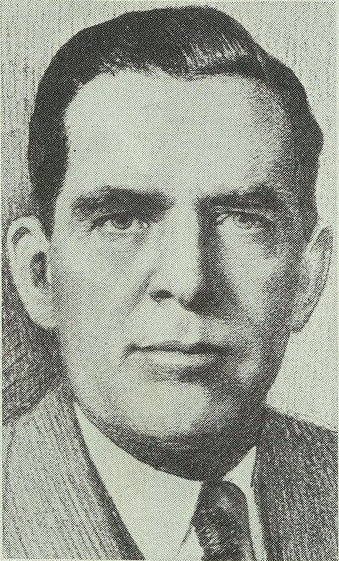
Historical · U.S. House · Texas · District 14
Richard Kleberg Sr.
Former U.S. Representative · Texas District 14 · 1931–1945 · Democratic
Richard Kleberg Sr. represented Texas's District 14 in the United States House of Representatives (1931–1945) for the Democratic party. The page below collects sourced biographical facts, term history, committee roles, and provenance for Sr..
Bioguide ID: K000257
Key facts
- Full name
- Richard Kleberg Sr.
- State
- Texas
- District
- District 14
- Party
- Democratic
- House service
- 1931–1945
- First House term
- 1931
- Status
- Left office
- Current term ends
- —
- Born
- 1887
- Bioguide ID
- K000257
- Committee assignments
- —
- Dataset version
- 1.20260605
Biographical narrative
811 words · sourced from the Wikipedia REST extract
Richard Mifflin Kleberg Sr. was an American politician who served as a member of the United States House of Representatives for Texas's 14th congressional district from 1931 until 1945. A member of the Democratic Party, Kleberg was notable for his long tenure in Congress, during which he was involved in significant legislative developments of the era. He was also an heir to the King Ranch, a prominent ranching enterprise in South Texas, which contributed to his local prominence and political influence.
Early life and career
Richard Kleberg was born on November 18, 1887. His early life and formative years were shaped by his family's involvement in the ranching industry, particularly through the King Ranch, which is one of the largest and most famous ranches in the United States. The King Ranch has played a significant role in the history of Texas and American ranching, and Kleberg's association with it provided him with a unique perspective on agricultural and rural issues that would later inform his political career.
Before entering politics, Kleberg was engaged in various business ventures, likely influenced by his family's legacy in ranching and agriculture. His background in these sectors would later resonate with his constituents, many of whom were involved in similar industries. Kleberg's political career began in earnest when he was elected to the U.S. House of Representatives in a special election in 1931, succeeding the late Harry M. Wurzbach. His election marked a pivotal moment for the Democratic Party, as it contributed to the party's majority in the House of Representatives, a status that the Democrats would maintain for the majority of the subsequent decades.
House tenure
Kleberg's tenure in the House of Representatives spanned seven terms, beginning in 1931 and concluding in 1945. Throughout this period, he was known for his conservative stance on various issues, particularly in the context of the New Deal policies championed by President Franklin D. Roosevelt. Initially, Kleberg expressed skepticism toward these policies, reflecting a broader conservative sentiment among some members of the Democratic Party during that era. However, he was influenced by Lyndon B. Johnson, who served as his congressional secretary from 1931 until 1935. Johnson's advocacy for certain New Deal initiatives helped sway Kleberg's position on key legislation, leading him to support measures that were popular among his constituents, despite his initial reservations.
Kleberg's political career was marked by significant electoral success. He was elected unopposed in both the 1940 and 1942 elections, indicating a strong base of support within his district. His ability to navigate the political landscape of the time, including the complexities of the New Deal, showcased his adaptability as a politician. However, his political fortunes changed in 1944 when he faced a challenge for renomination and was ultimately defeated by John E. Lyle, Jr. This defeat marked the end of Kleberg's congressional career, as he did not return to public office after his last term ended on January 3, 1945.
Legislative focus and committees
During his time in Congress, Richard Kleberg was involved in various legislative initiatives that reflected the interests and needs of his constituents in Texas's 14th congressional district. His background in ranching and agriculture likely informed his legislative priorities, as he sought to address issues pertinent to the agricultural community. Kleberg's conservative views often aligned with the interests of rural constituents, and he was known to advocate for policies that supported agricultural development and rural economic stability.
Kleberg was a member of the Miller group in Washington, a faction within the Democratic Party that was characterized by its conservative leanings. This affiliation influenced his legislative approach and the types of policies he supported. His participation in this group indicated his alignment with certain traditional Democratic values, particularly those that emphasized fiscal conservatism and limited government intervention in economic matters.
Throughout his congressional career, Kleberg's legislative focus included issues related to agriculture, land use, and economic development in rural areas. His ability to engage with constituents and understand their needs was a hallmark of his tenure, as he sought to represent the interests of those who relied on agriculture for their livelihoods. While he faced challenges in navigating the political landscape of the New Deal, his eventual support for certain policies demonstrated his responsiveness to the changing needs of his constituents.
Kleberg's legacy in Congress is marked by his long service and the influence he had on the Democratic Party during a transformative period in American history. His contributions to legislative discussions and his role in shaping policy in the context of rural America remain significant aspects of his political career. After leaving office, Kleberg continued to be recognized for his contributions to Texas and American politics until his passing on May 8, 1955, at the age of 67. His life and career exemplify the complexities of political service during a time of considerable change in the United States.
Notable legislation
Sponsored and co-sponsored legislation for Richard Kleberg Sr. is pending operator curation. The biographical narrative above carries the same provenance trail until per-bill rows are written.
Sources
- [1]https://en.wikipedia.org/wiki/Richard_M._KlebergWikipedia · retrieved 2026-06-05
Notable quotes
Sourced quotes for Richard Kleberg Sr. are pending operator curation. Narrative-scope provenance remains attached below.
Sources
- [1]https://en.wikipedia.org/wiki/Richard_M._KlebergWikipedia · retrieved 2026-06-05
Key positions
Curated policy positions for Richard Kleberg Sr. are pending operator review. The biographical narrative above carries the same provenance trail until per-topic positions are written.
Sources
- [1]https://en.wikipedia.org/wiki/Richard_M._KlebergWikipedia · retrieved 2026-06-05
Terms served
- 1931–1933U.S. House · Term 1 · Democratic
- 1933–1935U.S. House · Term 2 · Democratic
- 1935–1937U.S. House · Term 3 · Democratic
- 1937–1939U.S. House · Term 4 · Democratic
- 1939–1941U.S. House · Term 5 · Democratic
- 1941–1943U.S. House · Term 6 · Democratic
- 1943–1945U.S. House · Term 7 · Democratic
Sources & provenance
Every attributable claim above carries a per-section [N] marker that resolves to the corresponding URL below. Each entry records the upstream provider, the canonical URL, and the timestamp at which the source was retrieved by the ingest pipeline.
Key facts
- https://bioguide.congress.gov/search/bio/K000257bioguide · retrieved 2026-06-05
- https://www.govtrack.us/congress/members/406416govtrack · retrieved 2026-06-05
Biographical narrative
- https://en.wikipedia.org/wiki/Richard_M._Klebergwikipedia · retrieved 2026-06-05
Find your representative
Every U.S. state elects representatives by district. Browse Texas’s delegation, the full former-representative roster, or explore the role and term length.
Related on The Candidate
- Preceded by Augustus McCloskeyEarlier holder of the Texas District 14 House seat · Democratic.Open
- Succeeded by John Lyle Jr.Later holder of the Texas District 14 House seat · Democratic.Open
- Charles StewartFormer U.S. Representative · Texas District 1 · DemocraticOpen
- David KaufmanFormer U.S. Representative · Texas District 1 · DemocraticOpen
- Eugene BlackFormer U.S. Representative · Texas District 1 · DemocraticOpen
- George SmythFormer U.S. Representative · Texas District 1 · DemocraticOpen