
Historical · U.S. House · Texas · District 16
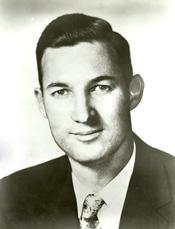
Richard White
Former U.S. Representative · Texas District 16 · 1965–1983 · Democratic
Richard White represented Texas's District 16 in the United States House of Representatives (1965–1983) for the Democratic party. The page below collects sourced biographical facts, term history, committee roles, and provenance for White.
Bioguide ID: W000390
Key facts
- Full name
- Richard White
- State
- Texas
- District
- District 16
- Party
- Democratic
- House service
- 1965–1983
- First House term
- 1965
- Status
- Left office
- Current term ends
- —
- Born
- 1923
- Bioguide ID
- W000390
- Committee assignments
- —
- Dataset version
- 1.20260605
Biographical narrative
954 words · sourced from the Wikipedia REST extract
Richard C. White was an American lawyer and politician who served as a U.S. Representative for Texas's 16th congressional district from 1965 until 1983. A member of the Democratic Party, White had a notable career in public service, marked by his involvement in significant legislative efforts and his representation of a diverse constituency in Texas. His background as a World War II veteran and his work on various congressional committees contributed to his reputation as a moderate Democrat who focused on issues pertinent to both his district and the nation.
Early life and career
Richard Crawford White was born on April 29, 1923, in El Paso, Texas. He received his early education in local institutions, graduating from Dudley Primary School and El Paso High School. His formative years included participation in the Citizens' Military Training Camp located in San Antonio, Texas, which likely influenced his later military service. Following high school, White attended the University of Texas at El Paso, which was then known as Texas Western College, from 1940 until 1942. His college education was interrupted by the onset of World War II, during which he enlisted in the United States Marine Corps.
White served in the Marine Corps from 1942 to 1945, where he distinguished himself as a rifleman and a Japanese-English interpreter in the Pacific Theater. His military service was marked by bravery, and he sustained injuries that earned him the Purple Heart, a military decoration awarded to those wounded in combat. This experience not only shaped his character but also influenced his later political career, particularly in matters related to military and veterans' affairs.
After the war, White returned to his studies and completed his education, eventually entering the legal profession. His legal background provided a foundation for his subsequent political career, as he sought to make a difference in his community and state. Prior to his tenure in the U.S. House of Representatives, White served in the Texas House of Representatives from 1955 to 1959, where he began to establish himself as a committed public servant.
House tenure
Richard White's congressional career began when he was elected to the U.S. House of Representatives in 1965, representing Texas's 16th congressional district. His initial election came during a period of significant political change in the United States, as the country grappled with civil rights issues and the Vietnam War. White's district, which initially encompassed a vast area stretching from El Paso to the Permian Basin, was later reconfigured due to the Supreme Court's ruling in Wesberry v. Sanders, which mandated more equitable congressional districting. As a result, his district was reduced to primarily include El Paso and a few surrounding suburbs.
Throughout his nine terms in Congress, White was reelected multiple times, often with relative ease, reflecting his strong connection with his constituents. His tenure in the House was characterized by a commitment to moderate Democratic principles, and he developed a reputation for being a pragmatic legislator who sought to address the needs of his district while navigating the complexities of national politics.
During his time in Congress, White was involved in several key legislative initiatives. He was a supporter of the Voting Rights Act of 1965 and the Civil Rights Act of 1968, both landmark pieces of legislation aimed at eliminating racial discrimination and ensuring equal rights for all Americans. His votes in favor of these acts demonstrated his alignment with the Democratic Party's broader civil rights agenda during this transformative era in American history.
Legislative focus and committees
As a member of the House Armed Services Committee, White's position was particularly relevant given the presence of Fort Bliss within his congressional district. This military installation played a significant role in the local economy and community, making White a natural advocate for military personnel and veterans' issues. He chaired the Military Personnel Subcommittee, where he was instrumental in various initiatives related to military organization and personnel management. His work included efforts to reorganize the Joint Chiefs of Staff, reflecting his commitment to enhancing the effectiveness of the U.S. military.
In addition to his work on the Armed Services Committee, White served on several other committees, including the Interior, Post Office & Civil Service, and Science & Technology committees. His involvement in these committees allowed him to address a wide range of issues, from environmental concerns to technological advancements and public service matters. White's legislative focus was often characterized by a cautious approach, earning him the description of a "cautious conservative." This label indicated his willingness to consider various perspectives and seek bipartisan solutions to complex problems.
White's leadership extended beyond committee work; he also chaired the Democratic Research Organization, a group within the party that played a crucial role in disseminating information from party leadership regarding upcoming votes and legislative priorities. This position allowed him to influence party strategy and ensure that members were well-informed on critical issues facing Congress.
In 1982, after serving nine terms in the House, White chose not to seek reelection. He returned to his hometown of El Paso, where he resumed his law practice. His decision to step away from public office marked the end of a significant chapter in his life, during which he had made substantial contributions to both his district and the nation.
Richard C. White passed away on February 18, 1998. His legacy is remembered through his service in Congress and his commitment to the constituents of Texas's 16th district. He was interred at Arlington National Cemetery, a testament to his military service and dedication to his country. White's life and career reflect the complexities of American political life during a transformative period, and his contributions continue to be recognized in discussions of Texas politics and legislative history.
Notable legislation
Sponsored and co-sponsored legislation for Richard White is pending operator curation. The biographical narrative above carries the same provenance trail until per-bill rows are written.
Sources
- [1]https://en.wikipedia.org/wiki/Richard_Crawford_WhiteWikipedia · retrieved 2026-06-05
Notable quotes
Sourced quotes for Richard White are pending operator curation. Narrative-scope provenance remains attached below.
Sources
- [1]https://en.wikipedia.org/wiki/Richard_Crawford_WhiteWikipedia · retrieved 2026-06-05
Key positions
Curated policy positions for Richard White are pending operator review. The biographical narrative above carries the same provenance trail until per-topic positions are written.
Sources
- [1]https://en.wikipedia.org/wiki/Richard_Crawford_WhiteWikipedia · retrieved 2026-06-05
Terms served
- 1965–1967U.S. House · Term 1 · Democratic
- 1967–1969U.S. House · Term 2 · Democratic
- 1969–1971U.S. House · Term 3 · Democratic
- 1971–1973U.S. House · Term 4 · Democratic
- 1973–1975U.S. House · Term 5 · Democratic
- 1975–1977U.S. House · Term 6 · Democratic
- 1977–1979U.S. House · Term 7 · Democratic
- 1979–1981U.S. House · Term 8 · Democratic
- 1981–1983U.S. House · Term 9 · Democratic
Sources & provenance
Every attributable claim above carries a per-section [N] marker that resolves to the corresponding URL below. Each entry records the upstream provider, the canonical URL, and the timestamp at which the source was retrieved by the ingest pipeline.
Key facts
- https://bioguide.congress.gov/search/bio/W000390bioguide · retrieved 2026-06-05
- https://www.govtrack.us/congress/members/411551govtrack · retrieved 2026-06-05
Biographical narrative
- https://en.wikipedia.org/wiki/Richard_Crawford_Whitewikipedia · retrieved 2026-06-05
Find your representative
Every U.S. state elects representatives by district. Browse Texas’s delegation, the full former-representative roster, or explore the role and term length.
Related on The Candidate
- Preceded by J. RutherfordEarlier holder of the Texas District 16 House seat · Democratic.Open
- Succeeded by Ronald ColemanLater holder of the Texas District 16 House seat · Democratic.Open
- Charles StewartFormer U.S. Representative · Texas District 1 · DemocraticOpen
- David KaufmanFormer U.S. Representative · Texas District 1 · DemocraticOpen
- Eugene BlackFormer U.S. Representative · Texas District 1 · DemocraticOpen
- George SmythFormer U.S. Representative · Texas District 1 · DemocraticOpen