
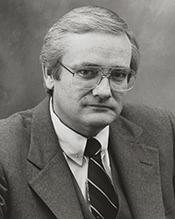
Historical · U.S. House · Texas · District 16
Ronald Coleman
Former U.S. Representative · Texas District 16 · 1983–1997 · Democratic
Ronald Coleman represented Texas's District 16 in the United States House of Representatives (1983–1997) for the Democratic party. The page below collects sourced biographical facts, term history, committee roles, and provenance for Coleman.
Bioguide ID: C000621
Key facts
- Full name
- Ronald Coleman
- State
- Texas
- District
- District 16
- Party
- Democratic
- House service
- 1983–1997
- First House term
- 1983
- Status
- Left office
- Current term ends
- —
- Born
- 1941
- Bioguide ID
- C000621
- Committee assignments
- —
- Dataset version
- 1.20260605
Biographical narrative
846 words · sourced from the Wikipedia REST extract
Ronald D. Coleman is a former American politician who served as a Democratic member of the United States House of Representatives, representing Texas's 16th congressional district. His tenure in Congress spanned from 1983 until 1997, during which he was involved in various legislative activities and served on multiple committees. Before his congressional career, Coleman had a diverse background in education, law, and state politics.
Early life and career
Ronald D. Coleman was born on November 29, 1941, in El Paso, Texas. He grew up in the region and attended local public schools, where he laid the foundation for his future academic and professional pursuits. Coleman went on to earn a Bachelor of Arts degree from the University of Texas at El Paso in 1963. His commitment to education continued as he later obtained a Juris Doctor degree from the University of Texas School of Law in 1967.
Following his legal education, Coleman served in the United States Army from 1967 to 1969, achieving the rank of captain during his service. This experience contributed to his leadership skills and understanding of military issues, which would later inform his work in Congress. After his military service, he returned to El Paso, where he worked as a public school teacher, demonstrating his dedication to education and community service.
In addition to teaching, Coleman also gained experience in legislative affairs. He served as a legislative aide in both houses of the Texas Legislature, which provided him with insights into the workings of state government. His legal career began in earnest when he was admitted to the bar and took on the role of assistant county attorney in El Paso County from 1969 to 1973. This position allowed him to engage with legal issues at the local level and further develop his expertise in law.
Coleman's political involvement deepened when he was elected to the Texas House of Representatives in 1972. His tenure in the state legislature was marked by his re-election for four additional terms, reflecting his growing influence and support within the community. In 1974, he was also a delegate to the Texas constitutional convention, where he participated in discussions and decisions regarding the state's governance.
House tenure
Ronald Coleman was elected to the United States House of Representatives in 1982, beginning his first term in the 98th Congress in January 1983. He was re-elected to six consecutive terms, serving until January 3, 1997. Throughout his time in Congress, Coleman represented Texas's 16th congressional district, which encompasses parts of El Paso and its surrounding areas.
During his tenure, Coleman was involved in numerous legislative initiatives and discussions, contributing to the development of policies that affected his constituents and the nation. His experience in state politics and law provided him with a strong foundation for addressing complex issues at the federal level. Coleman's congressional career coincided with significant events in American history, including economic challenges and shifts in national security policy.
In 1992, Coleman faced scrutiny due to his involvement in the House banking scandal, which revealed that he had over 670 overdrafts on his House bank account. Despite this controversy, he successfully won re-election, indicating a level of support from his constituents that allowed him to continue serving in Congress.
Coleman chose not to seek re-election for the 105th Congress, concluding his time in the House after a total of seven terms. His decision to step down marked the end of a significant chapter in his political career, during which he had established himself as a prominent figure in Texas politics.
Legislative focus and committees
Throughout his time in the House of Representatives, Ronald Coleman was a member of several important committees that shaped his legislative focus. Notably, he served on the House Appropriations Committee, which is responsible for determining the allocation of federal funds and overseeing government spending. This role allowed him to influence budgetary decisions and advocate for funding that would benefit his district and the state of Texas.
In addition to the Appropriations Committee, Coleman was also a member of the House Armed Services Committee. This committee plays a crucial role in overseeing national defense and military matters, giving Coleman the opportunity to engage with issues related to the armed forces and veterans. His military background likely informed his contributions to discussions on defense policy and military readiness.
Coleman’s involvement in the Select Committee on Intelligence further underscored his engagement with national security issues. This committee is tasked with overseeing the intelligence community and ensuring that the nation’s intelligence operations are conducted effectively and responsibly. His participation in this committee reflected his commitment to addressing complex security challenges facing the United States.
Throughout his congressional career, Coleman focused on a range of issues that were pertinent to his constituents and the broader national landscape. His legislative efforts were shaped by his experiences in education, law, and military service, allowing him to approach problems with a multifaceted perspective. Although his time in Congress ended in 1997, his contributions to legislative processes and his representation of Texas's 16th district remain part of his political legacy.
Notable legislation
Sponsored and co-sponsored legislation for Ronald Coleman is pending operator curation. The biographical narrative above carries the same provenance trail until per-bill rows are written.
Sources
- [1]https://en.wikipedia.org/wiki/Ron_Coleman_(politician)Wikipedia · retrieved 2026-06-05
Notable quotes
Sourced quotes for Ronald Coleman are pending operator curation. Narrative-scope provenance remains attached below.
Sources
- [1]https://en.wikipedia.org/wiki/Ron_Coleman_(politician)Wikipedia · retrieved 2026-06-05
Key positions
Curated policy positions for Ronald Coleman are pending operator review. The biographical narrative above carries the same provenance trail until per-topic positions are written.
Sources
- [1]https://en.wikipedia.org/wiki/Ron_Coleman_(politician)Wikipedia · retrieved 2026-06-05
Terms served
- 1983–1985U.S. House · Term 1 · Democratic
- 1985–1987U.S. House · Term 2 · Democratic
- 1987–1989U.S. House · Term 3 · Democratic
- 1989–1991U.S. House · Term 4 · Democratic
- 1991–1993U.S. House · Term 5 · Democratic
- 1993–1995U.S. House · Term 6 · Democratic
- 1995–1997U.S. House · Term 7 · Democratic
Sources & provenance
Every attributable claim above carries a per-section [N] marker that resolves to the corresponding URL below. Each entry records the upstream provider, the canonical URL, and the timestamp at which the source was retrieved by the ingest pipeline.
Key facts
- https://bioguide.congress.gov/search/bio/C000621bioguide · retrieved 2026-06-05
- https://www.govtrack.us/congress/members/402750govtrack · retrieved 2026-06-05
Biographical narrative
- https://en.wikipedia.org/wiki/Ron_Coleman_(politician)wikipedia · retrieved 2026-06-05
Find your representative
Every U.S. state elects representatives by district. Browse Texas’s delegation, the full former-representative roster, or explore the role and term length.
Related on The Candidate
- Preceded by Richard WhiteEarlier holder of the Texas District 16 House seat · Democratic.Open
- Succeeded by Silvestre ReyesLater holder of the Texas District 16 House seat · Democratic.Open
- Charles StewartFormer U.S. Representative · Texas District 1 · DemocraticOpen
- David KaufmanFormer U.S. Representative · Texas District 1 · DemocraticOpen
- Eugene BlackFormer U.S. Representative · Texas District 1 · DemocraticOpen
- George SmythFormer U.S. Representative · Texas District 1 · DemocraticOpen