
Historical · U.S. House · Texas · District 16
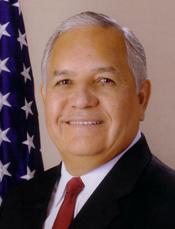
Silvestre Reyes
Former U.S. Representative · Texas District 16 · 1997–2013 · Democratic
Silvestre Reyes represented Texas's District 16 in the United States House of Representatives (1997–2013) for the Democratic party. The page below collects sourced biographical facts, term history, committee roles, and provenance for Reyes.
Bioguide ID: R000170
Key facts
- Full name
- Silvestre Reyes
- State
- Texas
- District
- District 16
- Party
- Democratic
- House service
- 1997–2013
- First House term
- 1997
- Status
- Left office
- Current term ends
- —
- Born
- 1944
- Bioguide ID
- R000170
- Committee assignments
- —
- Dataset version
- 1.20260605
Biographical narrative
909 words · sourced from the Wikipedia REST extract
Silvestre Reyes is a former U.S. Representative who served Texas's 16th congressional district from 1997 until 2013. A member of the Democratic Party, Reyes held significant positions during his tenure, including serving as the Chairman of the House Permanent Select Committee on Intelligence. His career in public service is marked by his extensive experience in border security and military affairs, as well as his involvement in various legislative initiatives that addressed immigration and national security issues.
Early life and career
Silvestre Reyes was born on November 10, 1944, in Canutillo, Texas, an unincorporated community located west of El Paso. He was the eldest of ten children in his family. Reyes completed his secondary education at Canutillo High School and subsequently pursued higher education at El Paso Community College, where he earned an associate degree. He later attended the University of Texas at Austin, furthering his academic pursuits before enlisting in the United States Army in 1966.
Reyes served in the Vietnam War, where he held the position of helicopter crew chief. His military service was marked by a significant injury; in 1968, he experienced complete hearing loss in his right ear due to a mortar explosion near his position. Following his military service, Reyes transitioned to a career in law enforcement by joining the U.S. Border Patrol in 1969. Over the next 26 years, he rose through the ranks, ultimately serving as the Sector Chief for both the McAllen and El Paso Sectors from 1984 to 1995.
During his time as Chief Patrol Agent of the El Paso Border Patrol Sector, Reyes implemented a strategic initiative known as "Operation Hold the Line" in 1993. This operation aimed to position Border Patrol agents in high-visibility areas along the border to deter illegal immigration. While the operation was successful in reducing illegal crossings in urban areas, it faced criticism from immigrant rights groups and raised concerns regarding the safety of agents due to increased risks from potential assaults.
Reyes's tenure with the Border Patrol and his efforts to manage immigration issues contributed to his growing popularity within Texas's 16th Congressional District, setting the stage for his political career.
House tenure
Reyes was elected to the U.S. House of Representatives in 1996 and began his first term in 1997. Over the course of his eight terms in Congress, he became a prominent figure in various legislative discussions, particularly those related to military and defense policy. His experience in border security and law enforcement positioned him as a key player in immigration debates, especially during the 109th Congress, where he was instrumental in opposing a controversial immigration proposal.
In December 2006, Reyes was appointed by then-Speaker of the House Nancy Pelosi to chair the House Intelligence Committee, a role he held until 2011. His leadership in this committee involved overseeing critical national security issues and shaping intelligence policy. Reyes's tenure included significant discussions around the Foreign Intelligence Surveillance Act (FISA) and the controversial topic of retroactive immunity for telecommunications companies involved in warrantless wiretapping.
In addition to his role on the Intelligence Committee, Reyes served on the House Armed Services Committee, where he contributed to military policy and defense initiatives. His involvement in the Base Realignment and Closure (BRAC) process was notable, as he played a role in securing the future of Fort Bliss and White Sands military bases.
Reyes's influence extended beyond committee work; he was also involved in high-level diplomatic discussions. In March 2009, he led a Congressional delegation to meet with Mexican President Felipe Calderón to address issues related to drug-related violence and U.S. assistance to Mexico.
Despite his long tenure and significant contributions, Reyes faced challenges in his political career. In the 2012 Democratic primary election, he lost to Beto O'Rourke, a former city councilman in El Paso, which marked the end of his congressional service when his term concluded on January 3, 2013.
Legislative focus and committees
Throughout his time in the House of Representatives, Reyes focused on a variety of issues, with a particular emphasis on immigration, national security, and military affairs. His background in the Border Patrol informed his legislative priorities, as he advocated for policies that addressed the complexities of immigration reform and border security.
Reyes served on several important committees during his congressional career. He was a member of the Committee on Armed Services, where he held the position of Ranking Member on the Subcommittee on Tactical Air and Land Forces and was also involved in the Subcommittee on Readiness. His role on these committees allowed him to influence defense policy and advocate for the needs of military installations in his district.
As Chairman of the Permanent Select Committee on Intelligence, Reyes was responsible for overseeing the nation's intelligence operations and ensuring that national security measures were effectively implemented. His leadership in this capacity was critical during a time when intelligence and security issues were at the forefront of national discourse.
In addition to his committee work, Reyes was an active member of the Congressional Hispanic Caucus, where he served as chair. This role enabled him to advocate for the interests of Hispanic Americans and address issues affecting the Latino community.
Reyes's contributions to Congress were recognized through various accolades, including being named "El Pasoan of the Year" in 2006 for his efforts to expand the role of Fort Bliss. His legislative career was characterized by a commitment to addressing the challenges facing his constituents and the nation as a whole.
Notable legislation
Sponsored and co-sponsored legislation for Silvestre Reyes is pending operator curation. The biographical narrative above carries the same provenance trail until per-bill rows are written.
Sources
- [1]https://en.wikipedia.org/wiki/Silvestre_ReyesWikipedia · retrieved 2026-06-05
Notable quotes
Sourced quotes for Silvestre Reyes are pending operator curation. Narrative-scope provenance remains attached below.
Sources
- [1]https://en.wikipedia.org/wiki/Silvestre_ReyesWikipedia · retrieved 2026-06-05
Key positions
Curated policy positions for Silvestre Reyes are pending operator review. The biographical narrative above carries the same provenance trail until per-topic positions are written.
Sources
- [1]https://en.wikipedia.org/wiki/Silvestre_ReyesWikipedia · retrieved 2026-06-05
Terms served
- 1997–1999U.S. House · Term 1 · Democratic
- 1999–2001U.S. House · Term 2 · Democratic
- 2001–2003U.S. House · Term 3 · Democratic
- 2003–2005U.S. House · Term 4 · Democratic
- 2005–2007U.S. House · Term 5 · Democratic
- 2007–2009U.S. House · Term 6 · Democratic
- 2009–2011U.S. House · Term 7 · Democratic
- 2011–2013U.S. House · Term 8 · Democratic
Sources & provenance
Every attributable claim above carries a per-section [N] marker that resolves to the corresponding URL below. Each entry records the upstream provider, the canonical URL, and the timestamp at which the source was retrieved by the ingest pipeline.
Key facts
- https://bioguide.congress.gov/search/bio/R000170bioguide · retrieved 2026-06-05
- http://wwwc.house.gov/reyeshouse.gov · retrieved 2026-06-05
Biographical narrative
- https://en.wikipedia.org/wiki/Silvestre_Reyeswikipedia · retrieved 2026-06-05
Find your representative
Every U.S. state elects representatives by district. Browse Texas’s delegation, the full former-representative roster, or explore the role and term length.
Related on The Candidate
- Preceded by Ronald ColemanEarlier holder of the Texas District 16 House seat · Democratic.Open
- Succeeded by Beto O’RourkeLater holder of the Texas District 16 House seat · Democratic.Open
- Charles StewartFormer U.S. Representative · Texas District 1 · DemocraticOpen
- David KaufmanFormer U.S. Representative · Texas District 1 · DemocraticOpen
- Eugene BlackFormer U.S. Representative · Texas District 1 · DemocraticOpen
- George SmythFormer U.S. Representative · Texas District 1 · DemocraticOpen