
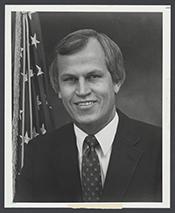
Historical · U.S. House · Texas · District 17
Charlie Stenholm
Former U.S. Representative · Texas District 17 · 1979–2005 · Democratic
Charlie Stenholm represented Texas's District 17 in the United States House of Representatives (1979–2005) for the Democratic party. The page below collects sourced biographical facts, term history, committee roles, and provenance for Stenholm.
Bioguide ID: S000851
Key facts
- Full name
- Charlie Stenholm
- State
- Texas
- District
- District 17
- Party
- Democratic
- House service
- 1979–2005
- First House term
- 1979
- Status
- Left office
- Current term ends
- —
- Born
- 1938
- Bioguide ID
- S000851
- Committee assignments
- —
- Dataset version
- 1.20260605
Biographical narrative
913 words · sourced from the Wikipedia REST extract
Charles W. Stenholm was a prominent American businessman and politician who served as a Democratic member of the United States House of Representatives for Texas's 17th congressional district from 1979 until 2005. Known for his deep roots in agriculture and his conservative social positions, Stenholm played a significant role in shaping federal farm policy and was a notable figure in Texas politics throughout his lengthy congressional career. His tenure was marked by a commitment to rural issues and a complex relationship with both Democratic and Republican administrations.
Early life and career
Charles Walter Stenholm was born on October 26, 1938, in Ericksdahl, Texas, a small farming community in Jones County. This area was settled primarily by Swedish immigrants in the early 20th century, including Stenholm's grandparents. Raised on a large, 2,000-acre cotton farm near Abilene by his parents, Lambert and Irene Constance Stenholm, he grew up immersed in agricultural life. The family farm primarily focused on cotton cultivation, which would later inform Stenholm's political career.
Stenholm attended public schools in Texas before pursuing higher education at Texas Tech University. He earned a Bachelor of Science degree in Agriculture Education in 1961, followed by a Master of Science degree in 1962. During his time at university, he was a member of the Sigma Alpha Epsilon fraternity. After completing his education, Stenholm took over the family farm, where he continued to raise cotton and also operated a cattle ranch. In addition to his farming activities, he worked as a vocational teacher, sharing his knowledge of agriculture with students.
Stenholm's entry into agricultural politics began when he was appointed to the Texas State Agricultural Stabilization and Conservation Service during President Jimmy Carter's administration. His involvement in agricultural organizations included serving as an executive for the Rolling Plains Cotton Growers Association. This experience laid the groundwork for his subsequent political career.
House tenure
Stenholm's political aspirations grew throughout the 1970s, and in late 1978, he seized the opportunity to run for Congress after the resignation of longtime Democratic Congressman Omar Burleson. Stenholm entered a competitive Democratic primary for Texas's 17th congressional district, which encompassed a vast and predominantly rural area stretching from San Angelo to the outskirts of the Dallas-Fort Worth Metroplex. In a crowded field of candidates, he emerged as the frontrunner, winning the primary and subsequently the general election with relative ease.
Throughout his 13 terms in the House of Representatives, Stenholm established himself as one of the most conservative Democrats in Congress. He was a member of the Blue Dog Coalition, a group of moderate to conservative Democrats, and he led the Boll Weevils, a faction of conservative Democrats during the 1980s. His political stance often aligned with conservative values, particularly on social issues, where he opposed abortion and gun control. In 1990, he was one of only three House Democrats to vote against the Americans with Disabilities Act.
Stenholm's relationship with the Democratic Party was complex, as he frequently found himself at odds with Democratic President Bill Clinton during his administration. Notably, he voted for three of the four articles of impeachment against Clinton. However, he also expressed strong criticism of the fiscal policies of Republican President George W. Bush, particularly opposing the permanent extension of tax cuts without a balanced budget.
Legislative focus and committees
Stenholm's legislative focus primarily centered on agriculture and budgetary matters. As a large farmer himself, he was deeply invested in agricultural policy and was recognized as one of the leading architects of federal farm policy during the late 20th and early 21st centuries. He served as the ranking Democrat on the House Agriculture Committee for eight years, where he played a crucial role in shaping legislation that affected farmers across the nation.
In 1992, Stenholm supported a balanced budget amendment to the Constitution, advocating for fiscal responsibility at the federal level. His commitment to agriculture culminated in his involvement in the 2002 Farm Bill, which he helped shepherd through Congress alongside Republican Chairman Larry Combest. This legislation resulted in a significant increase in farm subsidies for Texas, doubling the amount received by the state. Stenholm's advocacy for farmers was reflected in his own financial benefits from subsidy programs, which were originally designed to assist small farmers in maintaining their livelihoods.
Despite his focus on agricultural issues, Stenholm's tenure was not without controversy. The farm subsidy programs he supported were criticized for disproportionately benefiting larger agribusinesses, with a significant portion of subsidies going to the wealthiest farmers. This dynamic raised questions about the equity of federal agricultural policy and its impact on smaller farming operations.
Stenholm's electoral success in Texas's 17th congressional district was notable, particularly during a time when the district's voters began to lean Republican in presidential and U.S. Senate elections. However, he faced little major-party opposition for a significant portion of his career, running unopposed in several elections from 1980 to 1990. His ability to maintain support in a changing political landscape reflected his deep connections to the agricultural community and his reputation as a conservative Democrat.
After his defeat in the 2004 election, Stenholm concluded his congressional career on January 3, 2005. Following his departure from Congress, he remained active in Washington, D.C., working as a lobbyist for food and agricultural interests, primarily with the law and lobbying firm Olsson Frank Weeda. Stenholm's legacy in Congress is characterized by his commitment to agricultural policy, fiscal responsibility, and his unique position within the Democratic Party during a time of significant political change.
Notable legislation
Sponsored and co-sponsored legislation for Charlie Stenholm is pending operator curation. The biographical narrative above carries the same provenance trail until per-bill rows are written.
Sources
- [1]https://en.wikipedia.org/wiki/Charles_StenholmWikipedia · retrieved 2026-06-05
Notable quotes
Sourced quotes for Charlie Stenholm are pending operator curation. Narrative-scope provenance remains attached below.
Sources
- [1]https://en.wikipedia.org/wiki/Charles_StenholmWikipedia · retrieved 2026-06-05
Key positions
Curated policy positions for Charlie Stenholm are pending operator review. The biographical narrative above carries the same provenance trail until per-topic positions are written.
Sources
- [1]https://en.wikipedia.org/wiki/Charles_StenholmWikipedia · retrieved 2026-06-05
Terms served
- 1979–1981U.S. House · Term 1 · Democratic
- 1981–1983U.S. House · Term 2 · Democratic
- 1983–1985U.S. House · Term 3 · Democratic
- 1985–1987U.S. House · Term 4 · Democratic
- 1987–1989U.S. House · Term 5 · Democratic
- 1989–1991U.S. House · Term 6 · Democratic
- 1991–1993U.S. House · Term 7 · Democratic
- 1993–1995U.S. House · Term 8 · Democratic
- 1995–1997U.S. House · Term 9 · Democratic
- 1997–1999U.S. House · Term 10 · Democratic
- 1999–2001U.S. House · Term 11 · Democratic
- 2001–2003U.S. House · Term 12 · Democratic
- 2003–2005U.S. House · Term 13 · Democratic
Sources & provenance
Every attributable claim above carries a per-section [N] marker that resolves to the corresponding URL below. Each entry records the upstream provider, the canonical URL, and the timestamp at which the source was retrieved by the ingest pipeline.
Key facts
- https://bioguide.congress.gov/search/bio/S000851bioguide · retrieved 2026-06-05
- http://www.house.gov/stenholmhouse.gov · retrieved 2026-06-05
Biographical narrative
- https://en.wikipedia.org/wiki/Charles_Stenholmwikipedia · retrieved 2026-06-05
Find your representative
Every U.S. state elects representatives by district. Browse Texas’s delegation, the full former-representative roster, or explore the role and term length.
Related on The Candidate
- Preceded by Omar BurlesonEarlier holder of the Texas District 17 House seat · Democratic.Open
- Succeeded by Bill FloresLater holder of the Texas District 17 House seat · Republican.Open
- Charles StewartFormer U.S. Representative · Texas District 1 · DemocraticOpen
- David KaufmanFormer U.S. Representative · Texas District 1 · DemocraticOpen
- Eugene BlackFormer U.S. Representative · Texas District 1 · DemocraticOpen
- George SmythFormer U.S. Representative · Texas District 1 · DemocraticOpen