
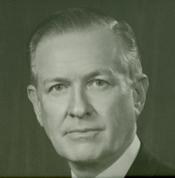
Historical · U.S. House · Texas · District 17
Omar Burleson
Former U.S. Representative · Texas District 17 · 1947–1979 · Democratic
Omar Burleson represented Texas's District 17 in the United States House of Representatives (1947–1979) for the Democratic party. The page below collects sourced biographical facts, term history, committee roles, and provenance for Burleson.
Bioguide ID: B001111
Key facts
- Full name
- Omar Burleson
- State
- Texas
- District
- District 17
- Party
- Democratic
- House service
- 1947–1979
- First House term
- 1947
- Status
- Left office
- Current term ends
- —
- Born
- 1906
- Bioguide ID
- B001111
- Committee assignments
- —
- Dataset version
- 1.20260605
Biographical narrative
970 words · sourced from the Wikipedia REST extract
Omar Burleson was a prominent American politician and attorney who served as a Democratic U.S. Representative for Texas's 17th congressional district from 1947 until 1979. With a political career spanning over three decades, Burleson was known for his leadership roles in various congressional committees and his long-standing representation of a rural district in Texas. His tenure in the House of Representatives was marked by significant historical events and legislative developments, reflecting the evolving political landscape of the United States during the mid-20th century.
Early life and career
Omar Truman Burleson was born on March 19, 1906, in Anson, Texas, located in Jones County, north of Abilene. He attended local public schools before pursuing higher education at Abilene Christian College and Hardin-Simmons University, both situated in Abilene. Following his undergraduate studies, Burleson moved to Tennessee to attend law school, graduating from Cumberland University in Lebanon in 1929. Upon returning to Texas, he was admitted to the bar the same year and established a legal practice in Gorman, Texas, within Eastland County.
As the Great Depression affected the economy, Burleson sought public office to serve his community. In 1930, he was elected as the County Attorney for Jones County, a position he held from 1931 to 1934. Subsequently, he was elected as a judge in Jones County, serving from 1934 until 1940. His legal career took a turn in 1940 when he became a special agent for the Federal Bureau of Investigation (FBI), a role he maintained until 1941. Following his time with the FBI, Burleson transitioned into politics, working as a secretary and staff member for U.S. Representative Sam Russell, who represented Texas's 17th congressional district, from 1941 to 1942. During this period, he also served as general counsel for the Housing Authority in Washington, D.C., at a time when the District was under congressional control and lacked home rule.
With the onset of World War II, Burleson enlisted in the United States Navy, serving from December 1942 until April 1946. He was deployed to the South Pacific Theater, where he contributed to the war effort.
House tenure
After the conclusion of World War II, Burleson entered national politics, winning election to the U.S. House of Representatives in 1946 as a Democrat from Texas's 17th congressional district. He succeeded Sam Russell and took office on January 3, 1947. Burleson was re-elected to the House for 16 consecutive terms, serving until his resignation on December 31, 1978. His lengthy tenure in Congress allowed him to accumulate significant seniority, which he leveraged to gain influential positions within the House.
Throughout his congressional career, Burleson held several key leadership roles. He served as the chairman of the Committee on House Administration from the Eighty-fourth through the Ninetieth Congresses, as well as the chairman of the Joint Committee on the Library and the Joint Committee on Printing during the same period. In the Ninetieth Congress, he opted to resign from these chairmanships to join the Ways and Means Committee, where he focused on issues pertinent to Texas, including the oil depletion allowance.
Burleson's political alignment and voting record reflected the complexities of his time. Notably, he was among the majority of the Texas delegation who chose not to sign the 1956 Southern Manifesto, which opposed the desegregation of public schools as mandated by the Supreme Court's ruling in Brown v. Board of Education. However, he did vote against several significant civil rights measures, including the Civil Rights Acts of 1957, 1960, 1964, and 1968, which aimed to enforce constitutional rights for African Americans and other minorities. Additionally, he opposed the ratification of the 24th Amendment and the Voting Rights Act of 1965, which sought to eliminate discriminatory practices in voting. Throughout his career, Burleson was recognized as a leader among a group of Southern and Border Democrats known as the Boll Weevils Club, who often aligned with Republican members of the House on various issues.
In 1978, Burleson decided not to seek re-election, concluding a notable political career that had a lasting impact on his constituents and the legislative process. He was succeeded by fellow conservative Democrat Charles Stenholm, who also hailed from Jones County.
Legislative focus and committees
During his extensive time in the House of Representatives, Burleson was involved in a range of legislative issues, reflecting the interests and needs of his rural Texas constituency. His roles in various committees allowed him to influence legislation on administrative matters, library services, and printing, which were critical to the functioning of Congress and the dissemination of information.
As chairman of the Committee on House Administration, Burleson oversaw the operations of the House, including the management of its facilities and the administration of its rules and procedures. His leadership in this capacity contributed to the efficiency and effectiveness of congressional operations during a time of significant legislative activity.
Burleson's tenure on the Ways and Means Committee was particularly significant, as this committee is responsible for taxation and revenue-related legislation. His focus on the oil depletion allowance was particularly relevant to Texas, a state with a substantial oil industry. This focus demonstrated his commitment to advocating for the economic interests of his constituents.
Despite the challenges of the civil rights era, Burleson's political actions and decisions were shaped by the prevailing attitudes of his constituency and the broader political climate. His opposition to key civil rights legislation reflected a complex interplay between regional sentiments and national policy debates during a transformative period in American history.
Following his resignation from Congress, Burleson returned to Abilene, Texas, where he lived until his death on May 14, 1991. He is interred at Mount Hope Cemetery in Anson, Texas, his hometown. Burleson's legacy is also commemorated by a statue installed in Anson at the Jones County Courthouse, honoring his contributions to the community and his long-standing public service.
Notable legislation
Sponsored and co-sponsored legislation for Omar Burleson is pending operator curation. The biographical narrative above carries the same provenance trail until per-bill rows are written.
Sources
- [1]https://en.wikipedia.org/wiki/Omar_BurlesonWikipedia · retrieved 2026-06-05
Notable quotes
Sourced quotes for Omar Burleson are pending operator curation. Narrative-scope provenance remains attached below.
Sources
- [1]https://en.wikipedia.org/wiki/Omar_BurlesonWikipedia · retrieved 2026-06-05
Key positions
Curated policy positions for Omar Burleson are pending operator review. The biographical narrative above carries the same provenance trail until per-topic positions are written.
Sources
- [1]https://en.wikipedia.org/wiki/Omar_BurlesonWikipedia · retrieved 2026-06-05
Terms served
- 1947–1949U.S. House · Term 1 · Democratic
- 1949–1951U.S. House · Term 2 · Democratic
- 1951–1953U.S. House · Term 3 · Democratic
- 1953–1955U.S. House · Term 4 · Democratic
- 1955–1957U.S. House · Term 5 · Democratic
- 1957–1959U.S. House · Term 6 · Democratic
- 1959–1961U.S. House · Term 7 · Democratic
- 1961–1963U.S. House · Term 8 · Democratic
- 1963–1965U.S. House · Term 9 · Democratic
- 1965–1967U.S. House · Term 10 · Democratic
- 1967–1969U.S. House · Term 11 · Democratic
- 1969–1971U.S. House · Term 12 · Democratic
- 1971–1973U.S. House · Term 13 · Democratic
- 1973–1975U.S. House · Term 14 · Democratic
- 1975–1977U.S. House · Term 15 · Democratic
- 1977–1979U.S. House · Term 16 · Democratic
Sources & provenance
Every attributable claim above carries a per-section [N] marker that resolves to the corresponding URL below. Each entry records the upstream provider, the canonical URL, and the timestamp at which the source was retrieved by the ingest pipeline.
Key facts
- https://bioguide.congress.gov/search/bio/B001111bioguide · retrieved 2026-06-05
- https://www.govtrack.us/congress/members/402056govtrack · retrieved 2026-06-05
Biographical narrative
- https://en.wikipedia.org/wiki/Omar_Burlesonwikipedia · retrieved 2026-06-05
Find your representative
Every U.S. state elects representatives by district. Browse Texas’s delegation, the full former-representative roster, or explore the role and term length.
Related on The Candidate
- Preceded by Sam RussellEarlier holder of the Texas District 17 House seat · Democratic.Open
- Succeeded by Charlie StenholmLater holder of the Texas District 17 House seat · Democratic.Open
- Charles StewartFormer U.S. Representative · Texas District 1 · DemocraticOpen
- David KaufmanFormer U.S. Representative · Texas District 1 · DemocraticOpen
- Eugene BlackFormer U.S. Representative · Texas District 1 · DemocraticOpen
- George SmythFormer U.S. Representative · Texas District 1 · DemocraticOpen