
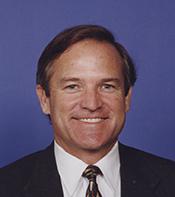
Historical · U.S. House · Texas · District 17
Chet Edwards
Former U.S. Representative · Texas District 17 · 1991–2011 · Democratic
Chet Edwards represented Texas's District 17 in the United States House of Representatives (1991–2011) for the Democratic party. The page below collects sourced biographical facts, term history, committee roles, and provenance for Edwards.
Bioguide ID: E000063
Key facts
- Full name
- Chet Edwards
- State
- Texas
- District
- District 17
- Party
- Democratic
- House service
- 1991–2011
- First House term
- 1991
- Status
- Left office
- Current term ends
- —
- Born
- 1951
- Bioguide ID
- E000063
- Committee assignments
- —
- Dataset version
- 1.20260605
Biographical narrative
1,020 words · sourced from the Wikipedia REST extract
Thomas Chester Edwards is a former American politician who served as a United States Representative for Texas's 17th congressional district from 1991 until 2011. A member of the Democratic Party, Edwards was known for his focus on veterans' affairs and fiscal policy during his tenure in Congress. Prior to his time in the House of Representatives, he was a member of the Texas Senate, where he gained experience in various legislative areas. Edwards's political career has been marked by his moderate stance on several issues and his involvement in significant legislative initiatives, particularly those benefiting veterans.
Early life and career
Chet Edwards was born on November 24, 1951, in Corpus Christi, Texas. He grew up in Waco, where he later became a prominent figure in local politics. Edwards attended Texas A&M University, graduating magna cum laude in 1974 with a bachelor's degree in economics. During his time at the university, he distinguished himself academically and was awarded the Earl Rudder Award, which recognizes outstanding seniors. He also took on leadership roles, including serving as Chairman of the 18th MSC Student Conference on National Affairs Conference, where he facilitated discussions with notable figures such as Vice President Walter Mondale and businessman Ross Perot.
Following his graduation, Edwards began his professional career as an aide to Congressman Olin E. Teague, a position he held for three years. This experience provided him with valuable insights into legislative processes and veterans' issues, which would later influence his work in Congress. In 1978, Edwards sought to succeed Teague in the Democratic primary but narrowly lost to Phil Gramm, who later switched to the Republican Party.
In 1981, Edwards furthered his education by earning an MBA from Harvard Business School. He subsequently worked as a commercial real estate agent for the Trammell Crow Company and later acquired several rural radio stations in South Texas. His diverse professional background contributed to his understanding of both business and community needs, which he would draw upon in his political career.
Edwards entered politics at the state level when he was elected to the Texas Senate in 1983, representing District 9. At the age of 30, he was the youngest member of the Senate. During his tenure, he served on multiple committees, including the Senate Education Committee, where he contributed to initiatives aimed at reducing class sizes in public schools. He was also involved with the Health and Human Resources Committee, chaired the Senate Nominations Committee, and participated in the Texas Sunset Commission, which reviews state agencies. His efforts in the Texas Senate earned him recognition as one of the outstanding freshman legislators and accolades from Texas Monthly.
House tenure
Chet Edwards was elected to the U.S. House of Representatives in 1991, representing Texas's 17th congressional district, which includes Waco. He served a total of ten terms in Congress, with his last term concluding on January 3, 2011. Throughout his time in the House, Edwards was a member of several important committees, including the Committee on Appropriations, where he played a significant role in funding decisions related to various sectors, including military construction and veterans' affairs.
During his tenure, Edwards served on multiple subcommittees, including the Subcommittee on Energy and Water Development, the Subcommittee on Financial Services and General Government, and the Subcommittee on Military Construction, Veterans Affairs, and Related Agencies, where he held the position of Chair. His leadership in this role was particularly notable for his efforts to increase funding for veterans' health care and benefits. In 2007, he successfully authored a significant funding increase for the Department of Veterans Affairs, marking the largest boost in veterans' funding in the agency's history. He also played a crucial role in the enactment of the 21st Century GI Bill of Rights, which provided comprehensive educational benefits for military personnel.
Edwards's work on veterans' issues earned him recognition from various organizations, including the American Legion and Veterans of Foreign Wars, which honored him with national awards for his leadership. He was also recognized by the Military Officers Association of America with the Marix Congressional Achievement Award and received the Award of Merit from the Military Coalition, which represents numerous military and veteran groups.
Legislative focus and committees
Throughout his congressional career, Chet Edwards was known for his moderate Democratic stance, which often placed him in a unique position within the party. He was recognized as a leader in the House and was involved in various legislative initiatives that reflected his commitment to fiscal responsibility and veterans' affairs. Edwards opposed certain tax cuts proposed by the Bush administration, including the 2001 federal tax cuts, and he voted against eliminating the marriage penalty and estate tax. He supported the American Recovery and Reinvestment Act of 2009, demonstrating his willingness to engage with economic recovery efforts.
In addition to his work on veterans' issues, Edwards was actively involved in national security matters. He opposed cuts to the nuclear non-proliferation budget and worked on initiatives to enhance homeland security, particularly in the wake of the September 11 attacks. His efforts included securing funding for radiological detectors at foreign ports to prevent nuclear materials from entering the United States.
Edwards's fiscal conservatism was recognized by the non-partisan Concord Coalition, which awarded him the "Deficit Hawk" Award. His pro-economic and pro-agriculture stance garnered endorsements from organizations such as the U.S. Chamber of Commerce and the Farm Bureau Friends of Agriculture Fund. He received the "Spirit of Enterprise" Award from the U.S. Chamber of Commerce multiple times for his support of business initiatives.
On social issues, Edwards maintained a conservative stance, particularly regarding same-sex marriage, and he voted in favor of constitutional amendments to define marriage as a union between one man and one woman. His voting record reflected a complex relationship with various social policies, earning him a mixed rating from organizations such as the Human Rights Campaign and the NAACP.
Edwards's political career concluded with his departure from Congress in 2011, after which he continued to engage in public service and community initiatives. His legacy in the House is marked by his commitment to veterans, fiscal responsibility, and a moderate approach to governance.
Notable legislation
Sponsored and co-sponsored legislation for Chet Edwards is pending operator curation. The biographical narrative above carries the same provenance trail until per-bill rows are written.
Sources
- [1]https://en.wikipedia.org/wiki/Chet_EdwardsWikipedia · retrieved 2026-06-05
Notable quotes
Sourced quotes for Chet Edwards are pending operator curation. Narrative-scope provenance remains attached below.
Sources
- [1]https://en.wikipedia.org/wiki/Chet_EdwardsWikipedia · retrieved 2026-06-05
Key positions
Curated policy positions for Chet Edwards are pending operator review. The biographical narrative above carries the same provenance trail until per-topic positions are written.
Sources
- [1]https://en.wikipedia.org/wiki/Chet_EdwardsWikipedia · retrieved 2026-06-05
Terms served
- 1991–1993U.S. House · Term 1 · Democratic
- 1993–1995U.S. House · Term 2 · Democratic
- 1995–1997U.S. House · Term 3 · Democratic
- 1997–1999U.S. House · Term 4 · Democratic
- 1999–2001U.S. House · Term 5 · Democratic
- 2001–2003U.S. House · Term 6 · Democratic
- 2003–2005U.S. House · Term 7 · Democratic
- 2005–2007U.S. House · Term 8 · Democratic
- 2007–2009U.S. House · Term 9 · Democratic
- 2009–2011U.S. House · Term 10 · Democratic
Sources & provenance
Every attributable claim above carries a per-section [N] marker that resolves to the corresponding URL below. Each entry records the upstream provider, the canonical URL, and the timestamp at which the source was retrieved by the ingest pipeline.
Key facts
- https://bioguide.congress.gov/search/bio/E000063bioguide · retrieved 2026-06-05
- http://www.house.gov/edwardshouse.gov · retrieved 2026-06-05
Biographical narrative
- https://en.wikipedia.org/wiki/Chet_Edwardswikipedia · retrieved 2026-06-05
Find your representative
Every U.S. state elects representatives by district. Browse Texas’s delegation, the full former-representative roster, or explore the role and term length.
Related on The Candidate
- Preceded by Omar BurlesonEarlier holder of the Texas District 17 House seat · Democratic.Open
- Succeeded by Bill FloresLater holder of the Texas District 17 House seat · Republican.Open
- Charles StewartFormer U.S. Representative · Texas District 1 · DemocraticOpen
- David KaufmanFormer U.S. Representative · Texas District 1 · DemocraticOpen
- Eugene BlackFormer U.S. Representative · Texas District 1 · DemocraticOpen
- George SmythFormer U.S. Representative · Texas District 1 · DemocraticOpen