
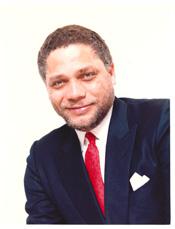
Historical · U.S. House · Texas · District 18
Mickey Leland
Former U.S. Representative · Texas District 18 · 1979–1989 · Democratic
Mickey Leland represented Texas's District 18 in the United States House of Representatives (1979–1989) for the Democratic party. The page below collects sourced biographical facts, term history, committee roles, and provenance for Leland.
Bioguide ID: L000237
Key facts
- Full name
- Mickey Leland
- State
- Texas
- District
- District 18
- Party
- Democratic
- House service
- 1979–1989
- First House term
- 1979
- Status
- Left office
- Current term ends
- —
- Born
- 1944
- Bioguide ID
- L000237
- Committee assignments
- —
- Dataset version
- 1.20260605
Biographical narrative
986 words · sourced from the Wikipedia REST extract
George Thomas "Mickey" Leland III was an American politician and anti-poverty activist who served as a U.S. Representative for Texas's 18th Congressional District from 1979 until his death in 1989. A member of the Democratic Party, Leland was known for his advocacy on issues related to health, hunger, and public welfare. He played a significant role in the establishment of the Congressional Select Committee on Hunger and was recognized for his efforts to address poverty and malnutrition both domestically and internationally. His leadership within the Congressional Black Caucus further highlighted his commitment to representing the interests of African Americans and marginalized communities.
Early life and career
Mickey Leland was born on November 27, 1944, in Lubbock, Texas, to Alice and George Thomas Leland, II. Shortly after his birth, the family relocated to Houston, where Leland grew up in the predominantly African-American neighborhood of Fifth Ward. He attended Wheatley High School, graduating in 1964 with a ranking in the top ten percent of his class. Following high school, Leland enrolled at Texas Southern University, where he became an active participant in the civil rights movement during the late 1960s. His leadership in this movement included efforts to bring national civil rights leaders to Houston, advocating for social justice and equality.
Leland graduated from Texas Southern University in 1970 with a bachelor's degree in Pharmacy. His commitment to community service was evident during his time as an instructor of Clinical Pharmacy at his alma mater from 1970 to 1971. In this role, he initiated outreach campaigns aimed at educating low-income residents about their healthcare options and conducting preliminary health screenings. His dedication to improving healthcare access for underserved populations laid the groundwork for his future political career.
In 1972, Texas implemented a new electoral system allowing for single-member districts in its State House of Representatives and Senate. This change enabled Leland, along with four other minority candidates known as the "People's Five," to successfully run for district seats in the Texas House of Representatives. This marked a significant moment in Texas history, as it was the first time since Reconstruction that African Americans were elected to the state legislature. Leland was re-elected in 1974 and 1976, serving three two-year terms representing the 88th District. During his tenure in Austin, he became known for his advocacy for healthcare rights, successfully pushing for legislation that improved access to affordable generic drugs and healthcare services for low-income Texans. He served on several committees, including the Texas State Labor Committee and the Human Resources Committee, and was the first African American to serve on the Senate–House Conference Committee as a member of the House Appropriations Committee.
House tenure
In November 1978, Leland was elected to the United States House of Representatives, representing Texas's 18th District. He began his first term in 1979 and was re-elected five times, serving a total of six two-year terms until his death on August 7, 1989. His congressional district included the neighborhood where he had grown up, and he quickly established himself as a knowledgeable advocate for health, children, and the elderly. Leland's leadership abilities were recognized early in his congressional career, as he was appointed Freshman Majority Whip during his first term and later served as At-Large Majority Whip.
Throughout his time in Congress, Leland was particularly focused on issues related to hunger and public health. In 1984, he played a pivotal role in the establishment of the Congressional Select Committee on Hunger, which aimed to address the growing concerns surrounding hunger and malnutrition in the United States and abroad. This committee was significant as it provided a dedicated platform for discussing and addressing hunger-related issues, despite lacking legislative jurisdiction. Leland's leadership on the committee allowed him to raise awareness about the complexities of hunger and malnutrition, and he became a prominent spokesperson for these issues on a national scale.
Leland's commitment to alleviating hunger extended beyond domestic concerns. Reports of famine in sub-Saharan Africa prompted him to lead a bipartisan Congressional delegation to assess the situation and determine relief requirements. His efforts culminated in the Africa Famine Relief and Recovery Act of 1985, which provided substantial funding for food and humanitarian aid. Leland's ability to mobilize support from various sectors, including entertainment figures and religious leaders, was instrumental in generating public awareness and support for famine relief efforts.
Legislative focus and committees
During his tenure in the House, Leland was a member of several important committees that aligned with his legislative interests and advocacy. His work on the Congressional Select Committee on Hunger was particularly notable, as it allowed him to focus on the pressing issues of hunger and malnutrition. The committee's mandate included conducting comprehensive studies and reviews of hunger-related problems, and Leland's leadership was crucial in shaping its agenda and initiatives.
In addition to his work on hunger, Leland was involved in initiatives aimed at improving healthcare access and outcomes for vulnerable populations. He was instrumental in the creation of the National Commission on Infant Mortality, which sought to address the high rates of infant mortality among at-risk groups. His advocacy also led to efforts to improve access to fresh food for women, children, and infants, as well as the establishment of comprehensive services for the homeless.
Leland's legislative initiatives reflected his deep sensitivity to the needs of the poor and marginalized. His ability to connect with diverse stakeholders and foster collaboration was a hallmark of his approach to governance. He was known for his innovative ideas and his capacity to garner support from unlikely allies, which contributed to his effectiveness as a legislator.
Throughout his career, Leland's commitment to social justice and equity remained a driving force behind his legislative efforts. His work in Congress not only addressed immediate needs but also sought to create systemic changes that would benefit future generations. His legacy as an advocate for health, hunger, and public welfare continues to be recognized and remembered.
Notable legislation
Sponsored and co-sponsored legislation for Mickey Leland is pending operator curation. The biographical narrative above carries the same provenance trail until per-bill rows are written.
Sources
- [1]https://en.wikipedia.org/wiki/Mickey_LelandWikipedia · retrieved 2026-06-05
Notable quotes
Sourced quotes for Mickey Leland are pending operator curation. Narrative-scope provenance remains attached below.
Sources
- [1]https://en.wikipedia.org/wiki/Mickey_LelandWikipedia · retrieved 2026-06-05
Key positions
Curated policy positions for Mickey Leland are pending operator review. The biographical narrative above carries the same provenance trail until per-topic positions are written.
Sources
- [1]https://en.wikipedia.org/wiki/Mickey_LelandWikipedia · retrieved 2026-06-05
Terms served
- 1979–1981U.S. House · Term 1 · Democratic
- 1981–1983U.S. House · Term 2 · Democratic
- 1983–1985U.S. House · Term 3 · Democratic
- 1985–1987U.S. House · Term 4 · Democratic
- 1987–1989U.S. House · Term 5 · Democratic
- 1989–1989U.S. House · Term 6 · Democratic
Sources & provenance
Every attributable claim above carries a per-section [N] marker that resolves to the corresponding URL below. Each entry records the upstream provider, the canonical URL, and the timestamp at which the source was retrieved by the ingest pipeline.
Key facts
- https://bioguide.congress.gov/search/bio/L000237bioguide · retrieved 2026-06-05
- https://www.govtrack.us/congress/members/406740govtrack · retrieved 2026-06-05
Biographical narrative
- https://en.wikipedia.org/wiki/Mickey_Lelandwikipedia · retrieved 2026-06-05
Find your representative
Every U.S. state elects representatives by district. Browse Texas’s delegation, the full former-representative roster, or explore the role and term length.
Related on The Candidate
- Preceded by Barbara JordanEarlier holder of the Texas District 18 House seat · Democratic.Open
- Succeeded by Craig WashingtonLater holder of the Texas District 18 House seat · Democratic.Open
- Charles StewartFormer U.S. Representative · Texas District 1 · DemocraticOpen
- David KaufmanFormer U.S. Representative · Texas District 1 · DemocraticOpen
- Eugene BlackFormer U.S. Representative · Texas District 1 · DemocraticOpen
- George SmythFormer U.S. Representative · Texas District 1 · DemocraticOpen