
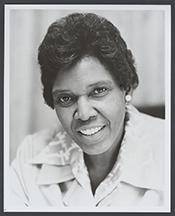
Historical · U.S. House · Texas · District 18
Barbara Jordan
Former U.S. Representative · Texas District 18 · 1973–1979 · Democratic
Barbara Jordan represented Texas's District 18 in the United States House of Representatives (1973–1979) for the Democratic party. The page below collects sourced biographical facts, term history, committee roles, and provenance for Jordan.
Bioguide ID: J000266
Key facts
- Full name
- Barbara Jordan
- State
- Texas
- District
- District 18
- Party
- Democratic
- House service
- 1973–1979
- First House term
- 1973
- Status
- Left office
- Current term ends
- —
- Born
- 1936
- Bioguide ID
- J000266
- Committee assignments
- —
- Dataset version
- 1.20260605
Biographical narrative
1,029 words · sourced from the Wikipedia REST extract
Barbara Charline Jordan was an influential American politician, attorney, and educator, who served as a U.S. Representative for Texas's 18th congressional district. A member of the Democratic Party, she made history as the first African American woman elected to the U.S. House of Representatives and was a prominent figure in the civil rights movement. Known for her exceptional oratory skills, Jordan gained national recognition during the impeachment hearings of President Richard Nixon. Her legacy includes significant contributions to the transformation of the Democratic Party and the advancement of Black political representation in the South.
Early life and career
Barbara Jordan was born on February 21, 1936, in the Fifth Ward neighborhood of Houston, Texas. She grew up in a family deeply rooted in the church; her mother, Arlyne Patten Jordan, was a teacher and maid, while her father, Benjamin Jordan, served as a Baptist preacher and worked in a warehouse. Jordan's early life was heavily influenced by her church community, where she participated in reciting poetry and singing gospel music alongside her sisters. Her father later became the full-time pastor of the Greater Pleasant Hill Baptist Church in 1949.
Jordan's family history included connections to political representation, as she was the great-granddaughter of Edward Patton, one of the last African American members of the Texas House of Representatives prior to the disenfranchisement of Black Texans under Jim Crow laws. As the youngest of three children, Jordan was inspired by her older siblings, Rose Mary and Bennie, and developed a strong educational foundation early on.
She attended Roberson Elementary School and graduated with honors from Phillis Wheatley High School in 1952. During her time at Wheatley, Jordan's oratorical talents were nurtured by supportive teachers, including her English teacher, Mrs. D. B. Reid, and her speech and drama instructor, Robert T. Holland. A pivotal moment in her life occurred when she heard a speech by Edith S. Sampson, which inspired her to pursue a career in law.
Jordan's education took place against the backdrop of racial segregation, and she was acutely aware of the injustices of Jim Crow laws. The civil rights movement in Houston, particularly through the efforts of the NAACP, influenced her early life. Notable victories included a successful campaign to equalize salaries for Black and white teachers in 1943. After graduating high school, she enrolled at Texas Southern University (TSU) in 1952, majoring in political science and history. At TSU, she became a national champion debater and was a member of the Delta Sigma Theta sorority. She graduated magna cum laude in 1956.
Following her undergraduate studies, Jordan attended Boston University School of Law, where she earned her law degree in 1959. After a year of teaching political science at Tuskegee Institute in Alabama, she returned to Houston to establish a private law practice. At 24, she was one of only two Black women attorneys in Texas and made history as the first Black woman to serve as an administrative assistant to a county judge. Her political career began in earnest when she volunteered for the John F. Kennedy-Lyndon B. Johnson campaign in 1960, working to encourage voter registration among African Americans in Houston.
House tenure
Jordan's political aspirations initially led her to run for the Texas House of Representatives in 1962 and 1964, both of which were unsuccessful attempts. However, her persistence paid off when she was elected to the Texas Senate in 1966, becoming one of the first African Americans to serve in the Texas Legislature since 1896. Her election marked a significant milestone in the post-Reconstruction era, and she was joined by Curtis Graves and Joe Lockridge as one of the few African American legislators at that time.
In 1972, Jordan successfully ran for the U.S. House of Representatives, representing Texas's 18th congressional district. She took office in 1973 and served three terms until her departure from Congress on January 3, 1979. During her tenure, Jordan became known for her powerful speeches and advocacy for civil rights, social justice, and equality. Her most notable moment came during the impeachment hearings of President Nixon, where her eloquent opening statement garnered national attention and showcased her oratory skills.
Jordan's election to the U.S. House was historic not only because she was the first African American woman from Texas to hold such a position, but also because she was one of the first two African Americans from the former Confederacy to be elected to Congress since 1901. Her presence in the House represented a significant shift in the political landscape of the South, particularly following the passage of the Voting Rights Act of 1965, which aimed to increase Black political participation.
Legislative focus and committees
Throughout her congressional career, Barbara Jordan focused on a range of issues, including civil rights, social justice, and immigration reform. She was a strong advocate for the rights of marginalized communities and worked to ensure that their voices were heard in the legislative process. Her commitment to civil rights was evident in her efforts to address systemic inequalities and promote policies that would benefit African Americans and other underrepresented groups.
In addition to her work on civil rights, Jordan served on several committees during her time in the House. Her involvement in these committees allowed her to influence legislation on various issues, including education, health care, and immigration policy. Jordan's legislative efforts were characterized by her ability to articulate the needs and concerns of her constituents, as well as her commitment to fostering a more inclusive and equitable society.
After leaving Congress, Jordan continued to be active in public life, teaching at the University of Texas at Austin and delivering lectures on civil rights and social justice. She remained engaged in Democratic Party politics and served as chair of the U.S. Commission on Immigration Reform. Her contributions to American society were recognized with numerous honors, including the Presidential Medal of Freedom.
Barbara Jordan passed away on January 17, 1996, leaving behind a legacy of advocacy and leadership that continues to inspire future generations. She was the first African American woman to be buried in the Texas State Cemetery, a testament to her significant impact on American politics and civil rights.
Notable legislation
Sponsored and co-sponsored legislation for Barbara Jordan is pending operator curation. The biographical narrative above carries the same provenance trail until per-bill rows are written.
Sources
- [1]https://en.wikipedia.org/wiki/Barbara_JordanWikipedia · retrieved 2026-06-05
Notable quotes
Sourced quotes for Barbara Jordan are pending operator curation. Narrative-scope provenance remains attached below.
Sources
- [1]https://en.wikipedia.org/wiki/Barbara_JordanWikipedia · retrieved 2026-06-05
Key positions
Curated policy positions for Barbara Jordan are pending operator review. The biographical narrative above carries the same provenance trail until per-topic positions are written.
Sources
- [1]https://en.wikipedia.org/wiki/Barbara_JordanWikipedia · retrieved 2026-06-05
Terms served
- 1973–1975U.S. House · Term 1 · Democratic
- 1975–1977U.S. House · Term 2 · Democratic
- 1977–1979U.S. House · Term 3 · Democratic
Sources & provenance
Every attributable claim above carries a per-section [N] marker that resolves to the corresponding URL below. Each entry records the upstream provider, the canonical URL, and the timestamp at which the source was retrieved by the ingest pipeline.
Key facts
- https://bioguide.congress.gov/search/bio/J000266bioguide · retrieved 2026-06-05
- https://www.govtrack.us/congress/members/406158govtrack · retrieved 2026-06-05
Biographical narrative
- https://en.wikipedia.org/wiki/Barbara_Jordanwikipedia · retrieved 2026-06-05
Find your representative
Every U.S. state elects representatives by district. Browse Texas’s delegation, the full former-representative roster, or explore the role and term length.
Related on The Candidate
- Preceded by Walter RogersEarlier holder of the Texas District 18 House seat · Democratic.Open
- Succeeded by Mickey LelandLater holder of the Texas District 18 House seat · Democratic.Open
- Charles StewartFormer U.S. Representative · Texas District 1 · DemocraticOpen
- David KaufmanFormer U.S. Representative · Texas District 1 · DemocraticOpen
- Eugene BlackFormer U.S. Representative · Texas District 1 · DemocraticOpen
- George SmythFormer U.S. Representative · Texas District 1 · DemocraticOpen