
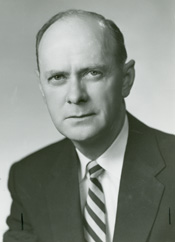
Historical · U.S. House · Texas · District 18
Walter Rogers
Former U.S. Representative · Texas District 18 · 1951–1967 · Democratic
Walter Rogers represented Texas's District 18 in the United States House of Representatives (1951–1967) for the Democratic party. The page below collects sourced biographical facts, term history, committee roles, and provenance for Rogers.
Bioguide ID: R000404
Key facts
- Full name
- Walter Rogers
- State
- Texas
- District
- District 18
- Party
- Democratic
- House service
- 1951–1967
- First House term
- 1951
- Status
- Left office
- Current term ends
- —
- Born
- 1908
- Bioguide ID
- R000404
- Committee assignments
- —
- Dataset version
- 1.20260605
Biographical narrative
1,013 words · sourced from the Wikipedia REST extract
Walter Rogers was a Democratic politician who served as a United States Representative for Texas's 18th congressional district from 1951 until 1967. Born on July 19, 1908, in Texarkana, Arkansas, he pursued a career in law and politics, eventually becoming a notable figure in the U.S. Congress. His tenure was marked by significant events in American history, including his presence during the assassination of President John F. Kennedy. Rogers was known for his firm positions on various issues, including his opposition to certain civil rights advancements and his unique voting record on notable resolutions. He passed away on May 31, 2001, in Naples, Florida, at the age of 92.
Early life and career
Walter Edward Rogers was born in Texarkana, Arkansas, in 1908. Growing up in the early 20th century, he experienced the social and economic changes that shaped the American South. After completing his primary and secondary education, Rogers pursued higher education at the University of Texas, where he earned a law degree in 1935. This academic achievement laid the groundwork for his future career in law and politics.
Following his graduation, Rogers began his professional career as a lawyer. In 1938, he took on the role of city attorney for Pampa, Texas, a position that allowed him to gain valuable experience in municipal law and governance. His work as city attorney likely provided him with insights into the legal and political systems that would later inform his decisions as a member of Congress. The experience he gained in local government helped him build a network of contacts and establish a reputation within the community, which would prove beneficial in his political aspirations.
Rogers's early career was characterized by a commitment to public service and an understanding of the legal issues facing his constituents. His involvement in local governance and law practice positioned him well for a future in national politics, where he would advocate for the interests of his district and engage with broader national issues.
House tenure
Walter Rogers entered the U.S. House of Representatives after winning election in 1950. His first term began in 1951, marking the beginning of an extensive political career that would span over a decade. Throughout his time in Congress, Rogers served a total of eight terms, reflecting a sustained level of support from his constituents in Texas's 18th congressional district. His tenure in the House coincided with a period of significant change in American society, including the civil rights movement and the Cold War.
During his time in Congress, Rogers was involved in various legislative activities and discussions that shaped the direction of national policy. He was one of the five Texas congressmen who signed the Southern Manifesto in 1956, a document that expressed opposition to the Supreme Court's decision in Brown v. Board of Education, which mandated the desegregation of public schools. This action highlighted Rogers's alignment with the prevailing attitudes of many Southern politicians at the time, reflecting the contentious debates surrounding civil rights and racial integration.
Rogers's legislative record included a range of votes on key issues, showcasing his political philosophy and priorities. Notably, he was the only member of the combined House of Representatives and Senate to vote against granting honorary citizenship to Winston Churchill in 1963. This decision underscored his unique stance on certain matters and his willingness to diverge from the majority opinion, a characteristic that defined his political identity.
Rogers's time in Congress also coincided with significant historical events, including the assassination of President John F. Kennedy on November 22, 1963. Rogers was present in Dallas that day, traveling in the motorcade several cars behind the President. This event had a profound impact on the nation and marked a pivotal moment in American history, further intertwining Rogers's legacy with the broader narrative of the era.
After serving in Congress for 16 years, Rogers chose not to seek re-election in 1966, concluding his political career with his last term ending on January 3, 1967. His decision to retire marked the end of a significant chapter in his life, during which he had navigated the complexities of national politics and represented the interests of his constituents.
Legislative focus and committees
Throughout his congressional career, Walter Rogers was involved in various legislative initiatives and served on several committees that shaped his contributions to the House. His work often reflected the priorities and concerns of his constituents, particularly in relation to issues affecting Texas and the broader Southern region.
Rogers's legislative focus included matters related to civil rights, education, and local governance. His signature on the Southern Manifesto indicated his alignment with the views of many Southern Democrats during a time of significant upheaval regarding race relations in the United States. This position often placed him at odds with the growing civil rights movement, which sought to dismantle systemic racism and promote equality.
In addition to his involvement in civil rights issues, Rogers's tenure in Congress also included participation in discussions surrounding economic policies and federal funding for various programs. His legal background likely informed his approach to legislative matters, as he sought to balance the needs of his constituents with the broader implications of federal policies.
Rogers's committee assignments provided him with platforms to influence legislation and advocate for his district's interests. While specific committee details are not provided, it is common for members of Congress to serve on committees that align with their areas of expertise and the needs of their constituents. These committees play a crucial role in shaping legislation, conducting hearings, and overseeing the implementation of federal laws.
In summary, Walter Rogers's career as a U.S. Representative was marked by significant historical events and complex legislative challenges. His early life and legal career laid the foundation for his political journey, while his tenure in Congress reflected the tensions and transformations of mid-20th century America. After retiring from public office, Rogers left behind a legacy intertwined with the evolving landscape of American politics and society. He passed away on May 31, 2001, in Naples, Florida, concluding a life dedicated to public service and legal advocacy.
Notable legislation
Sponsored and co-sponsored legislation for Walter Rogers is pending operator curation. The biographical narrative above carries the same provenance trail until per-bill rows are written.
Sources
- [1]https://en.wikipedia.org/wiki/Walter_E._RogersWikipedia · retrieved 2026-06-05
Notable quotes
Sourced quotes for Walter Rogers are pending operator curation. Narrative-scope provenance remains attached below.
Sources
- [1]https://en.wikipedia.org/wiki/Walter_E._RogersWikipedia · retrieved 2026-06-05
Key positions
Curated policy positions for Walter Rogers are pending operator review. The biographical narrative above carries the same provenance trail until per-topic positions are written.
Sources
- [1]https://en.wikipedia.org/wiki/Walter_E._RogersWikipedia · retrieved 2026-06-05
Terms served
- 1951–1953U.S. House · Term 1 · Democratic
- 1953–1955U.S. House · Term 2 · Democratic
- 1955–1957U.S. House · Term 3 · Democratic
- 1957–1959U.S. House · Term 4 · Democratic
- 1959–1961U.S. House · Term 5 · Democratic
- 1961–1963U.S. House · Term 6 · Democratic
- 1963–1965U.S. House · Term 7 · Democratic
- 1965–1967U.S. House · Term 8 · Democratic
Sources & provenance
Every attributable claim above carries a per-section [N] marker that resolves to the corresponding URL below. Each entry records the upstream provider, the canonical URL, and the timestamp at which the source was retrieved by the ingest pipeline.
Key facts
- https://bioguide.congress.gov/search/bio/R000404bioguide · retrieved 2026-06-05
- https://www.govtrack.us/congress/members/409371govtrack · retrieved 2026-06-05
Biographical narrative
- https://en.wikipedia.org/wiki/Walter_E._Rogerswikipedia · retrieved 2026-06-05
Find your representative
Every U.S. state elects representatives by district. Browse Texas’s delegation, the full former-representative roster, or explore the role and term length.
Related on The Candidate
- Preceded by Ben GuillEarlier holder of the Texas District 18 House seat · Republican.Open
- Succeeded by Barbara JordanLater holder of the Texas District 18 House seat · Democratic.Open
- Charles StewartFormer U.S. Representative · Texas District 1 · DemocraticOpen
- David KaufmanFormer U.S. Representative · Texas District 1 · DemocraticOpen
- Eugene BlackFormer U.S. Representative · Texas District 1 · DemocraticOpen
- George SmythFormer U.S. Representative · Texas District 1 · DemocraticOpen