
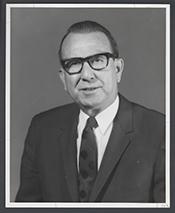
Historical · U.S. House · Texas · District 21
Ovie Fisher
Former U.S. Representative · Texas District 21 · 1943–1975 · Democratic
Ovie Fisher represented Texas's District 21 in the United States House of Representatives (1943–1975) for the Democratic party. The page below collects sourced biographical facts, term history, committee roles, and provenance for Fisher.
Bioguide ID: F000152
Key facts
- Full name
- Ovie Fisher
- State
- Texas
- District
- District 21
- Party
- Democratic
- House service
- 1943–1975
- First House term
- 1943
- Status
- Left office
- Current term ends
- —
- Born
- 1903
- Bioguide ID
- F000152
- Committee assignments
- —
- Dataset version
- 1.20260605
Biographical narrative
919 words · sourced from the Wikipedia REST extract
O. C. Fisher was a prominent American politician and attorney who served as a U.S. Representative for Texas's 21st congressional district for over three decades. A member of the Democratic Party, Fisher's congressional career spanned from 1943 until 1975, during which he was elected to 16 consecutive terms in the House of Representatives. His tenure was marked by significant political developments in Texas and the nation, reflecting the shifting dynamics of American politics during the mid-20th century.
Early life and career
Ovie Clark Fisher was born on November 22, 1903, in Junction, Texas, to Jobe Bazilee Fisher and Rhoda Catherine Clark Fisher. He grew up in a rural environment that shaped his understanding of the challenges faced by his constituents later in life. Fisher pursued higher education at several institutions, including the University of Texas at Austin, the University of Colorado at Boulder, and Baylor University in Waco, where he earned his Bachelor of Laws (LL.B.) degree. He was admitted to the Texas bar in 1929, beginning his professional career as an attorney.
Fisher initially practiced law in San Angelo, Texas, for a brief period before entering public service. In 1931, he was elected as the county attorney for Tom Green County, where he gained valuable experience in legal and governmental affairs. His political career continued to evolve when he served in the Texas House of Representatives, representing the 53rd District from 1935 to 1937. Following this role, he became the District Attorney for the 51st Judicial District of Texas from 1937 until 1943, further solidifying his reputation as a dedicated public servant.
In 1942, Fisher transitioned to national politics when he was elected to the United States House of Representatives as a Democrat. His election marked the beginning of a long and influential career in Congress, where he would serve through significant periods of American history, including World War II and the Civil Rights Movement.
House tenure
Fisher's congressional career began with the 78th Congress and continued through the 93rd Congress, lasting from 1943 until his departure from office in 1975. Over the course of his 16 terms, he was re-elected 14 times, often facing minimal opposition in his early years. His political influence was notable, particularly in Texas, where he was one of the prominent figures representing the interests of rural and conservative constituents.
During the 1972 election, however, Fisher faced a more challenging race against Republican Doug Harlan, who garnered a significant portion of the vote despite limited campaign resources. This election was indicative of the changing political landscape in Texas, as it suggested a shift away from the dominance of rural conservative Democrats that had characterized the state's politics for decades. In light of this emerging political reality and following heart surgery in 1973, Fisher chose not to seek re-election in 1974. His party subsequently nominated Robert Krueger, who successfully defeated Harlan in the general election.
Fisher's long tenure in Congress was marked by participation in various legislative efforts and significant national debates. He was one of five Texas representatives who signed the "Southern Manifesto," which opposed the Supreme Court's ruling in Brown v. Board of Education that mandated desegregation in public schools. His voting record included opposition to several key pieces of civil rights legislation, such as the Civil Rights Acts of 1957, 1960, 1964, and 1968, as well as the Voting Rights Act of 1965 and the 24th Amendment to the U.S. Constitution. These positions reflected the prevailing attitudes of many Southern Democrats during this period, as they navigated the complex social and political changes occurring in the United States.
Legislative focus and committees
Throughout his congressional career, Fisher's legislative focus encompassed a range of issues pertinent to his constituents and the broader national landscape. His work often emphasized the needs of rural communities, agriculture, and water resource management, reflecting the priorities of his Texas district. Fisher's legal background informed his approach to legislation, as he sought to address the challenges faced by his constituents through various policy initiatives.
Fisher served on several committees during his time in the House, which allowed him to influence legislation in key areas. His involvement in these committees provided him with a platform to advocate for the interests of Texas and to engage with national issues. Although specific committee assignments are not detailed in the available information, it is common for representatives to serve on committees related to agriculture, appropriations, or public works, given the rural and economic context of their districts.
In addition to his legislative work, Fisher was also an author and historian, contributing to the understanding of Texas history through his writings. He published several works that explored various aspects of Texas culture and history, including titles that focused on local history and notable figures. His contributions to literature and historical scholarship further exemplified his commitment to preserving and promoting the heritage of Texas.
Fisher's legacy extends beyond his congressional service. In recognition of his contributions, San Angelo Lake was renamed O.C. Fisher Reservoir in 1975, and San Angelo State Park was established on its shores. These honors reflect his lasting impact on the region and his commitment to public service.
O. C. Fisher passed away on December 9, 1994, leaving behind a complex legacy as a long-serving member of Congress and a figure who navigated the evolving political landscape of Texas and the United States during a transformative era. His life and career continue to be of interest to historians and political scholars studying the dynamics of mid-20th-century American politics.
Notable legislation
Sponsored and co-sponsored legislation for Ovie Fisher is pending operator curation. The biographical narrative above carries the same provenance trail until per-bill rows are written.
Sources
- [1]https://en.wikipedia.org/wiki/O._C._FisherWikipedia · retrieved 2026-06-05
Notable quotes
Sourced quotes for Ovie Fisher are pending operator curation. Narrative-scope provenance remains attached below.
Sources
- [1]https://en.wikipedia.org/wiki/O._C._FisherWikipedia · retrieved 2026-06-05
Key positions
Curated policy positions for Ovie Fisher are pending operator review. The biographical narrative above carries the same provenance trail until per-topic positions are written.
Sources
- [1]https://en.wikipedia.org/wiki/O._C._FisherWikipedia · retrieved 2026-06-05
Terms served
- 1943–1945U.S. House · Term 1 · Democratic
- 1945–1947U.S. House · Term 2 · Democratic
- 1947–1949U.S. House · Term 3 · Democratic
- 1949–1951U.S. House · Term 4 · Democratic
- 1951–1953U.S. House · Term 5 · Democratic
- 1953–1955U.S. House · Term 6 · Democratic
- 1955–1957U.S. House · Term 7 · Democratic
- 1957–1959U.S. House · Term 8 · Democratic
- 1959–1961U.S. House · Term 9 · Democratic
- 1961–1963U.S. House · Term 10 · Democratic
- 1963–1965U.S. House · Term 11 · Democratic
- 1965–1967U.S. House · Term 12 · Democratic
- 1967–1969U.S. House · Term 13 · Democratic
- 1969–1971U.S. House · Term 14 · Democratic
- 1971–1973U.S. House · Term 15 · Democratic
- 1973–1975U.S. House · Term 16 · Democratic
Sources & provenance
Every attributable claim above carries a per-section [N] marker that resolves to the corresponding URL below. Each entry records the upstream provider, the canonical URL, and the timestamp at which the source was retrieved by the ingest pipeline.
Key facts
- https://bioguide.congress.gov/search/bio/F000152bioguide · retrieved 2026-06-05
- https://www.govtrack.us/congress/members/404107govtrack · retrieved 2026-06-05
Biographical narrative
- https://en.wikipedia.org/wiki/O._C._Fisherwikipedia · retrieved 2026-06-05
Find your representative
Every U.S. state elects representatives by district. Browse Texas’s delegation, the full former-representative roster, or explore the role and term length.
Related on The Candidate
- Preceded by Charles SouthEarlier holder of the Texas District 21 House seat · Democratic.Open
- Succeeded by Thomas LoefflerLater holder of the Texas District 21 House seat · Republican.Open
- Charles StewartFormer U.S. Representative · Texas District 1 · DemocraticOpen
- David KaufmanFormer U.S. Representative · Texas District 1 · DemocraticOpen
- Eugene BlackFormer U.S. Representative · Texas District 1 · DemocraticOpen
- George SmythFormer U.S. Representative · Texas District 1 · DemocraticOpen