
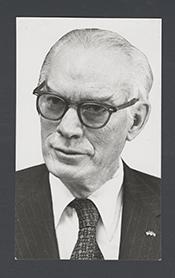
Historical · U.S. House · Texas · District 22
Robert Casey
Former U.S. Representative · Texas District 22 · 1959–1976 · Democratic
Robert Casey represented Texas's District 22 in the United States House of Representatives (1959–1976) for the Democratic party. The page below collects sourced biographical facts, term history, committee roles, and provenance for Casey.
Bioguide ID: C000228
Key facts
- Full name
- Robert Casey
- State
- Texas
- District
- District 22
- Party
- Democratic
- House service
- 1959–1976
- First House term
- 1959
- Status
- Left office
- Current term ends
- —
- Born
- 1915
- Bioguide ID
- C000228
- Committee assignments
- —
- Dataset version
- 1.20260605
Biographical narrative
842 words · sourced from the Wikipedia REST extract
Robert Randolph Casey was a prominent American politician who served as a member of the United States House of Representatives from Texas. A member of the Democratic Party, Casey represented Texas's 22nd congressional district, where he was elected to serve for nine consecutive terms from 1959 until his departure from the House in 1976. Following his congressional career, he was appointed to the Federal Maritime Commission by President Gerald R. Ford. Casey's contributions to Texas politics and his service in the U.S. Congress are remembered, and he is commemorated by the naming of the Bob Casey Federal Courthouse in Houston.
Early life and career
Bob Casey was born on July 27, 1915, in Joplin, Missouri. During his teenage years, he relocated to Houston, Texas, where he completed his secondary education at San Jacinto High School. Following high school, Casey pursued higher education at the University of Houston, where he earned his undergraduate degree. He continued his studies at South Texas College of Law, obtaining his Juris Doctor degree in 1940. After being admitted to the bar that same year, he established a private law practice in Alvin, Texas, marking the beginning of his professional career in law.
In 1942, Casey transitioned into public service when he was appointed as the city attorney for Alvin. His legal career continued to evolve, and in 1943, he returned to Houston to serve as the assistant district attorney for Harris County. This role provided him with valuable experience in the legal and political landscape of Texas. In 1948, Casey made his initial foray into elected office by winning a seat in the Texas House of Representatives, where he represented the 24th district, which encompassed parts of Houston. Although he served only one term in the Texas legislature, he gained significant political experience during this period.
After his time in the Texas House, Casey opted not to seek reelection and instead took on the role of Harris County Judge, a position akin to a county executive. He held this office for eight years, overseeing various administrative functions and contributing to local governance. Additionally, he served as an administrator at South Texas College, further solidifying his ties to the educational community in Texas.
House tenure
Bob Casey's congressional career began in 1958 when he was elected to the United States House of Representatives, representing the newly established 22nd congressional district of Texas. He won the election decisively against his Republican opponent, Thomas Everton Kennerly, Sr., securing a significant majority of the votes. Throughout his tenure in the House, Casey was known for his active participation in various legislative matters and his commitment to serving his constituents.
During his time in Congress, Casey was a member of the House Committee on Government Reform and the Committee on the Post Office and the Civil Service. His involvement in these committees allowed him to engage with a range of issues pertinent to government operations and public services. Over the course of his nine terms in the House, Casey worked on various legislative initiatives and contributed to discussions on policies affecting both Texas and the nation.
In 1976, Casey concluded his tenure in the House of Representatives when he was appointed to the Federal Maritime Commission by President Gerald R. Ford. This appointment marked a transition from legislative duties to regulatory responsibilities in the maritime sector. Following his service on the Commission, Casey returned to the practice of law, where he continued to apply his legal expertise.
Legislative focus and committees
Throughout his congressional career, Bob Casey's legislative focus encompassed a variety of issues, reflecting the interests and needs of his constituents in Texas. As a member of the House Committee on Government Reform, he was involved in efforts to improve the efficiency and effectiveness of government operations. This committee played a crucial role in examining the performance of federal agencies and advocating for reforms aimed at enhancing accountability and transparency in government.
Additionally, Casey's role on the Committee on the Post Office and the Civil Service allowed him to address matters related to postal services and civil service employment. His work on these committees demonstrated his commitment to public service and his desire to ensure that government functions met the needs of the American people.
Casey's legislative contributions were shaped by the political climate of the time, as well as the specific challenges facing his district and the nation. His long tenure in the House provided him with a wealth of experience in navigating complex legislative processes and advocating for policies that aligned with his constituents' interests.
After leaving Congress, Casey remained engaged in public life through his legal practice and continued to influence the community until his passing on April 17, 1986, in Houston, Texas. His legacy is honored through the naming of the Bob Casey Federal Courthouse, which serves as a reminder of his contributions to public service and the legal profession in Texas. Casey's life and career reflect the dedication of a public servant committed to the welfare of his constituents and the broader community.
Notable legislation
Sponsored and co-sponsored legislation for Robert Casey is pending operator curation. The biographical narrative above carries the same provenance trail until per-bill rows are written.
Sources
- [1]https://en.wikipedia.org/wiki/Robert_R._CaseyWikipedia · retrieved 2026-06-05
Notable quotes
Sourced quotes for Robert Casey are pending operator curation. Narrative-scope provenance remains attached below.
Sources
- [1]https://en.wikipedia.org/wiki/Robert_R._CaseyWikipedia · retrieved 2026-06-05
Key positions
Curated policy positions for Robert Casey are pending operator review. The biographical narrative above carries the same provenance trail until per-topic positions are written.
Sources
- [1]https://en.wikipedia.org/wiki/Robert_R._CaseyWikipedia · retrieved 2026-06-05
Terms served
- 1959–1961U.S. House · Term 1 · Democratic
- 1961–1963U.S. House · Term 2 · Democratic
- 1963–1965U.S. House · Term 3 · Democratic
- 1965–1967U.S. House · Term 4 · Democratic
- 1967–1969U.S. House · Term 5 · Democratic
- 1969–1971U.S. House · Term 6 · Democratic
- 1971–1973U.S. House · Term 7 · Democratic
- 1973–1975U.S. House · Term 8 · Democratic
- 1975–1976U.S. House · Term 9 · Democratic
Sources & provenance
Every attributable claim above carries a per-section [N] marker that resolves to the corresponding URL below. Each entry records the upstream provider, the canonical URL, and the timestamp at which the source was retrieved by the ingest pipeline.
Key facts
- https://bioguide.congress.gov/search/bio/C000228bioguide · retrieved 2026-06-05
- https://www.govtrack.us/congress/members/402373govtrack · retrieved 2026-06-05
Biographical narrative
- https://en.wikipedia.org/wiki/Robert_R._Caseywikipedia · retrieved 2026-06-05
Find your representative
Every U.S. state elects representatives by district. Browse Texas’s delegation, the full former-representative roster, or explore the role and term length.
Related on The Candidate
- Succeeded by Robert GammageLater holder of the Texas District 22 House seat · Democratic.Open
- Charles StewartFormer U.S. Representative · Texas District 1 · DemocraticOpen
- David KaufmanFormer U.S. Representative · Texas District 1 · DemocraticOpen
- Eugene BlackFormer U.S. Representative · Texas District 1 · DemocraticOpen
- George SmythFormer U.S. Representative · Texas District 1 · DemocraticOpen
- Democratic PartyFederal candidates and office holders on the Democratic line.Open