
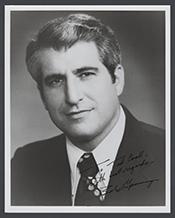
Historical · U.S. House · Texas · District 22
Robert Gammage
Former U.S. Representative · Texas District 22 · 1977–1979 · Democratic
Robert Gammage represented Texas's District 22 in the United States House of Representatives (1977–1979) for the Democratic party. The page below collects sourced biographical facts, term history, committee roles, and provenance for Gammage.
Bioguide ID: G000036
Key facts
- Full name
- Robert Gammage
- State
- Texas
- District
- District 22
- Party
- Democratic
- House service
- 1977–1979
- First House term
- 1977
- Status
- Left office
- Current term ends
- —
- Born
- 1938
- Bioguide ID
- G000036
- Committee assignments
- —
- Dataset version
- 1.20260605
Biographical narrative
895 words · sourced from the Wikipedia REST extract
Robert A. Gammage was an American politician who served as a Democratic U.S. Representative for Texas's 22nd congressional district from 1977 to 1979. His political career spanned several decades and included roles in the Texas House of Representatives, the Texas State Senate, and the judiciary, where he held positions as a justice on the Texas Third Court of Appeals and the Texas Supreme Court. Gammage was known for his advocacy of government reform, consumer rights, and equal rights legislation, as well as his involvement in judicial reform efforts later in his career.
Early life and career
Robert Alton Gammage was born on March 13, 1938, in Houston, Texas. He completed his early education at Milby High School in Houston before pursuing higher education. Gammage earned an associate of arts degree from Del Mar College in 1958 and went on to obtain a Bachelor of Science degree from the University of Corpus Christi in 1963. He furthered his education with a master's degree from Sam Houston State University in 1965 and a Juris Doctor from the University of Texas at Austin in 1969. In 1986, he completed an LLM from the University of Virginia School of Law.
Gammage's early career included military service in the United States Army from 1959 to 1960, followed by a period in the Army Reserve until 1964. His military service included time stationed at Fort Benning, Georgia, and in Seoul, Korea. He later joined the Navy Reserve, where he served from 1965 until his retirement as a captain in 2000.
In addition to his military service, Gammage had a notable academic career. Throughout the late 1960s and early 1970s, he held faculty positions at various institutions, including the University of Corpus Christi, San Jacinto College, and the South Texas College of Law. In the late 1990s and early 2000s, he continued to teach at several universities, including Sam Houston State University, Texas A&M University-Corpus Christi, Texas State University, and St. Edward's University in Austin.
House tenure
Gammage's political career began in earnest when he was elected to the Texas House of Representatives, serving from 1971 to 1973. During this time, he was part of a bipartisan group known as the "Dirty 30," which sought to implement reforms in response to the Sharpstown scandal, a significant political corruption case in Texas. As a member of the Texas House, Gammage advocated for various reforms, including government accountability, consumer protection, voting rights for eighteen-year-olds, and equal rights for women.
After his tenure in the Texas House, Gammage served in the Texas State Senate from 1973 to 1976. His political career continued to ascend when he was elected to the United States House of Representatives, representing Texas's 22nd congressional district. He began his term in the 95th Congress in 1977 after defeating incumbent Republican Ron Paul. Gammage's time in Congress was marked by his commitment to the Democratic Party's platform and his focus on legislative issues relevant to his constituents.
However, Gammage's congressional career was relatively brief. After serving one term, he lost his seat to Ron Paul in the 1978 election. Following his departure from Congress, Gammage continued to engage in public service, taking on various roles in state government and the judiciary.
Legislative focus and committees
During his time in the U.S. House of Representatives, Gammage was involved in a range of legislative initiatives that reflected his commitment to consumer rights and government reform. He sponsored several bills aimed at improving the legal and regulatory framework in Texas. Some of his notable legislative efforts included measures related to the regulation of debt collection practices, the awarding of attorney's fees in civil actions, and the definition of deceptive trade practices in commerce. He also worked on legislation concerning the jurisdiction of municipal courts and the establishment of utility districts in Harris County.
In addition to his legislative work, Gammage's political career included significant contributions to the Texas judiciary. After his congressional term, he served as an assistant state attorney general under Attorney General Mark Wells White from 1979 to 1980. Gammage was later elected as a justice to the Texas Third Court of Appeals in 1982, a position he held until 1991. He was subsequently elected to the Texas Supreme Court, where he served from 1991 until 1995. During his time on the bench, he participated in numerous cases and was known for his expansive interpretation of legal doctrines that protect individual rights and equality.
Gammage's judicial career was marked by his advocacy for reform in the electoral process for judges. He garnered national attention when he resigned from the Texas Supreme Court in 1995 to highlight the influence of campaign contributions on judicial elections. His efforts contributed to initiatives aimed at capping campaign contributions in judicial races, reflecting his ongoing commitment to integrity in public service.
In the years following his judicial tenure, Gammage remained active in political and civic life. He participated in the 2006 Texas gubernatorial Democratic primary and was involved in the campaign to nominate Hillary Clinton for the presidency in 2008. In his later years, he engaged in pro bono legal work, assisting those in need.
Robert A. Gammage passed away on September 10, 2012, at the age of 74. His career spanned multiple facets of public service, including legislative, judicial, and educational roles, leaving a legacy of advocacy for reform and individual rights in Texas.
Notable legislation
Sponsored and co-sponsored legislation for Robert Gammage is pending operator curation. The biographical narrative above carries the same provenance trail until per-bill rows are written.
Sources
- [1]https://en.wikipedia.org/wiki/Robert_GammageWikipedia · retrieved 2026-06-05
Notable quotes
Sourced quotes for Robert Gammage are pending operator curation. Narrative-scope provenance remains attached below.
Sources
- [1]https://en.wikipedia.org/wiki/Robert_GammageWikipedia · retrieved 2026-06-05
Key positions
Curated policy positions for Robert Gammage are pending operator review. The biographical narrative above carries the same provenance trail until per-topic positions are written.
Sources
- [1]https://en.wikipedia.org/wiki/Robert_GammageWikipedia · retrieved 2026-06-05
Terms served
- 1977–1979U.S. House · Term 1 · Democratic
Sources & provenance
Every attributable claim above carries a per-section [N] marker that resolves to the corresponding URL below. Each entry records the upstream provider, the canonical URL, and the timestamp at which the source was retrieved by the ingest pipeline.
Key facts
- https://bioguide.congress.gov/search/bio/G000036bioguide · retrieved 2026-06-05
- https://www.govtrack.us/congress/members/404412govtrack · retrieved 2026-06-05
Biographical narrative
- https://en.wikipedia.org/wiki/Robert_Gammagewikipedia · retrieved 2026-06-05
Find your representative
Every U.S. state elects representatives by district. Browse Texas’s delegation, the full former-representative roster, or explore the role and term length.
Related on The Candidate
- Preceded by Robert CaseyEarlier holder of the Texas District 22 House seat · Democratic.Open
- Succeeded by Tom DeLayLater holder of the Texas District 22 House seat · Republican.Open
- Charles StewartFormer U.S. Representative · Texas District 1 · DemocraticOpen
- David KaufmanFormer U.S. Representative · Texas District 1 · DemocraticOpen
- Eugene BlackFormer U.S. Representative · Texas District 1 · DemocraticOpen
- George SmythFormer U.S. Representative · Texas District 1 · DemocraticOpen