
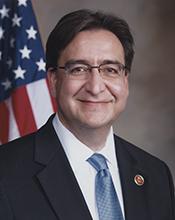
Historical · U.S. House · Texas · District 23
Pete Gallego
Former U.S. Representative · Texas District 23 · 2013–2015 · Democratic
Pete Gallego represented Texas's District 23 in the United States House of Representatives (2013–2015) for the Democratic party. The page below collects sourced biographical facts, term history, committee roles, and provenance for Gallego.
Bioguide ID: G000572
Key facts
- Full name
- Pete Gallego
- State
- Texas
- District
- District 23
- Party
- Democratic
- House service
- 2013–2015
- First House term
- 2013
- Status
- Left office
- Current term ends
- —
- Born
- 1961
- Bioguide ID
- G000572
- Committee assignments
- —
- Dataset version
- 1.20260605
Biographical narrative
923 words · sourced from the Wikipedia REST extract
Pete P. Gallego is an American lawyer and politician who served as a U.S. Representative for Texas's 23rd congressional district from 2013 until 2015. A member of the Democratic Party, Gallego has had a notable career in both state and federal government, as well as in higher education. He is recognized for his work in the Texas House of Representatives prior to his congressional tenure and has continued to engage in discussions surrounding college accessibility and affordability after his time in office.
Early life and career
Born on December 2, 1961, Pete Gallego grew up in Alpine, Texas. He pursued higher education at Sul Ross State University, where he earned a degree before attending law school. After completing his legal education, Gallego began his professional career as an assistant in the office of the Texas Attorney General. He later returned to Alpine to serve as a prosecutor, where he gained valuable experience in the legal system. Additionally, he worked as an attorney at the law firm Brown McCarroll LLP, which had an office in Austin.
Gallego's political career began in earnest when he was elected to the Texas House of Representatives in 1990, representing the 68th district. He made history as the first Hispanic individual to hold this position in a district that encompasses a significant portion of the Texas-Mexico border. His tenure in the Texas House was marked by a series of leadership roles, including becoming the first freshman and ethnic minority member to serve as chair of the House Democratic Caucus, a position he held until January 2001.
During his time in the Texas legislature, Gallego was actively involved in various committees and caucuses. He served on the board of directors of the National Association of Latino Elected Officials (NALEO) and held the chairmanship of the Mexican American Legislative Caucus (MALC) for four terms. His legislative focus included significant issues such as criminal justice reform, economic development, and the rights of crime victims. He was also instrumental in establishing internship programs within MALC, named in honor of prominent mentors in the Latino community.
Gallego's influence extended beyond legislative matters; he was involved in the Texas Sunset Commission and participated in multiple committees, including those on Appropriations, Criminal Jurisprudence, and Higher Education. His commitment to public service and advocacy for underrepresented communities was evident throughout his career in the Texas House.
House tenure
Gallego announced his candidacy for the U.S. House of Representatives in September 2011, seeking to represent Texas's 23rd congressional district. This district was largely coextensive with the central portion of the state house district he had previously represented. In the Democratic primary, he finished second to former congressman Ciro Rodriguez, who had the endorsement of prominent figures, including Bill Clinton. However, Gallego successfully won the runoff election against Rodriguez, securing his place on the ballot for the general election.
In the general election held on November 6, 2012, Gallego faced incumbent Republican Quico Canseco. The campaign was characterized by its contentious nature, with both candidates exchanging sharp criticisms. Despite losing in Bexar County, which constituted a significant portion of the district's population, Gallego won the election by a margin of over 9,000 votes, marking his entry into Congress.
Gallego's first term in the House began in January 2013. He was involved in various legislative activities and was recognized for his efforts to advocate for issues relevant to his constituents. His tenure, however, was relatively short-lived. In 2014, he ran for re-election and faced Republican challenger Will Hurd. Gallego won the Democratic primary without opposition but ultimately lost the general election by a narrow margin of approximately 2,400 votes.
Following his defeat, Gallego sought to reclaim his seat in the 2016 election. He won the Democratic nomination but was again unsuccessful against Hurd, losing by a slightly larger margin. Despite these setbacks, Gallego remained engaged in political discussions and considered future opportunities to run for office, although he ultimately decided not to pursue a candidacy in the 2018 election cycle.
Legislative focus and committees
During his time in the U.S. House of Representatives, Gallego was known for his commitment to various legislative priorities that aligned with the interests of his constituents. His background in law and experience in the Texas legislature informed his approach to governance and policy-making. Gallego's focus included issues related to education, economic development, and criminal justice reform, reflecting his long-standing advocacy for marginalized communities.
In addition to his legislative work, Gallego was involved in committee assignments that allowed him to influence policy on a broader scale. He served on the Committee on Agriculture, where he contributed to discussions and initiatives relevant to agricultural practices and rural development. His experience in the Texas House, particularly in committees related to higher education and appropriations, positioned him as a knowledgeable voice on matters affecting educational institutions and funding.
After leaving Congress in 2015, Gallego continued to engage in higher education as he took on the role of president at Sul Ross State University from 2020 to 2022. He has since held the title of president emeritus and remains active in discussions surrounding college accessibility and affordability, particularly for first-generation college students. His ongoing commitment to these issues reflects his dedication to public service and advocacy for educational opportunities.
Throughout his career, Pete Gallego has demonstrated a commitment to serving the people of Texas, advocating for legislative changes that address the needs of diverse communities. His experiences in both state and federal government, along with his leadership in higher education, underscore his multifaceted contributions to public life.
Notable legislation
Sponsored and co-sponsored legislation for Pete Gallego is pending operator curation. The biographical narrative above carries the same provenance trail until per-bill rows are written.
Sources
- [1]https://en.wikipedia.org/wiki/Pete_GallegoWikipedia · retrieved 2026-06-05
Notable quotes
Sourced quotes for Pete Gallego are pending operator curation. Narrative-scope provenance remains attached below.
Sources
- [1]https://en.wikipedia.org/wiki/Pete_GallegoWikipedia · retrieved 2026-06-05
Key positions
Curated policy positions for Pete Gallego are pending operator review. The biographical narrative above carries the same provenance trail until per-topic positions are written.
Sources
- [1]https://en.wikipedia.org/wiki/Pete_GallegoWikipedia · retrieved 2026-06-05
Terms served
- 2013–2015U.S. House · Term 1 · Democratic
Sources & provenance
Every attributable claim above carries a per-section [N] marker that resolves to the corresponding URL below. Each entry records the upstream provider, the canonical URL, and the timestamp at which the source was retrieved by the ingest pipeline.
Key facts
- https://bioguide.congress.gov/search/bio/G000572bioguide · retrieved 2026-06-05
- http://gallego.house.govhouse.gov · retrieved 2026-06-05
Biographical narrative
- https://en.wikipedia.org/wiki/Pete_Gallegowikipedia · retrieved 2026-06-05
Find your representative
Every U.S. state elects representatives by district. Browse Texas’s delegation, the full former-representative roster, or explore the role and term length.
Related on The Candidate
- Preceded by Quico CansecoEarlier holder of the Texas District 23 House seat · Republican.Open
- Succeeded by Will HurdLater holder of the Texas District 23 House seat · Republican.Open
- Charles StewartFormer U.S. Representative · Texas District 1 · DemocraticOpen
- David KaufmanFormer U.S. Representative · Texas District 1 · DemocraticOpen
- Eugene BlackFormer U.S. Representative · Texas District 1 · DemocraticOpen
- George SmythFormer U.S. Representative · Texas District 1 · DemocraticOpen