
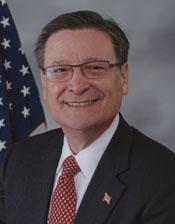
Historical · U.S. House · Texas · District 23
Quico Canseco
Former U.S. Representative · Texas District 23 · 2011–2013 · Republican
Quico Canseco represented Texas's District 23 in the United States House of Representatives (2011–2013) for the Republican party. The page below collects sourced biographical facts, term history, committee roles, and provenance for Canseco.
Bioguide ID: C001082
Key facts
- Full name
- Quico Canseco
- State
- Texas
- District
- District 23
- Party
- Republican
- House service
- 2011–2013
- First House term
- 2011
- Status
- Left office
- Current term ends
- —
- Born
- 1949
- Bioguide ID
- C001082
- Committee assignments
- —
- Dataset version
- 1.20260605
Biographical narrative
877 words · sourced from the Wikipedia REST extract
Francisco "Quico" Canseco is a former U.S. Representative who served Texas's 23rd congressional district from 2011 to 2013. A member of the Republican Party, Canseco's tenure in the House was marked by his alignment with conservative principles and his involvement in various legislative initiatives. Prior to his political career, he had a background in law and business, which informed his approach to governance and policy-making.
Early life and career
Francisco Raul Canseco was born on July 30, 1949, in Laredo, Texas, where he was raised as the eldest of eight children. His parents, Consuelo Sada Rangel and Dr. Francisco Manuel Canseco, were both originally from Monterrey, Mexico. Canseco's family heritage includes Italian and Sephardic Jewish roots, which has influenced his perspective and identity.
Canseco pursued higher education at Saint Louis University, where he earned a Bachelor of Arts degree in History in 1972. He continued his studies at the same institution, obtaining a Juris Doctor degree from the Saint Louis University School of Law in 1975. His early involvement in college life included membership in the Tau Kappa Epsilon International Fraternity.
Following his graduation from law school, Canseco began his legal career as an associate attorney at Mann, Castillon, Fried and Kazen in Laredo. He later established his own law practice, which he operated for five years before joining another firm, Person, Whitworth, Ramos, Borchers, and Morales. In 1987, he transitioned to a role as general counsel for Union National Bank of Texas, a position he held until 1992. Canseco's legal career also included a stint as counsel for Escamilla and Ponek from 2003 to 2007.
In addition to his legal work, Canseco has been involved in the banking sector. He served as chairman of Texas Heritage Bancshares from 2001 to 2007 and has been the President and Director of FMC Developers since 1988. His business acumen was evident in his leadership role at Hondo National Bank, where he played a significant part in transforming the institution from a struggling bank into a successful entity with multiple branches and substantial assets.
House tenure
Canseco's political career began with his candidacy for the U.S. House of Representatives. His first attempt at election came in 2004 when he ran for the newly redrawn Texas's 28th congressional district. In the Republican primary, he faced attorney Jim Hopson, ultimately losing in a runoff election. Canseco made another bid for Congress in 2008 but was defeated in the Republican primary by Lyle Larson.
In 2010, Canseco successfully secured the Republican nomination for Texas's 23rd congressional district after a competitive primary that included CIA officer Will Hurd. Canseco won the runoff election and subsequently faced incumbent Democratic Congressman Ciro Rodriguez in the general election. With significant financial backing from the Republican National Committee, Canseco won the election, marking the beginning of his term in the House.
During his time in Congress, Canseco was known for his conservative stance on various issues. He identified as a "limited-government conservative" and was an advocate for policies such as the extension of the Bush tax cuts and the repeal of the Affordable Care Act. His alignment with the Tea Party movement was also a notable aspect of his political identity.
In the 2012 election, Canseco ran for re-election but was defeated by Democratic candidate Pete Gallego. The election was characterized by allegations of voter fraud and irregularities, which Canseco cited as a concern during his concession. Despite winning in parts of Bexar County, he could not overcome Gallego's support in other areas of the district.
Legislative focus and committees
During his tenure in the House, Canseco was a member of the Republican Study Committee, a group of conservative House Republicans. This affiliation placed him among a select group of Latino members of Congress who shared similar ideological views. He was also part of the Congressional Hispanic Conference, which aimed to address issues pertinent to the Hispanic community.
Canseco's legislative activities included introducing the San Antonio Missions National Historical Park Boundary Expansion Act, which sought to facilitate a land swap between the federal government and Bexar County. The bill aimed to enhance the development of the San Antonio River and expand the historical park's boundaries. Although the bill faced initial criticism, it ultimately aligned with broader efforts to promote local heritage and tourism.
In addition to his legislative initiatives, Canseco was recognized for delivering the Spanish-language response to the State of the Union address in 2012, reflecting his commitment to engaging with the Hispanic community and addressing their concerns.
After his term in Congress ended in January 2013, Canseco made subsequent attempts to return to the House. He ran in the 2014 Republican primary but was defeated by Will Hurd. He also sought to succeed retiring Congressman Lamar Smith in the 2018 Republican primary for Texas's 21st congressional district, where he garnered a small percentage of the vote. In 2026, he attempted to challenge incumbent Tony Gonzales in the 23rd congressional district but was again unsuccessful.
Canseco's political journey illustrates the complexities of electoral politics and the challenges faced by candidates in maintaining support within their constituencies. His background in law and business, combined with his legislative focus on conservative principles, shaped his approach to governance during his time in the U.S. House of Representatives.
Notable legislation
Sponsored and co-sponsored legislation for Quico Canseco is pending operator curation. The biographical narrative above carries the same provenance trail until per-bill rows are written.
Sources
- [1]https://en.wikipedia.org/wiki/Quico_CansecoWikipedia · retrieved 2026-06-05
Notable quotes
Sourced quotes for Quico Canseco are pending operator curation. Narrative-scope provenance remains attached below.
Sources
- [1]https://en.wikipedia.org/wiki/Quico_CansecoWikipedia · retrieved 2026-06-05
Key positions
Curated policy positions for Quico Canseco are pending operator review. The biographical narrative above carries the same provenance trail until per-topic positions are written.
Sources
- [1]https://en.wikipedia.org/wiki/Quico_CansecoWikipedia · retrieved 2026-06-05
Terms served
- 2011–2013U.S. House · Term 1 · Republican
Sources & provenance
Every attributable claim above carries a per-section [N] marker that resolves to the corresponding URL below. Each entry records the upstream provider, the canonical URL, and the timestamp at which the source was retrieved by the ingest pipeline.
Key facts
- https://bioguide.congress.gov/search/bio/C001082bioguide · retrieved 2026-06-05
- http://canseco.house.gov/house.gov · retrieved 2026-06-05
Biographical narrative
- https://en.wikipedia.org/wiki/Quico_Cansecowikipedia · retrieved 2026-06-05
Find your representative
Every U.S. state elects representatives by district. Browse Texas’s delegation, the full former-representative roster, or explore the role and term length.
Related on The Candidate
- Preceded by Ciro RodriguezEarlier holder of the Texas District 23 House seat · Democratic.Open
- Succeeded by Pete GallegoLater holder of the Texas District 23 House seat · Democratic.Open
- Charles StewartFormer U.S. Representative · Texas District 1 · DemocraticOpen
- David KaufmanFormer U.S. Representative · Texas District 1 · DemocraticOpen
- Eugene BlackFormer U.S. Representative · Texas District 1 · DemocraticOpen
- George SmythFormer U.S. Representative · Texas District 1 · DemocraticOpen