
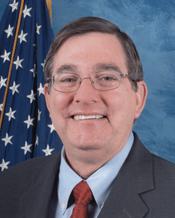
Historical · U.S. House · Texas · District 26
Michael Burgess
Former U.S. Representative · Texas District 26 · 2003–2025 · Republican
Michael Burgess represented Texas's District 26 in the United States House of Representatives (2003–2025) for the Republican party. The page below collects sourced biographical facts, term history, committee roles, and provenance for Burgess.
Bioguide ID: B001248
Key facts
- Full name
- Michael Burgess
- State
- Texas
- District
- District 26
- Party
- Republican
- House service
- 2003–2025
- First House term
- 2003
- Status
- Left office
- Current term ends
- —
- Born
- 1950
- Bioguide ID
- B001248
- Committee assignments
- —
- Dataset version
- 1.20260603
Biographical narrative
806 words · sourced from the Wikipedia REST extract
Michael C. Burgess is a former American physician and politician who served as a U.S. Representative for Texas's 26th congressional district from 2003 until 2025. A member of the Republican Party, Burgess represented a district that is primarily located in Denton County, a suburban area situated north of the Dallas-Fort Worth metropolitan region. Before entering politics, he practiced as an obstetrician and gynecologist, delivering over 3,000 babies throughout his medical career. He is known for his conservative stance on various issues, including healthcare, immigration, and abortion.
Early life and career
Michael Burgess was born on December 23, 1950, in Rochester, Minnesota, to parents Norma and Harry Meredith Burgess. His family has roots in Nova Scotia, Canada, having emigrated to the United States. Burgess pursued higher education at North Texas State University, where he graduated in 1972. He then attended McGovern Medical School at the University of Texas Health Science Center at Houston, earning his medical degree in 1977. Following his education, he completed a residency in obstetrics and gynecology at Parkland Memorial Hospital in Dallas, Texas.
Burgess's medical career was marked by his commitment to women's health, and he became a well-respected figure in his field. Over the years, he delivered thousands of babies, showcasing his dedication to his profession. His medical background provided him with a unique perspective on healthcare policy, which would later influence his legislative priorities. Burgess identifies as an Episcopalian, reflecting his personal beliefs and values.
House tenure
Burgess entered the political arena in 2002 when he ran for the U.S. House of Representatives to replace retiring House Majority Leader Dick Armey. His primary opponent was Scott Armey, the son of the incumbent. The district, which encompasses nearly all of Denton County, was a stronghold for the Republican Party, leading many to predict that the winner of the primary would likely secure a long tenure in Congress. Burgess initially placed second in the primary election, garnering 23% of the vote compared to Armey's 45%. Since no candidate achieved a majority, a runoff election was held, during which Burgess capitalized on negative press surrounding Armey's campaign. He won the runoff with 55% of the vote and subsequently triumphed in the general election with 75% of the vote.
Burgess was re-elected multiple times throughout his congressional career, consistently securing a significant share of the vote in subsequent elections. His electoral victories included winning 66% of the vote in 2004, 60% in both 2006 and 2008, and 67% in 2010. In 2014, he achieved nearly 84% of the vote, running unopposed by a Democratic challenger. He continued to win re-election in 2016, 2018, and 2020, demonstrating his strong support within his district.
During his tenure in the House, Burgess was a member of the Republican Party and aligned himself with the Tea Party Caucus, which emphasized limited government and fiscal conservatism. His voting record reflected a strong conservative stance, earning him a lifetime rating of 93.59% from the American Conservative Union through 2011. He also signed the Taxpayer Protection Pledge, committing to oppose tax increases.
Burgess decided not to seek a 12th term during the 2024 election cycle and concluded his congressional career when his last term ended on January 3, 2025.
Legislative focus and committees
Throughout his time in Congress, Burgess was particularly active in healthcare policy, leveraging his medical background to advocate for various health-related issues. He was one of only nine medical doctors serving in Congress and chaired the GOP Doctor's Caucus, a group of medical professionals within the House Republican Conference. His expertise in medicine positioned him as a prominent voice on healthcare matters, especially during debates surrounding the Affordable Care Act (ACA), also known as Obamacare. Burgess was a vocal opponent of the ACA and consistently supported efforts to repeal it.
In addition to healthcare, Burgess was involved in discussions surrounding immigration and refugee policies. He opposed the Deferred Action for Childhood Arrivals (DACA) program initiated by the Obama administration and voted against the DREAM Act. He supported President Donald Trump's executive order imposing a temporary travel ban on citizens from several Muslim-majority countries, asserting that the President acted within his authority. Burgess also sponsored legislation aimed at reforming the H-1B visa program, which sought to establish a wage floor and reduce reliance on foreign labor.
Burgess's legislative record included a strong pro-life stance, as he consistently voted in favor of measures aimed at restricting abortion access. He supported legislation to ban abortions after 22 weeks of pregnancy and was a long-time advocate for pro-life policies.
In summary, Michael C. Burgess's career in the U.S. House of Representatives was characterized by his conservative principles and focus on healthcare, immigration, and social issues. His background as a physician informed his legislative priorities, and he played a significant role in shaping policy discussions during his 11 terms in office.
Notable legislation
Sponsored and co-sponsored legislation for Michael Burgess is pending operator curation. The biographical narrative above carries the same provenance trail until per-bill rows are written.
Sources
- [1]https://en.wikipedia.org/wiki/Michael_C._BurgessWikipedia · retrieved 2026-06-03
Notable quotes
Sourced quotes for Michael Burgess are pending operator curation. Narrative-scope provenance remains attached below.
Sources
- [1]https://en.wikipedia.org/wiki/Michael_C._BurgessWikipedia · retrieved 2026-06-03
Key positions
Curated policy positions for Michael Burgess are pending operator review. The biographical narrative above carries the same provenance trail until per-topic positions are written.
Sources
- [1]https://en.wikipedia.org/wiki/Michael_C._BurgessWikipedia · retrieved 2026-06-03
Terms served
- 2003–2005U.S. House · Term 1 · Republican
- 2005–2007U.S. House · Term 2 · Republican
- 2007–2009U.S. House · Term 3 · Republican
- 2009–2011U.S. House · Term 4 · Republican
- 2011–2013U.S. House · Term 5 · Republican
- 2013–2015U.S. House · Term 6 · Republican
- 2015–2017U.S. House · Term 7 · Republican
- 2017–2019U.S. House · Term 8 · Republican
- 2019–2021U.S. House · Term 9 · Republican
- 2021–2023U.S. House · Term 10 · Republican
- 2023–2025U.S. House · Term 11 · Republican
Sources & provenance
Every attributable claim above carries a per-section [N] marker that resolves to the corresponding URL below. Each entry records the upstream provider, the canonical URL, and the timestamp at which the source was retrieved by the ingest pipeline.
Key facts
- https://bioguide.congress.gov/search/bio/B001248bioguide · retrieved 2026-06-03
- https://burgess.house.govhouse.gov · retrieved 2026-06-03
Biographical narrative
- https://en.wikipedia.org/wiki/Michael_C._Burgesswikipedia · retrieved 2026-06-03
Find your representative
Every U.S. state elects representatives by district. Browse Texas’s delegation, the full former-representative roster, or explore the role and term length.
Related on The Candidate
- Preceded by Richard ArmeyEarlier holder of the Texas District 26 House seat · Republican.Open
- Charles StewartFormer U.S. Representative · Texas District 1 · DemocraticOpen
- David KaufmanFormer U.S. Representative · Texas District 1 · DemocraticOpen
- Eugene BlackFormer U.S. Representative · Texas District 1 · DemocraticOpen
- George SmythFormer U.S. Representative · Texas District 1 · DemocraticOpen
- Republican PartyFederal candidates and office holders on the Republican line.Open