
Historical · U.S. House · Texas · District 26
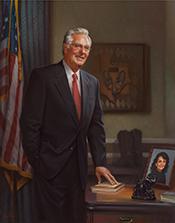
Richard Armey
Former U.S. Representative · Texas District 26 · 1985–2003 · Republican
Richard Armey represented Texas's District 26 in the United States House of Representatives (1985–2003) for the Republican party. The page below collects sourced biographical facts, term history, committee roles, and provenance for Armey.
Bioguide ID: A000217
Key facts
- Full name
- Richard Armey
- State
- Texas
- District
- District 26
- Party
- Republican
- House service
- 1985–2003
- First House term
- 1985
- Status
- Left office
- Current term ends
- —
- Born
- 1940
- Bioguide ID
- A000217
- Committee assignments
- —
- Dataset version
- 1.20260605
Biographical narrative
876 words · sourced from the Wikipedia REST extract
Richard K. Armey is a former U.S. Representative who served Texas's 26th congressional district from 1985 until 2003. A member of the Republican Party, he played a significant role in the political landscape of the 1990s, particularly as a key architect of the "Republican Revolution" that led to the party gaining control of both houses of Congress for the first time in four decades. Armey also served as House Majority Leader from 1995 to 2003 and was instrumental in the creation of the Contract with America, a pivotal campaign platform that contributed to the Republican resurgence during that era. Following his congressional career, he transitioned into consulting, advising, and lobbying.
Early life and career
Richard Keith Armey was born on July 7, 1940, in Cando, North Dakota, where he was raised in a rural farming community. He is the son of Marion and Glenn Armey. His educational journey began at Jamestown College, where he earned a Bachelor of Arts degree. He furthered his studies by obtaining a Master of Arts from the University of North Dakota and subsequently achieved a PhD in economics from the University of Oklahoma. During his academic career, Armey was involved in higher education as a faculty member in economics at several institutions. He taught at the University of Montana from 1964 to 1965 and served as an assistant professor at West Texas State University (now West Texas A&M University) from 1967 to 1968. He continued his academic career at Austin College from 1968 to 1972 and at North Texas State University (now the University of North Texas) from 1972 to 1977, where he also held the position of chairman of the economics department from 1977 until 1983.
Armey's early professional life was marked by his engagement with economics, which laid the groundwork for his later political career. He was a member of the Pi Kappa Alpha fraternity during his college years. Armey has been married twice; his first marriage produced three children and ended in divorce. He later married Susan Armey, who had two children from a previous relationship. Their marriage faced challenges, including multiple instances where Susan called off the wedding before ultimately proceeding.
House tenure
Armey entered the political arena when he was elected to the United States House of Representatives in 1984, representing Texas's 26th congressional district. His victory came against incumbent Tom Vandergriff, marking a significant moment in his political career. Armey was part of a group of six Republican freshmen, collectively known as the Texas Six Pack, who were elected that year. Following his initial election, he consistently secured re-election, never receiving less than 68 percent of the vote in subsequent elections. His most notable electoral performance occurred in 1998 when he won with 88 percent of the vote against a Libertarian candidate, reflecting the growing Republican sentiment in his district.
Throughout his early years in Congress, Armey was influenced by the economic theories of Austrian economist Ludwig von Mises, which shaped his legislative perspectives and priorities. His tenure in the House spanned nine terms, during which he established himself as a prominent figure within the Republican Party.
Legislative focus and committees
Armey's legislative career was characterized by his involvement in significant political movements and leadership roles. In 1994, he served as House Republican Conference Chairman and collaborated with Minority Whip Newt Gingrich to draft the Contract with America, a key document that outlined the Republican agenda and was credited with contributing to the party's success in the midterm elections that year. Following the Republican takeover of Congress, Gingrich became Speaker, and Armey was appointed as House Majority Leader, a position that granted him considerable influence over legislative scheduling and strategy.
During his leadership, Armey faced challenges, including a notable incident in 1995 when he made a controversial remark about openly gay Congressman Barney Frank. This incident drew public attention and criticism, highlighting the contentious nature of political discourse during that period.
Armey's leadership was further tested in 1997 when a faction of House Republicans sought to replace Gingrich as Speaker. Although initially involved in discussions about the potential leadership change, Armey ultimately chose not to support the coup, opting instead to inform Gingrich of the plans. This decision reflected the complexities of party dynamics and leadership loyalty within the Republican caucus.
Despite facing challenges, including a competitive bid for his majority leader position in 1998, Armey maintained his leadership role. Following the resignation of Gingrich and the subsequent selection of Bob Livingston as Speaker, Armey was considered a potential successor. However, due to internal party dynamics and the fallout from previous leadership challenges, he opted not to pursue the Speakership, which eventually went to Dennis Hastert.
Armey's congressional career concluded in 2003 when he announced his retirement. In his later years in office, he engaged in public disputes with influential conservative figures, such as James Dobson of Focus on the Family, which underscored the tensions between different factions within the Republican Party.
After leaving Congress, Armey transitioned to a career as a consultant, advisor, and lobbyist, continuing to influence political discourse and policy from outside the legislative arena. His extensive experience in economics and politics has allowed him to remain active in various capacities, contributing to discussions on economic policy and governance.
Notable legislation
Sponsored and co-sponsored legislation for Richard Armey is pending operator curation. The biographical narrative above carries the same provenance trail until per-bill rows are written.
Sources
- [1]https://en.wikipedia.org/wiki/Dick_ArmeyWikipedia · retrieved 2026-06-05
Notable quotes
Sourced quotes for Richard Armey are pending operator curation. Narrative-scope provenance remains attached below.
Sources
- [1]https://en.wikipedia.org/wiki/Dick_ArmeyWikipedia · retrieved 2026-06-05
Key positions
Curated policy positions for Richard Armey are pending operator review. The biographical narrative above carries the same provenance trail until per-topic positions are written.
Sources
- [1]https://en.wikipedia.org/wiki/Dick_ArmeyWikipedia · retrieved 2026-06-05
Terms served
- 1985–1987U.S. House · Term 1 · Republican
- 1987–1989U.S. House · Term 2 · Republican
- 1989–1991U.S. House · Term 3 · Republican
- 1991–1993U.S. House · Term 4 · Republican
- 1993–1995U.S. House · Term 5 · Republican
- 1995–1997U.S. House · Term 6 · Republican
- 1997–1999U.S. House · Term 7 · Republican
- 1999–2001U.S. House · Term 8 · Republican
- 2001–2003U.S. House · Term 9 · Republican
Sources & provenance
Every attributable claim above carries a per-section [N] marker that resolves to the corresponding URL below. Each entry records the upstream provider, the canonical URL, and the timestamp at which the source was retrieved by the ingest pipeline.
Key facts
- https://bioguide.congress.gov/search/bio/A000217bioguide · retrieved 2026-06-05
- https://www.govtrack.us/congress/members/400551govtrack · retrieved 2026-06-05
Biographical narrative
- https://en.wikipedia.org/wiki/Dick_Armeywikipedia · retrieved 2026-06-05
Find your representative
Every U.S. state elects representatives by district. Browse Texas’s delegation, the full former-representative roster, or explore the role and term length.
Related on The Candidate
- Preceded by Tommy VandergriffEarlier holder of the Texas District 26 House seat · Democratic.Open
- Succeeded by Michael BurgessLater holder of the Texas District 26 House seat · Republican.Open
- Charles StewartFormer U.S. Representative · Texas District 1 · DemocraticOpen
- David KaufmanFormer U.S. Representative · Texas District 1 · DemocraticOpen
- Eugene BlackFormer U.S. Representative · Texas District 1 · DemocraticOpen
- George SmythFormer U.S. Representative · Texas District 1 · DemocraticOpen