
Historical · U.S. House · Texas · District 4
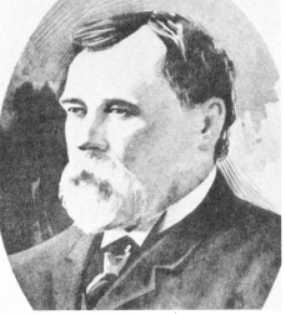
David Culberson
Former U.S. Representative · Texas District 4 · 1875–1897 · Democratic
David Culberson represented Texas's District 4 in the United States House of Representatives (1875–1897) for the Democratic party. The page below collects sourced biographical facts, term history, committee roles, and provenance for Culberson.
Bioguide ID: C000964
Key facts
- Full name
- David Culberson
- State
- Texas
- District
- District 4
- Party
- Democratic
- House service
- 1875–1897
- First House term
- 1875
- Status
- Left office
- Current term ends
- —
- Born
- 1830
- Bioguide ID
- C000964
- Committee assignments
- —
- Dataset version
- 1.20260606
Biographical narrative
912 words · sourced from the Wikipedia REST extract
David Culberson was a prominent figure in American politics during the late 19th century, serving as a Democratic U.S. Representative from Texas. His political career spanned over two decades, during which he held significant roles, including Chairman of the House Judiciary Committee. Culberson's legislative contributions and his involvement in various political movements reflect the complexities of his time, particularly in relation to issues such as state rights and economic regulation.
Early life and career
David Browning Culberson was born on September 29, 1830, in Troup County, Georgia. He was the son of David B. Culberson and Lucy Wilkerson. His early education took place at the Brownwood Institute in La Grange, Georgia, after which he pursued a legal education at Tuskegee, Alabama, under the tutelage of William P. Chilton, who later became the Chief Justice of Alabama. Culberson was admitted to the bar in 1850, marking the beginning of his legal career in Dadeville, Alabama.
In 1856, Culberson relocated to Texas, settling in Upshur County, where he continued his law practice in partnership with General Hinche P. Mabry. His legal career flourished, but the onset of the Civil War brought significant changes to his life and career. Culberson married Eugenia Kimball on December 8, 1852, and they had two sons, one of whom, Charles A. Culberson, would later become Governor of Texas and serve as a U.S. Senator.
Culberson's political involvement began in the Texas Legislature, where he served during the 1859-60 session representing Upshur County. His opposition to secession put him at odds with the prevailing sentiments of his district, leading him to resign his legislative seat. Despite his anti-secession stance, when Texas seceded from the Union, Culberson took on a military role, raising the 18th Texas Infantry and serving as its commander with the rank of lieutenant colonel. The regiment participated in significant battles, including the Siege of Vicksburg, although Culberson's health issues eventually led to his reassignment as Adjutant General of Texas.
In 1864, he returned to the legislature, representing Cass, Titus, and Bowie counties. His legal expertise was further demonstrated as he participated in high-profile cases, including the defense of individuals accused of serious crimes. Culberson's political activities included attending the Democratic state convention in 1868 and serving as a presidential elector in the 1872 election, where he was initially pledged to Horace Greeley but ultimately cast his vote for Benjamin Gratz Brown.
House tenure
Culberson's congressional career began when he was elected to the U.S. House of Representatives in 1874, representing Texas's 2nd Congressional District. He resigned his state Senate seat to assume his role in Washington, D.C. His tenure in the House spanned from 1875 until 1897, during which he served a total of 11 terms. Throughout his time in Congress, Culberson was known for his commitment to various legislative issues, particularly those related to state rights and economic regulation.
During his time in the House, Culberson supported prohibition and was an advocate for limiting federal interference in state matters. He was involved in significant legislative efforts, including his support for the repeal of the Specie Act in 1876 and the introduction of antitrust legislation in 1888. His leadership capabilities were recognized when he was appointed as Chairman of the House Judiciary Committee, a role that placed him at the forefront of legal and legislative discussions during a transformative period in American history.
Culberson's political stance was often characterized by a populist approach, although he campaigned against the Populist Party, which was gaining traction in Texas during the 1890s. He viewed the party as a divisive force that could disrupt the political landscape of the state. His ability to navigate the complexities of the political environment of his time contributed to his longevity in office and his influence within the Democratic Party.
Legislative focus and committees
Throughout his congressional career, David Culberson's legislative focus encompassed a range of issues that were pertinent to his constituents and the broader national context. His support for prohibition reflected a commitment to social reform, while his opposition to federal interference in state governance underscored his belief in the principles of states' rights. This perspective was particularly relevant during a time when the federal government was increasingly involved in various aspects of American life.
Culberson's role as Chairman of the House Judiciary Committee allowed him to influence significant legal and constitutional matters. Under his leadership, the committee addressed various issues, including civil rights, economic regulation, and the balance of power between federal and state authorities. His introduction of antitrust legislation in 1888 indicated his awareness of the growing concerns regarding monopolies and corporate power, which were becoming increasingly relevant as the nation industrialized.
In addition to his legislative work, Culberson's background as a lawyer informed his approach to legal issues in Congress. His experience in high-profile legal cases and his understanding of the law equipped him to navigate complex legislative challenges. He was known for his ability to articulate the legal implications of proposed legislation and to advocate for measures that aligned with his principles.
Culberson's political career concluded with his appointment by President William McKinley in 1897 as one of the commissioners tasked with codifying the laws of the United States. He continued to serve in this capacity until his death on May 7, 1900, in Jefferson, Texas. His contributions to American politics, particularly during a time of significant change and upheaval, remain a part of the historical narrative of the U.S. Congress and the state of Texas.
Notable legislation
Sponsored and co-sponsored legislation for David Culberson is pending operator curation. The biographical narrative above carries the same provenance trail until per-bill rows are written.
Sources
- [1]https://en.wikipedia.org/wiki/David_B._CulbersonWikipedia · retrieved 2026-06-06
Notable quotes
Sourced quotes for David Culberson are pending operator curation. Narrative-scope provenance remains attached below.
Sources
- [1]https://en.wikipedia.org/wiki/David_B._CulbersonWikipedia · retrieved 2026-06-06
Key positions
Curated policy positions for David Culberson are pending operator review. The biographical narrative above carries the same provenance trail until per-topic positions are written.
Sources
- [1]https://en.wikipedia.org/wiki/David_B._CulbersonWikipedia · retrieved 2026-06-06
Terms served
- 1875–1877U.S. House · Term 1 · Democratic
- 1877–1879U.S. House · Term 2 · Democratic
- 1879–1881U.S. House · Term 3 · Democratic
- 1881–1883U.S. House · Term 4 · Democratic
- 1883–1885U.S. House · Term 5 · Democratic
- 1885–1887U.S. House · Term 6 · Democratic
- 1887–1889U.S. House · Term 7 · Democratic
- 1889–1891U.S. House · Term 8 · Democratic
- 1891–1893U.S. House · Term 9 · Democratic
- 1893–1895U.S. House · Term 10 · Democratic
- 1895–1897U.S. House · Term 11 · Democratic
Sources & provenance
Every attributable claim above carries a per-section [N] marker that resolves to the corresponding URL below. Each entry records the upstream provider, the canonical URL, and the timestamp at which the source was retrieved by the ingest pipeline.
Key facts
- https://bioguide.congress.gov/search/bio/C000964bioguide · retrieved 2026-06-06
- https://www.govtrack.us/congress/members/403075govtrack · retrieved 2026-06-06
Biographical narrative
- https://en.wikipedia.org/wiki/David_B._Culbersonwikipedia · retrieved 2026-06-06
Find your representative
Every U.S. state elects representatives by district. Browse Texas’s delegation, the full former-representative roster, or explore the role and term length.
Related on The Candidate
- Preceded by Edward DegenerEarlier holder of the Texas District 4 House seat · Republican.Open
- Succeeded by John CranfordLater holder of the Texas District 4 House seat · Democratic.Open
- Charles StewartFormer U.S. Representative · Texas District 1 · DemocraticOpen
- David KaufmanFormer U.S. Representative · Texas District 1 · DemocraticOpen
- Eugene BlackFormer U.S. Representative · Texas District 1 · DemocraticOpen
- George SmythFormer U.S. Representative · Texas District 1 · DemocraticOpen