
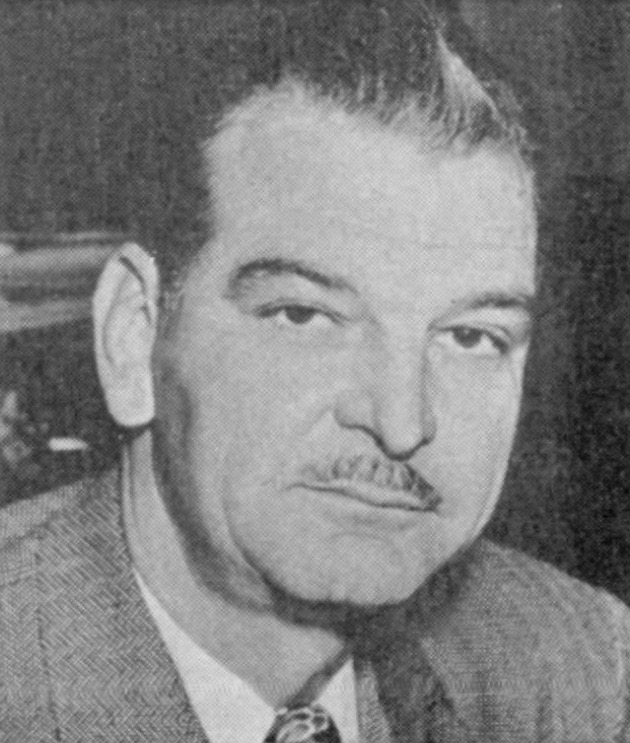
Historical · U.S. House · Texas · District 5
Joseph Wilson
Former U.S. Representative · Texas District 5 · 1947–1955 · Democratic
Joseph Wilson represented Texas's District 5 in the United States House of Representatives (1947–1955) for the Democratic party. The page below collects sourced biographical facts, term history, committee roles, and provenance for Wilson.
Bioguide ID: W000604
Key facts
- Full name
- Joseph Wilson
- State
- Texas
- District
- District 5
- Party
- Democratic
- House service
- 1947–1955
- First House term
- 1947
- Status
- Left office
- Current term ends
- —
- Born
- 1901
- Bioguide ID
- W000604
- Committee assignments
- —
- Dataset version
- 1.20260605
Biographical narrative
1,023 words · sourced from the Wikipedia REST extract
Joseph Franklin Wilson was a notable figure in American politics, serving as a U.S. Representative from Texas. A member of the Democratic Party, Wilson represented Texas's 5th congressional district from 1947 until 1955. His career in public service was marked by his involvement in both legislative and judicial capacities, reflecting a commitment to his community and the state of Texas. Born in 1901, Wilson's early life and education laid the foundation for his later achievements in law and politics.
Early life and career
Joseph Franklin Wilson was born on March 18, 1901, in Corsicana, Navarro County, Texas. His early education began in the local elementary schools of Corsicana, where he developed a foundational understanding of his community and the values that would later guide his public service. In 1913, Wilson's family relocated to Memphis, Texas, situated in the Texas Panhandle, where he continued his education in the public schools until 1916. This move exposed him to the diverse challenges and opportunities of rural Texas, shaping his perspective on the needs of his constituents.
Wilson's educational journey took a significant turn when he enrolled at Peacock Military College in San Antonio from September 1917 to June 1918. This experience likely instilled in him a sense of discipline and leadership that would serve him well in his future endeavors. Following his time at Peacock, he attended the Tennessee Military Institute from September 1918 to June 1919, further enhancing his educational background.
In 1923, Wilson graduated from Baylor Law School in Waco, Texas, marking a pivotal moment in his career. After being admitted to the bar the same year, he moved to Dallas, where he began his law practice. His legal career provided him with a deep understanding of the law and governance, which would later inform his legislative work. Wilson's commitment to public service was evident early on, as he became actively involved in political activities. He served as a delegate to the Democratic National Convention in 1936, showcasing his engagement with the national political landscape. Additionally, he held the position of chairman of the Dallas County Democratic Executive Committee from 1942 to 1945, further solidifying his role as a leader within the Democratic Party in Texas.
House tenure
Wilson's political career took a significant leap in the 1946 Texas Congressional election when he successfully ran for the U.S. House of Representatives. He faced a primary challenge from Sarah T. Hughes, a prominent figure in Texas politics, and won by a margin of 14,000 votes. This victory was a testament to his growing influence and support within the Democratic Party. Following the primary, Wilson defeated Republican candidate L.W. Stayart in the general election, marking the beginning of his tenure in Congress.
During his time in the House, which began in 1947, Wilson was re-elected in 1948, defeating Joe Bailey Irwin. His subsequent elections in 1950 and 1952 were notable for their lack of opposition, as he ran unopposed during those years. This unopposed status reflected his strong standing within his district and the confidence his constituents had in his representation. Wilson's congressional career spanned four terms, during which he focused on various issues pertinent to his constituents and the broader national landscape.
However, Wilson did not seek renomination in 1954, marking the end of his time in the House of Representatives on January 3, 1955. His decision not to run again may have been influenced by various factors, including the shifting political landscape or personal considerations. Regardless, his tenure in Congress contributed to the legislative framework of the time and demonstrated his commitment to public service.
Legislative focus and committees
During his time in the House of Representatives, Joseph Wilson was involved in a range of legislative activities and committees that reflected his interests and the needs of his constituents. While specific details about the bills he sponsored or the committees he served on are not provided, it is evident that his legal background and experience in public service informed his approach to governance. As a member of the Democratic Party, Wilson likely aligned with the party's priorities of the era, which included issues related to civil rights, economic development, and social welfare.
Wilson's legislative focus would have been shaped by the context of the post-World War II era, a time characterized by significant social and economic changes in the United States. The nation was grappling with the challenges of returning veterans, economic expansion, and the early stages of the civil rights movement. As a representative from Texas, Wilson would have been particularly attuned to the needs of his constituents, advocating for policies that addressed local concerns while also contributing to national discussions.
After his congressional career, Wilson transitioned into the judicial system, where he served as a district judge of the criminal district court of Texas in 1943 and 1944, adopting the title Judge J. Frank Wilson. His appointment as judge of Criminal District Court No. 1 in Dallas in 1955 marked a significant shift in his career, allowing him to continue his public service in a different capacity. He held this judicial position until September 1968, contributing to the legal system and upholding the rule of law in Texas.
Wilson's involvement in the judicial system included notable events, such as his temporary role during the Jack Ruby trial in Dallas. He was granted a vacation to allow a larger courtroom to accommodate Judge Joe B. Brown, who was presiding over the high-profile case. However, Wilson's commitment to his responsibilities led him to interrupt his vacation to fill in for the ailing Judge Brown, demonstrating his dedication to the judicial process.
In his personal life, Wilson married Ruby Lee Hopkins in 1926, and the couple had two children, Joseph Franklin Wilson Jr. and Marion Sue. His family life remained an important aspect of his identity, and he balanced his professional commitments with his responsibilities as a husband and father. Wilson's life came to a close on October 13, 1968, in Dallas, Texas, after a period of illness. His legacy as a public servant, both in the legislative and judicial realms, continues to be remembered as part of Texas's rich political history.
Notable legislation
Sponsored and co-sponsored legislation for Joseph Wilson is pending operator curation. The biographical narrative above carries the same provenance trail until per-bill rows are written.
Sources
- [1]https://en.wikipedia.org/wiki/Joseph_Franklin_WilsonWikipedia · retrieved 2026-06-05
Notable quotes
Sourced quotes for Joseph Wilson are pending operator curation. Narrative-scope provenance remains attached below.
Sources
- [1]https://en.wikipedia.org/wiki/Joseph_Franklin_WilsonWikipedia · retrieved 2026-06-05
Key positions
Curated policy positions for Joseph Wilson are pending operator review. The biographical narrative above carries the same provenance trail until per-topic positions are written.
Sources
- [1]https://en.wikipedia.org/wiki/Joseph_Franklin_WilsonWikipedia · retrieved 2026-06-05
Terms served
- 1947–1949U.S. House · Term 1 · Democratic
- 1949–1951U.S. House · Term 2 · Democratic
- 1951–1953U.S. House · Term 3 · Democratic
- 1953–1955U.S. House · Term 4 · Democratic
Sources & provenance
Every attributable claim above carries a per-section [N] marker that resolves to the corresponding URL below. Each entry records the upstream provider, the canonical URL, and the timestamp at which the source was retrieved by the ingest pipeline.
Key facts
- https://bioguide.congress.gov/search/bio/W000604bioguide · retrieved 2026-06-05
- https://www.govtrack.us/congress/members/411759govtrack · retrieved 2026-06-05
Biographical narrative
- https://en.wikipedia.org/wiki/Joseph_Franklin_Wilsonwikipedia · retrieved 2026-06-05
Find your representative
Every U.S. state elects representatives by district. Browse Texas’s delegation, the full former-representative roster, or explore the role and term length.
Related on The Candidate
- Preceded by Hatton SumnersEarlier holder of the Texas District 5 House seat · Democratic.Open
- Succeeded by Bruce AlgerLater holder of the Texas District 5 House seat · Republican.Open
- Charles StewartFormer U.S. Representative · Texas District 1 · DemocraticOpen
- David KaufmanFormer U.S. Representative · Texas District 1 · DemocraticOpen
- Eugene BlackFormer U.S. Representative · Texas District 1 · DemocraticOpen
- George SmythFormer U.S. Representative · Texas District 1 · DemocraticOpen